

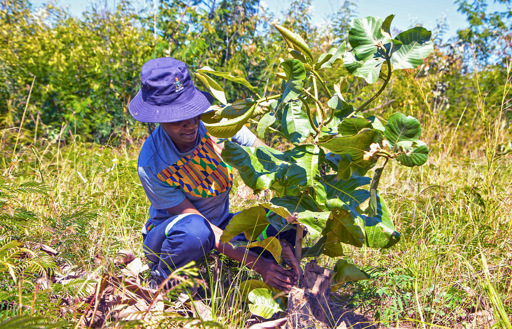
Plant geneticist Alice Muchugi recalls meeting a group of furious fruit sellers on the side of a dusty road not far from Zimbabwe’s capital, Harare, in 2024. They told her that a group of men armed with chainsaws had felled some of the district’s most prolific fruit trees, robbing the women of a steady source of income: the trees’ sweet, yellow, apricot-sized berries. The men wanted the wood from the trees to burn in brick-making kilns, Muchugi said. Muchugi, leader for tree diversity and productivity at the Landscape Alliance, an international forestry and agroforestry research organization, immediately knew which trees the women were referring to. They were wild loquats (Uapaca kirkiana), cloned more than 20 years ago from superior mother trees in 25 different geographical locations across four countries within the region and growing at her organization’s field gene bank in Domboshava, around 30 kilometers (19 miles) northeast of Harare. The sweet fruit of the wild loquat tree is highly popular throughout Southern and East Africa. Image courtesy of Brian Nduw. Once data on the trees had been collected by staff at the gene bank — essentially an orchard dedicated to growing clones of especially fruitful wild trees — the women had been given permission to harvest the fruit for sale, Muchugi said. The loss of the trees after the loggers stole onto the gene bank’s land under cover of darkness highlighted the challenges facing both fruit collectors and plant geneticists. “One night you can wake up and find everything…This article was originally published on Mongabay
From Conservation news via This RSS Feed.