

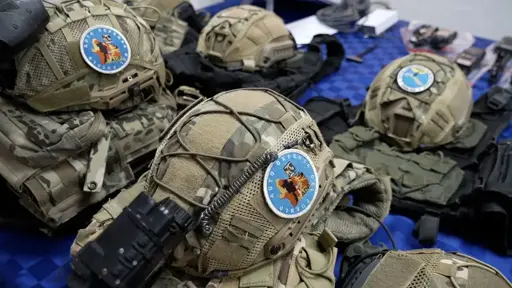
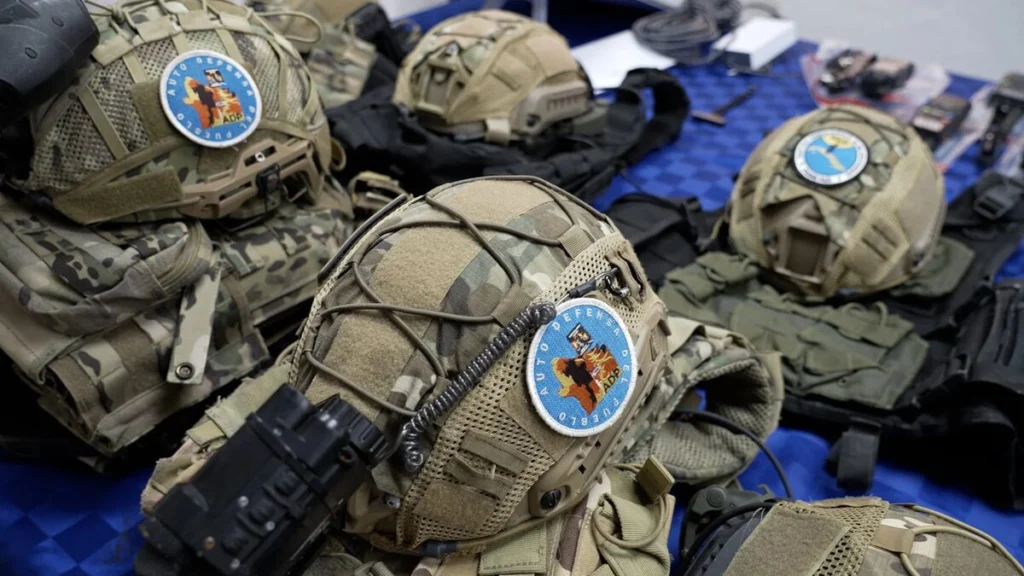
In February, armed men attempted to reach Cuba to seize a police station, incite an uprising, and trigger a U.S. military intervention.
On Wednesday, the independent outlet “Belly of the Beast” published an investigative report on an attempted armed incursion into Cuba that took place on February 25 and failed due to the intervention of the Caribbean nation’s coast guard.
RELATED:
Barbados PM Rejects Blockade on Cuba, Backs Caribbean Peace at UNGA
Authored by Reed Lindsay, “Inside the Armed Incursion from Florida Meant to Topple Cuba’s Government” details a counter-revolutionary venture that sought to seize a police station, incite a popular uprising, and subsequently trigger a U.S. military intervention.
The following is a summary of the key aspects of Lindsay’s work—an extensive report that includes interviews with survivors, Cuban officials, relatives, and political allies, alongside forensic evidence and property records. The summary follows the original report’s section order.
The Key Figures Who Survived the Shootout
For Jose Manuel Rodriguez, the path from Nashville to a Cuban prison began on TikTok. In November 2025, the 33-year-old truck driver contacted Raul Quevedo, a Cuban exile whose La Nueva Cuba account promoted opposition to Cuba’s government through imagery of armed resistance and an imagined post-communist future.
Rodriguez, a U.S. permanent resident who had left Cuba nearly a decade earlier, said Quevedo introduced him to men preparing an armed uprising.
On February 24, he departed the Florida Keys with nine others. Their ambition was to seize a police station, trigger a popular rebellion and create conditions for U.S. military intervention. Rodriguez described a plan to hold a province for 72 hours and appeal to Washington for help.
They never reached land. A confrontation with the Cuban Border Guard left four participants dead that day; a fifth later died from his wounds. Five survived and were detained. The Cuban patrol’s commanding officer was wounded, but none of its crew died.
In July, Lindsay interviewed four survivors while they awaited trial on terrorism-related charges. Their accounts illuminate the recruitment, preparations and disastrous voyage while leaving major questions about leadership, financing, and responsibility unresolved.
Four congressional Democrats visited a Havana hospital in July to witness the toll of the U.S. economic war on Cuba firsthand.
See what the lawmakers learned inside the hospital pic.twitter.com/pHB9o0rZSM
— Belly of the Beast (@bellybeastcuba) September 24, 2026
The Interviews
Lindsay interviewed Rodriguez, Christian Ernesto Acosta Guevara, Leordan Enrique Cruz Gomez and Conrado Galindo Sariol individually at a Havana property belonging to the Interior Ministry. Each arrived handcuffed and wearing an orange jumpsuit; the restraints were removed before interviews lasting between 30 and 55 minutes.
The prosecutor Edward Robert Campbell and senior Interior Ministry investigator Col. Francisco Estrada Portales attended. All four detainees said they had agreed voluntarily to speak without lawyers and had received neither pressure nor promises.
The men expressed markedly different attitudes. Galindo maintained he had been forced to participate in the terrorist adventure. Acosta regretted joining. Cruz remained committed to political change but questioned aspects of the armed approach. Rodriguez openly defended the effort to overthrow Cuba’s government.
Their accounts broadly agreed on the mission’s objective and the confrontation at sea, but diverged over its organization and financing. Much of that disagreement concerned Miami activist Maritza Lugo Fernandez, whose former farm served as their training ground.
Recruited on TikTok
Acosta, a moving-company driver living in Austin, also entered the group through TikTok. A U.S. permanent resident who had lived in the country for approximately ten years, he connected with Pavel Alling Peña, a naturalized U.S. citizen in Florida.
Alling created the Cardumen Movement’s TikTok account in May 2025. Acosta said the initial invitation concerned producing videos and other material against the Cuban government. Later, Alling introduced the possibility of military training.
In November, Acosta accompanied him to a small farm near Fort Myers. Among crops and animals stood a rudimentary shooting range. The four interviewed detainees understood the property to belong to Lugo, who leads the anti-communist Party November 30 (30 de Noviembre).
The party emerged from a longer history of anti-Castro organizing. Lugo helped establish it inside Cuba in 1991, assumed leadership after her husband’s imprisonment and continued its activities after moving to Florida in 2002.
Acosta and Rodriguez made repeated training visits but said operational details remained restricted. Both identified Roberto Alvarez Avila and Cruz as leaders. Acosta, also named Amijail Sanchez Gonzalez, was co-founder of People’s Self-Defense (Auto Defensa del Pueblo, or ADP).
In January, recruits were asked to remain at the farm while a boat was prepared. Rodriguez’s girlfriend, Yeni Rodriguez, said he left Nashville on January 23, taking firearms but describing the trip only as a visit to a Florida camp. She expected him home soon and said the incursion came as a complete surprise.
Quevedo did not accompany the expedition. He acknowledged knowing most participants through TikTok but declined to explain his possible involvement. While supporting the possibility of overthrowing Cuba’s government, he criticized the mission’s organization, timing and lack of contingency planning.
The U.S. deems Cuba’s medical missions “forced labor.” The Cuban government calls the doctors heroes. We traveled to Calabria, Italy, to see how one of these missions actually works. Watch our documentary film “From Cuba to Calabria”https://t.co/m2sNqwtGSa
— Belly of the Beast (@bellybeastcuba) June 13, 2026
Trying to Light a Spark
Cruz, an industrial painter living in Tampa, had left Cuba by makeshift boat in 2014 and eventually become a U.S. citizen. He said a WhatsApp contact brought him to the farm.
Initially, he recalled, training lacked a specific operational objective. Images of hardship in Cuba circulating online helped turn that activity into plans for an incursion.
Lindsay places this motivation within Cuba’s economic crisis, emphasizing the damage caused by U.S. “maximum pressure” sanctions.
Cruz previously trained with “The New Cuban Nation in Arms”, which Cuban authorities linked to a 2023 terrorist plot. Dissatisfied with its political vision, he moved toward Lugo’s party and the Florida-based Republican Party of Cuba.
Without formal military training, Cruz prepared through books and videos featuring U.S. special forces. He led shooting sessions but disputed the existence of a formal hierarchy, saying decisions were collective and Alvarez handled more operational planning.
Republican Party of Cuba president Ibrahim Bosch denied organizational involvement. He acknowledged that participant Michel Ortega Casanova had led its Tampa branch and that he had heard of shooting practice at Lugo’s farm, but said any members attending did so individually.
Cruz described a plan to seize a police station in Cardenas and encourage residents to mobilize. Cuban investigators instead identified a station in nearby Santa Marta and the Varadero Border Guard Unit as intended targets. Cruz said Alvarez knew the details.
Authorities also arrested Duniel Hernandez Santos, alleging he was the group’s contact inside Cuba. Cruz said someone on the island was supposed to arrange transport from the coast.
The premise was that ten men could provide the spark for a much larger uprising. The plan failed before they reached shore.
A Plot in Plain Sight
Despite efforts to restrict operational details internally, participants openly advertised militancy and approaching action. Two days after establishing the Cardumen account in May 2025, Alling posted an image of rifles and solicited funds for Cuba’s “freedom.”
In a comment, he claimed preparations had been underway for two years. Subsequent posts displayed equipment and suggested action was imminent.
Acosta and Ledian Padron Guevara also appeared in a video, apparently filmed in a gun store, displaying semi-automatic rifles.
Political allies publicly endorsed force. At an August 2025 anti-communist gathering in Miami, activist Javier Berovides advocated physical confrontation while claiming to represent Lugo’s party, ADP, and his own Cuban Shield Movement (Movimiento Escudo Cubano). Lindsay reports overlapping leadership between these organizations, including Lugo’s position as Cuban Shield’s vice-president.
In January, Galindo posted an AI-generated image depicting himself armed and in military clothing. Quevedo appeared in a separate video carrying a rifle and declaring that exiles were ready to support the Trump administration’s efforts against Cuba. He later said the video concerned hopes for U.S. intervention following American military action in Venezuela, rather than this particular mission.
On January 31, Sanchez shared a joint statement from four organizations rejecting negotiations with Havana. Lindsay suggests these public signals attracted Cuban attention.
On February 5, Cuban President Miguel Diaz-Canel warned of attacks being prepared, supported and financed from the United States.
At the UN General Assembly this morning, Trump called Cuba a “failed state” that was also somehow capable of providing a safe haven to foreign adversaries that “threaten America” and cultivating “subversive groups” in the U.S.
Cuba’s UN delegation walked out while Trump spoke. pic.twitter.com/Y5JWinblPm
— Belly of the Beast (@bellybeastcuba) September 22, 2026
Ten Men, 25 Guns
On February 24, the group departed Marathon after sunset in two boats. Cuban authorities reported an arsenal of 25 firearms – 14 long guns and 11 handguns – approximately 13,000 rounds of ammunition and more than 100 magazines.
Officials also listed homemade explosives, Molotov cocktails, protective equipment, knives, night-vision equipment, a drone, a Starlink terminal and medical supplies.
One boat suffered engine failure during the crossing. The men transferred themselves and their equipment to El Tornado, a 24-foot fishing boat built in 1981.
Participant Hector Duani Cruz Correa had obtained that boat through its owner, for whom he had performed tile work. Acosta said Cruz Correa claimed permission to use it for fishing. The owner subsequently reported it stolen and asked to press charges.
The breakdown disrupted plans to arrive in darkness. At approximately 7 a.m., a Cuban lookout spotted the boat off the northern coast, and radar personnel tracked it.
Attempting to hide near a cay until nightfall, the men ran aground. They freed the boat as a Border Guard vessel approached but could not escape. Weapons and magazines were stored separately in bags, complicating their response.
All four interviewed survivors agreed that the first shot came from their boat. Acosta identified Sanchez as the shooter; the others said they did not know who fired first. The Cuban captain was hit in the abdomen.
Cuban investigators said the five-person patrol carried five weapons. Casings recovered aboard El Tornado matched a Glock pistol and two Ruger rifles. The ballistics expert cautioned that recovered evidence could not account for every shot because casings could have fallen into the sea.
Nine expedition members were shot. All four interviewees denied firing. They described exhaustion, seasickness, cold and confusion after the overnight crossing.
The exchange lasted minutes. Cruz signaled surrender. Galindo said one Border Guard continued shooting until the wounded captain ordered him to stop.
Padron, Cruz Correa and Alling died aboard the boat; Ortega died during evacuation. Alvarez died on March 4 from complications associated with his wounds.
Investigators recorded 14 bullet impacts on the patrol boat and 23 on El Tornado. Cuban forensic specialists said the moving vessels prevented a precise reconstruction of firing distances but that their findings did not indicate close-range shooting. Survivors acknowledged they had not prepared to confront the Border Guard.
A Long History of Violence and Impunity
Lindsay situates the expedition within decades of armed exile activity against Cuba. Before the incursion, Cuban authorities had placed Sanchez and Cruz on their national list of terrorism suspects, alleging involvement in financing violence. Cuba submitted that list to the United Nations; this did not constitute a U.S. terrorist designation.
The report describes ADP-linked social media promoting sabotage, including a post by co-founder Michel “Kiki” Naranjo Riveron offering money for killing a Cuban police officer. Estrada alleged that Sanchez and ADP financed a series of attacks inside Cuba. The United States had not designated ADP a terrorist organization.
Lindsay then traces the history from the CIA’s 1960 regime-change program and the failed Bay of Pigs invasion to Operation Mongoose and subsequent exile attacks launched after direct CIA support diminished.
He recounts the 1976 bombing of Cubana Flight 455, which killed 73 people. Suspected organizers Orlando Bosch and Luis Posada Carriles later lived in Florida and were never prosecuted in the United States for that bombing.
Lindsay also recalls exile militants’ attacks within the United States, assaults on Cuban tourist facilities and the 1990s Havana hotel bombings. A more recent example is Cuba’s account of a foiled 2023 operation involving a Florida man who arrived by jet ski with weapons to recruit people for violence and arson.
Maritza Lugo, the Organizer and Financier
Cuban investigators identify Lugo as the operation’s alleged principal organizer and financier. She categorically denies involvement. Estrada alleged that she oversaw preparations, funding and logistics at the farm.
Lugo countered that she lived on approximately US$700 a month in Social Security, supplemented by occasional work and family assistance, and lacked the money to finance such an undertaking.
Lindsay recounts her background as an opposition activist. Her former husband, Rafael Ibarra Roque, received a 20-year sentence for sabotage, a prosecution she maintains was fabricated.
Since moving to Florida, she has maintained a relatively marginal but persistent political presence, occasionally meeting prominent U.S. officials. Lindsay also documents her public associations with Enrique Tarrio and Posada Carriles.
Her relationship with ADP was both organizational and personal. She said Sanchez, its co-founder, had been her romantic partner for about a year and lived with her before the expedition.
Cruz described ADP as the mission’s military component and Lugo’s party as its prospective political leadership. Cuban authorities seized clothing bore insignia from both organizations.
Lugo became a prominent advocate for the detained men but insisted she knew nothing of their plans. She characterized the expedition as reckless while continuing to support intervention by the U.S. military.
“You cut off all the oil to Cuba,” Rep. Maxine Waters told Treasury Secretary Scott Bessent last week, accusing the Trump administration’s Cuba policy of starving families and leaving them without electricity.
“You don’t have to be cruel,” she said. pic.twitter.com/ot5wEIFcAf
— Belly of the Beast (@bellybeastcuba) September 22, 2026
The Finca
Property records clarify that Lugo no longer owned the training site when the expedition departed. She owned the 13-acre LaBelle farm from March 2020 until September 2024, when she sold it to her daughter and Alexis Martinez. Martinez took full possession in July 2025.
Nevertheless, both Lugo and Martinez acknowledged that she retained access. Acosta, Rodriguez and Cruz said training continued there in the months before the incursion.
Lugo described lawful shooting practice and hunting, denying that she witnessed military preparations. Martinez said he had demolished the shooting range after acquiring full ownership and knew nothing of training.
When sheriff’s detectives visited in August following an inquiry for Lindsay’s report, they observed a three-sided berm apparently suited to shooting exercises involving multiple directions. The sheriff’s office nevertheless said it had received no complaints of criminal activity there and no confirmation from other contacted agencies that military training occurred.
Cruz and Rodriguez described Lugo as frequently present. Rodriguez said she helped with food, transportation and other practical needs, while denying she planned the mission or supplied its weapons.
Lugo said her visits were brief and Sanchez had broad freedom to use the property. Rodriguez maintained that participants financed their own weapons and equipment. Acosta called Lugo’s party their sponsor but said she did not plan the operation.
Galindo Claims to Have Been Coerced into Participating
Galindo, the 59-year-old delivery-business operator, who had studied video production, said Lugo offered him US$500 to film and edit training footage.
After arriving at the farm, he was told he would accompany the expedition. When he objected, Lugo and Alvarez threatened him and confiscated his phone and green card.
Acosta separately said he surrendered his phone and green card to Lugo and that Cruz warned him against leaving because the men had sworn an oath. Lugo denied these allegations, maintaining that the detainees’ testimony had been coerced.
Galindo’s wife, Ana Segui, described him as a family man who traveled for work, rather than armed political action. Although he had previously been a dissident and imprisoned in Cuba, she said he had moved away from activism in the United States. She described his armed, AI-generated Facebook portrait as a joke.
Rodriguez’s girlfriend likewise rejected the terrorist label, describing a supportive partner who had helped provide food to immigrant families during an immigration-enforcement crackdown in Nashville.
The Flow of Information Between Authorities
According to Border Guard chief of staff First Col. Ybey Carballo, Cuban authorities notified U.S. Coast Guard counterparts within three hours of the firefight and subsequently briefed the Coast Guard liaison in Havana.
Carballo said practical communication between the maritime services persisted despite deteriorating political relations. However, bilateral coordination meetings stopped after Trump returned to office, and he accused Washington of providing inadequate responses to Cuban messages.
He questioned how an armed expedition could leave Florida without U.S. detection. His skepticism does not establish that American authorities knew of the mission beforehand.
Estrada said Cuba sent Washington a detailed report and questions about financing and organization on March 6.
On March 31, an FBI delegation arrived and received briefings, inspected the vessels, and briefly met the detainees, collecting fingerprints and DNA samples. Cuban officials said subsequent information-sharing was limited. By July, they maintained that their central questions remained unanswered.
The Aftermath
Survivors received first aid and hospital treatment. Cruz and Alvarez underwent surgery; Cruz later required a second operation for an arm injury involving nerve damage. He praised the Cuban medical care as professional and humane.
Alvarez died despite treatment. Cuban officials said the five deceased men’s cremated remains were returned to relatives.
After hospitalization, survivors were interrogated at Villa Marista and transferred to a maximum-security section of Combinado del Este prison. Rodriguez, Acosta and Cruz said they had not been physically harmed or tortured in custody.
The five survivors and alleged island contact Hernandez remained in pretrial detention. The prosecutor said the terrorism-related charges could carry up to 30 years’ imprisonment or death, while noting Cuba had conducted no executions since 2003. His office was also considering trying Lugo in absentia.
An Adventure Ending In Regrets
The failed expedition deepened divisions among its supporters. In August, ADP co-founder Naranjo publicly broke with Lugo’s party, criticizing the support provided and questioning how the men had been allowed to undertake such a disastrous mission.
Galindo said he wanted to sue Lugo for alleged kidnapping and threats if he returned to the United States. Acosta expressed regret and urged other Cubans to resist inflammatory social media, keep their jobs and avoid similar expeditions.
Cruz remained committed to political change, arguing that a successful armed struggle would require greater resources.
Rodriguez remained unrepentant about joining, though he mourned his companions and acknowledged his family’s suffering. He continued to support both military action and economic pressure against Cuba.
Lindsay closes with those contrasting responses: regret, accusations, and enduring commitment among men whose hoped-for uprising ended at sea.
teleSUR/ JF
Source: Belly of The Beast
From teleSUR English via This RSS Feed.