

Bullets:
About 98% of global B2B transactions are via wire transfer and bank-to-bank
Credit and debit cards are common for cross-border sales under $200, and on a USD volume basis.
Younger business owners in North America and Europe express strong preferences for paying with cards.
But manufacturers that do accept foreign credit cards must charge far higher prices, to recover chargebacks from fraudulent buyers.
Inside China / Business is a reader-supported publication. To receive new posts and support my work, consider becoming a free or paid subscriber.
Report:
Good morning.
Our company is in Kunming, in Yunnan province. We do travel a lot across China, working with factories in heavy manufacturing industries. But we live here, and Yunnan is home to Asia’s largest flower market. And we’re setting up two new businesses here for preserved flowers, out of those giant facilities in Dounan.
Preserved flowers look fresh for two years and more, and we can produce them in almost any color, and in very high volumes. That makes them ideal for high-end florists in North America and Europe, who can provide flowers year-round, and it will be especially lucrative for their corporate and luxury customers.
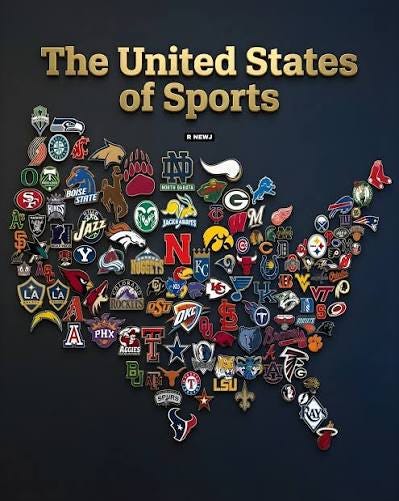
One of our new product lines is preserved flowers, targeting sports fans. College and university markets are huge in the United States; it’s impossible to describe to our Chinese partners here, the level of devotion that university grads have for their teams back home.
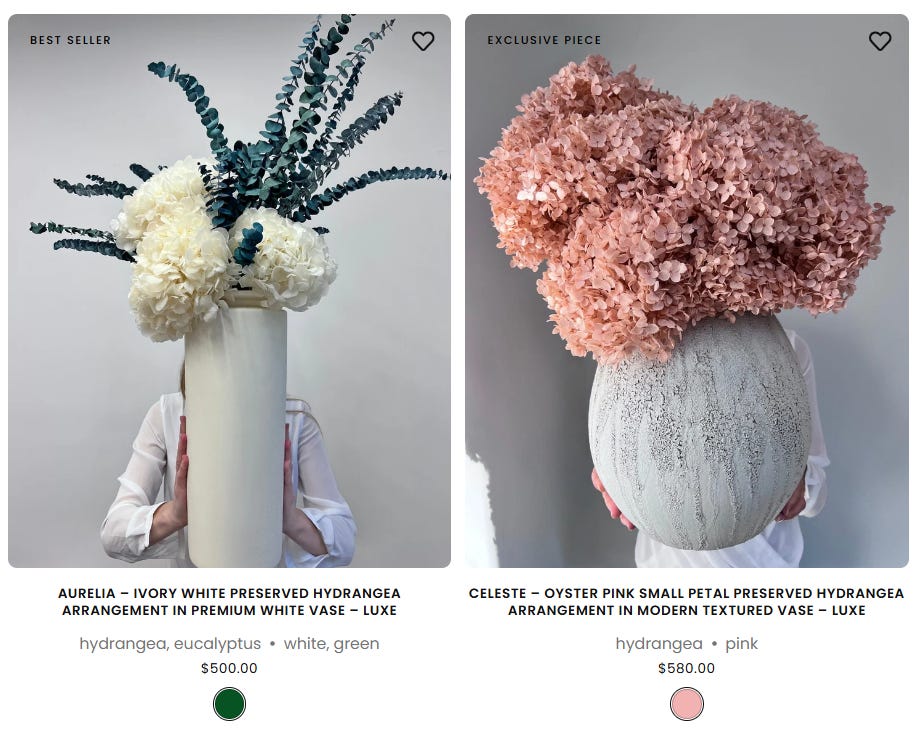
Then we have the NFL—American football—the NBA, Major League Baseball and hockey. Football in Europe is a massive market, too. So the idea for these product divisions is to sell preserved flowers directly to florists in those markets, who arrange them and sell to hotels, restaurants, offices, man caves, and as expensive gifts:
We’re still two weeks away from going live; finishing up the websites and finalizing inventory counts. But we’re wrestling with a payments problem. Fundamentally it’s this: who should we be selling to? For example, what should we do for a small or startup florist, who wants to start with a small order, and pay by credit card?
And going through the economics of our decision is instructive, and helps to understand why international business just isn’t done that way. First, we are a registered company here, in China. Direct Equipment Corporation of Kunming. We have a company with the exact same name in Hong Kong, and another in the United States. That makes money transfers and transfer pricing easier for us. But almost all the business we do is here, in Mainland China. Our offices are here, our suppliers and factories are here, we pay bills and rent and staff here. So the money has to get from business customers, outside China, to China.
We expect that most of our orders will be in the $2500 - $5000 range. These are companies who will buy about three months of inventory of preserved flowers, which they will turn into about $10,000 – 25,000 in revenues in their businesses over the next quarter. But what about smaller companies, wanting to place smaller orders, and pay by card?
B2B is business-to-business, and when those involve suppliers and buyers in different countries, it usually means going across different currencies, and banking and legal systems. That alone introduces a higher level of risk, compared to just using your credit card to buy supplies at your local hardware store, where they know you. For international orders, the invoice size is much bigger, and everything is more complicated. And for these, neither buyer nor seller wants to use credit cards. Wire transfers, T/T, bank-to-bank are overwhelmingly how the business is done.
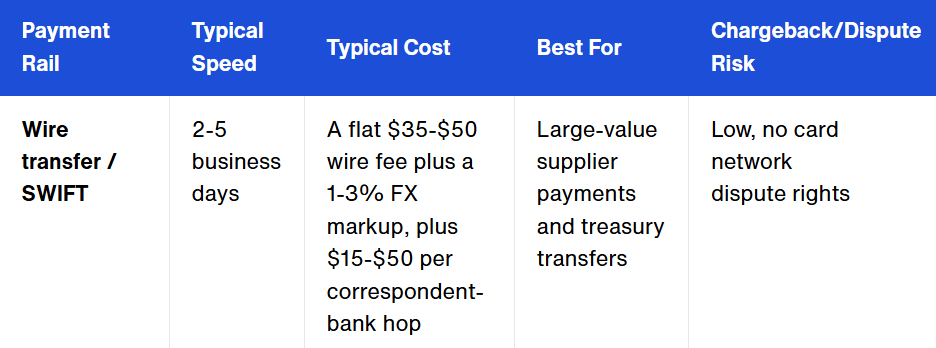
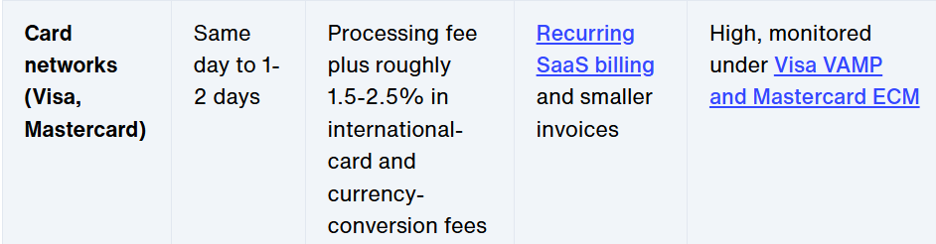
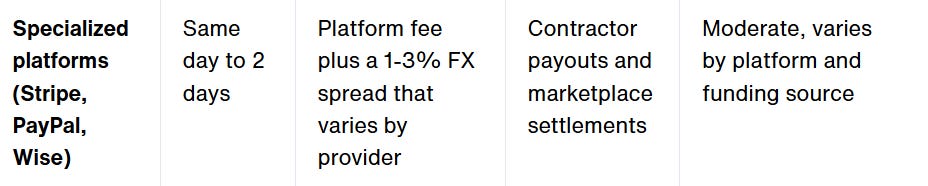
International bank-to-bank wires clear in 2-5 days. Visa, Mastercard, American Express and the other credit card networks clear same-day, which is the same as the new fintech companies like Stripe and Paypal.
Seems like there’s not much difference then. But it costs money to move money. Bank-to-bank, it’s a flat fee, then some charges on the foreign exchange, swapping out in our example, US dollars for Chinese renminbi. Credit cards are on a percentage—a $1,000 dollar charge to a credit card is a little bit less than wiring $1,000. But at about $1500 the economics change, in favor of the wire.

The last column, though, is where big problems happen for manufacturers, for suppliers like our company. For wire transfers, the chargeback risk is almost zero. But on credit card networks, it is very high.
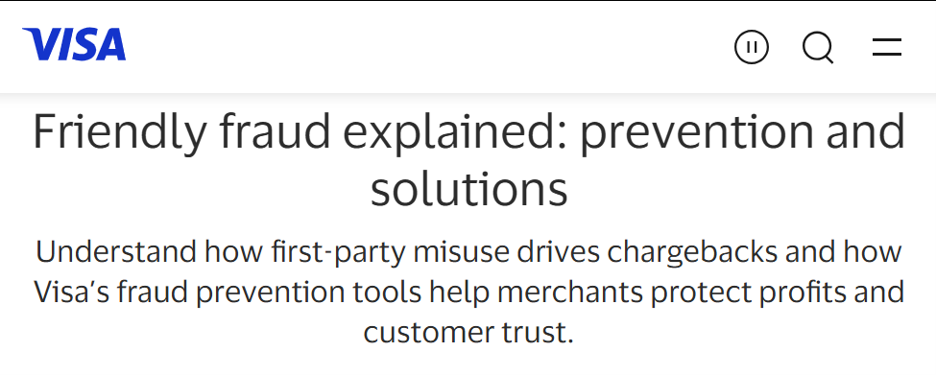
A growing problem for businesses everywhere is called “friendly fraud”, whereby a buyer will call their credit card company and dispute a legitimate charge, saying that it failed to meet specifications, somehow. Friendly Fraud is becoming the leading reason for chargebacks. If you’re confused about the name, like we were, Visa here explains that “third-party fraud” is identify theft, or using stolen cards to make purchases. Friendly fraud is looking for a reason to keep merchandise, for free, claiming a frivolous reason for doing so.
For online merchants, 30% of all the disputes come from these buyers now. All of them are expensive. The credit card company freezes the funds, and charges the merchant up to a hundred dollars to open an investigation. For merchants who have a lot of “friendly fraud” cases, credit card companies hit them with higher risk profiles, and may simply just shut them off.
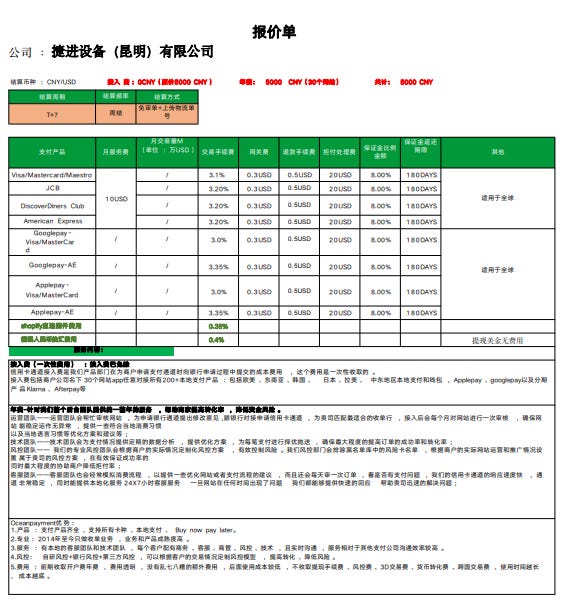
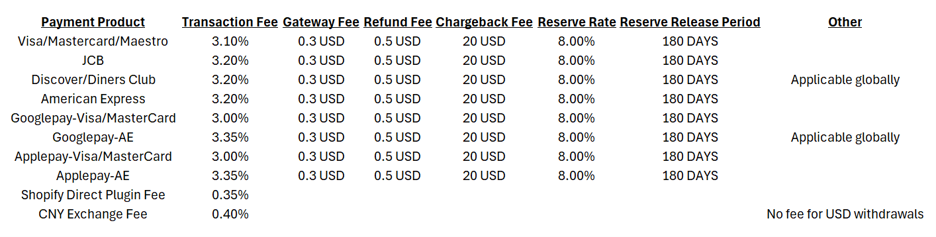
We asked for a quote, from a credit card processor here in China. They sent us this terms sheet, in Chinese. We told them to assume an average credit card order of under $1,000, with $10,000 in credit card volume, every day.
T+7 is the settlement time; the funds take seven days to arrive in our account, sometimes more. So for a customer who pays with a credit card, we have to source the order, and pack it, even though we haven’t received the funds yet.
Then we have the fee schedule for processing the cards. Visa and Mastercard processing runs 3.1%. Amex is 3.2%, Apple is 3.35%. All of cards charge more than 3%, which we build into the price for the lower-cost kits. We’re charged 30 cents just to run a card.
Then we get to the chargeback problem. If a buyer disputes the charge later, we are charged $20, plus we’re likely to have the entire transaction voided, after it was shipped. The “reserve rate” is another huge cost, and another massive advantage to the financial industry. Reserve rates are 8% for 180 days.
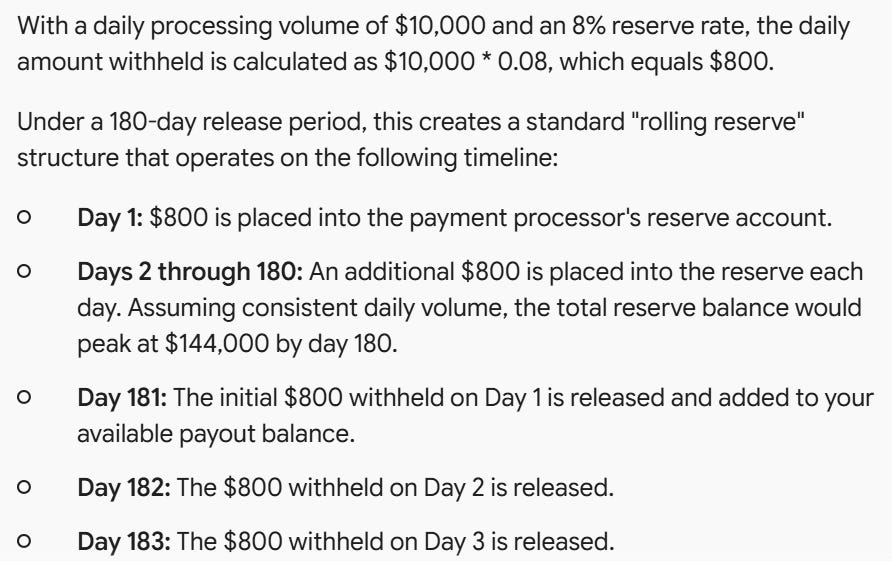
Suppose we do $10,000 on Day One in credit card business at an 8% reserve. The card processors will keep $800, on reserve, for 180 days. That’s just a big pool of money that we cannot use, but that the banks can use, to lend at interest, just in case customers file a dispute. Every day, $800 goes into that pot. Eventually it would reach over a hundred thousand dollars. And it stays there. Starting on day 181, assuming no disputes or chargebacks, they’ll send over the $800 they withheld six months prior. Then released daily, after.
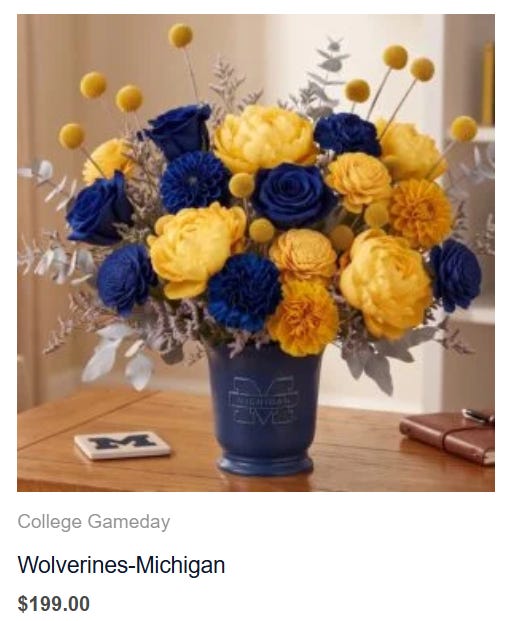
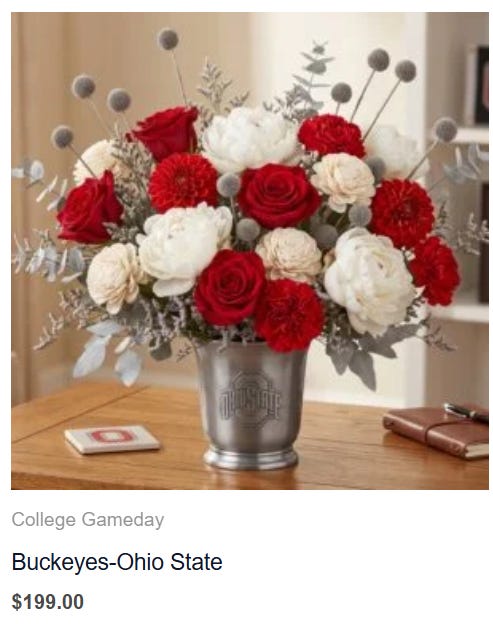
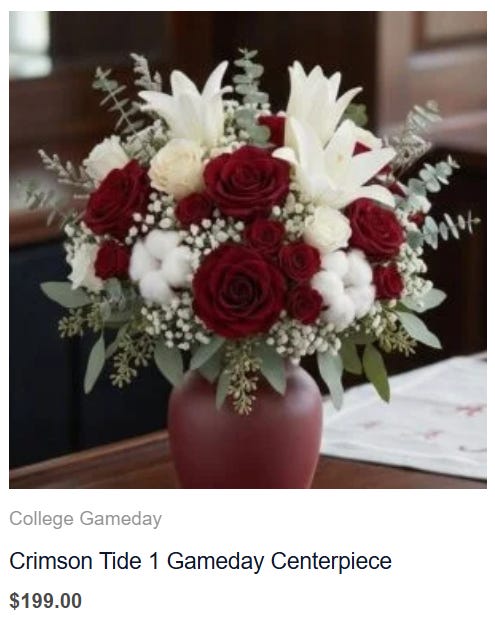
Here is how that might affect a company like ours, and how “friendly fraud” is such a risk to us, and a large, potential windfall for a dishonest buyer. This is again, one of our new product lines. These are preserved flowers for fans and graduates of American universities. University of Michigan and Ohio State have enormous fan bases, across the country, and they also happen to hate each other. University of Alabama is another with a massive following, in the Southeast. And right away we notice that the red for Ohio State is different from the red used at University of Alabama:
Those color codes are specific and exact. At UNC, it’s actually called “Carolina Blue”, with that Hex code. They also use a shade of Navy and plain white:
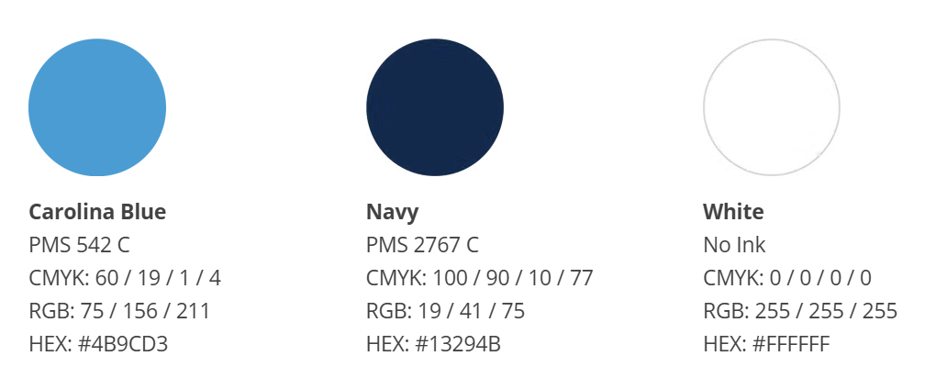
The farms and factories in Dounan can replicate those colors, almost exactly. But they will be coloring roses and other flowers that dry, slightly differently. But hopefully you can appreciate the risk to us, now, if a dishonest florist in North Carolina orders up a bunch of “Carolina Blue”, complains that the color is slightly off, and calls his card company to reverse the charge:
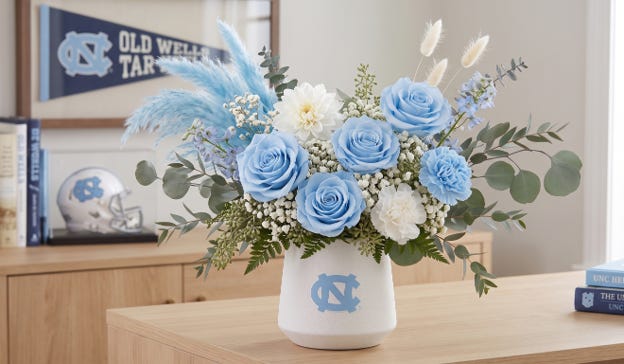
In this case, it’s not like he bought 1,00 branded t-shirts that were orange. He still received hundreds of light-blue roses, which can again be used to create arrangements with very high profit margins. By disputing the charge, it’s no risk to him, and may yield him over a thousand free flowers, which he can use to build custom designs at high prices. Light blue is used in Springtime arrangements everywhere. This is a luxury preserved flower company in the Northeast. They offer a large assortment that retails for $4,900:
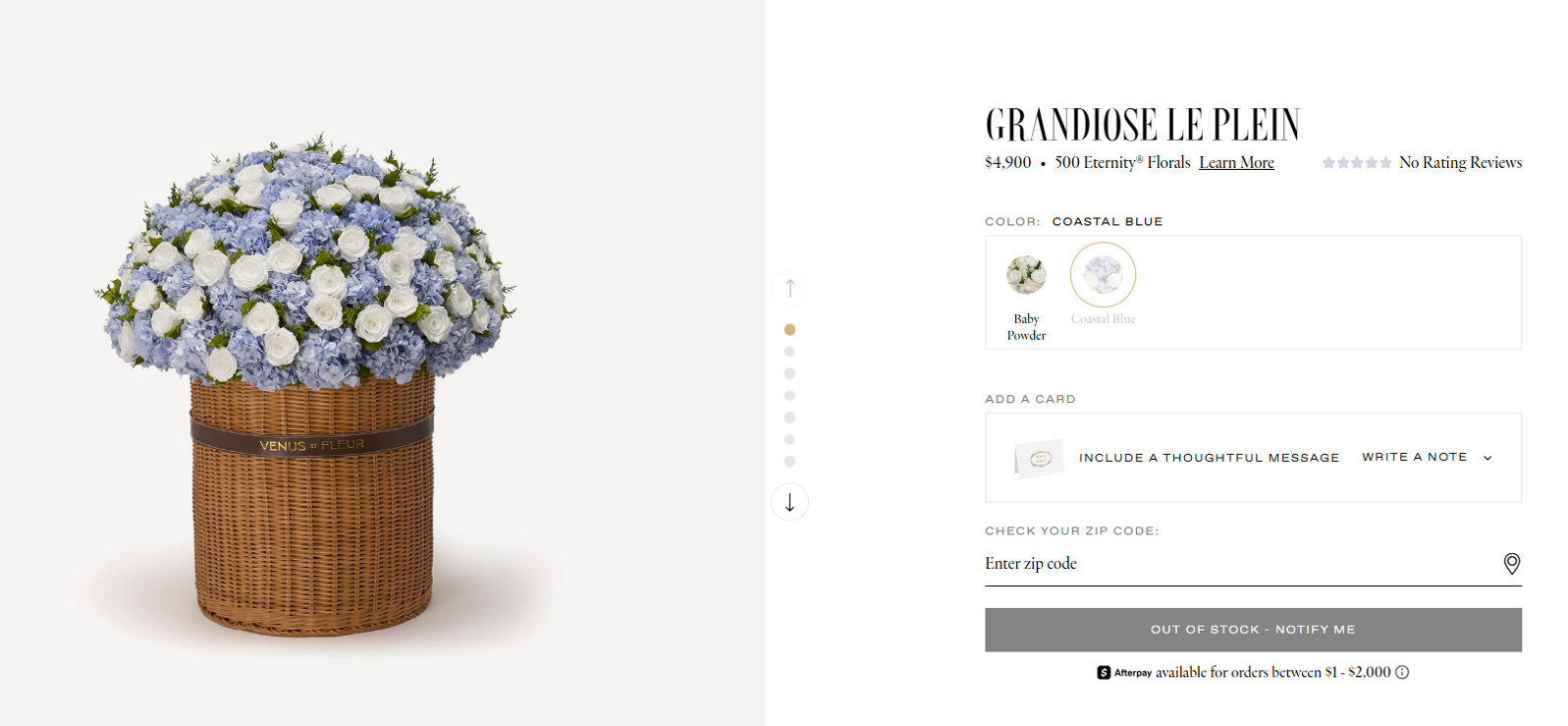
In the case of Alabama or Ohio State. Red is the color of Valentines Day, and almost any red will do for Valentines, or for anniversaries. A big order of red preserved roses plus two hours of labor, can create arrangements for thousands of dolalrs.
The risk is very high, for companies like ours, and for our banks, to do credit card business in the age of “friendly fraud”. And that risk is built into the pricing for everything that involves credit cards. Merchants have to charge higher prices, and credit card processors have to hold thousands of dollars in reserve. So nobody does it.
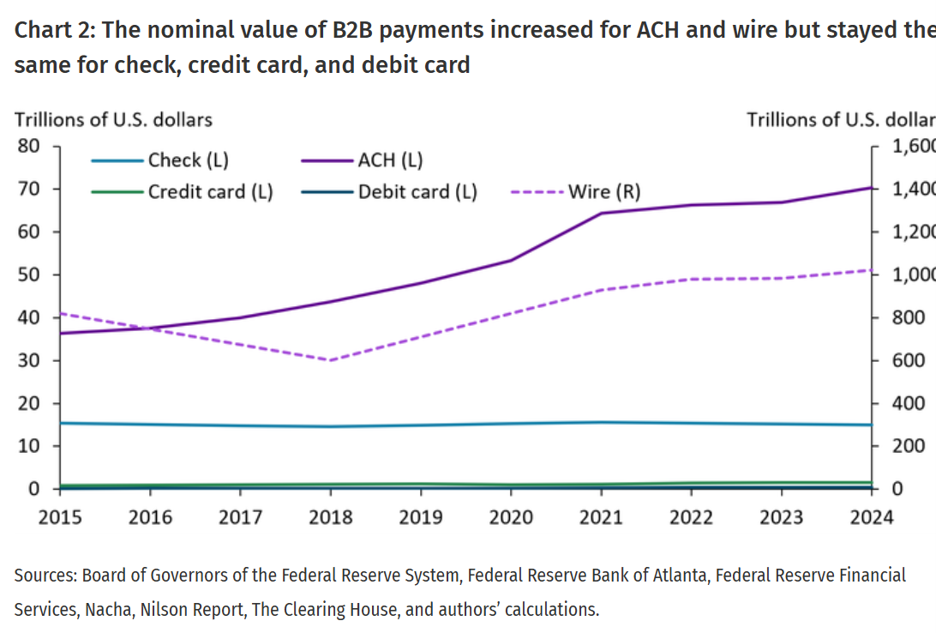
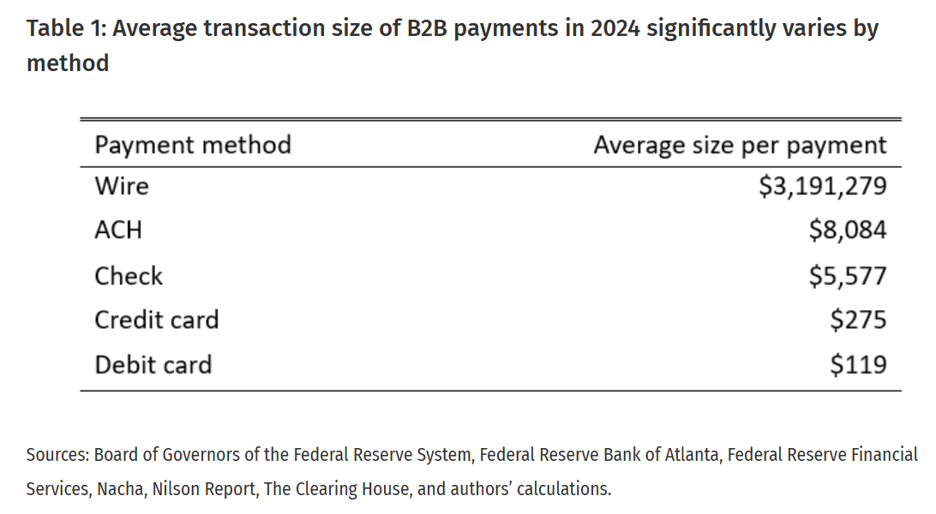
These data are from the Federal Reserve. B2B payments by credit card are barely above zero. Wire transfers and ACH combined are 2.4 trillion a year. Credit and debit cards are used for very small orders, where the average sale is around $200.
We’re aware that by refusing to accept credit cards, we’re saying no to about 40% or so, of prospective buyers, who want more options to pay. That’s especially true of younger business owners. Our advice to that generation, though, is that if you want to do serious business with real manufacturers outside your home town, and really want to cut out middleman companies and wholesalers, this mindset has to go.
Be good.
Resources and links:
What Are B2B Cross-Border Payments? A Complete Guide for Online Businesses
https://www.chargeflow.io/blog/b2b-cross-border-payments
17 statistics revealing why B2B buyers abandon carts without net-terms options
https://resolvepay.com/blog/17-statistics-revealing-why-b2b-buyers-abandon-carts-without-net-terms-options
UNC at Chapel Hill, University Branding and Identity
https://identity.unc.edu/brand/color/
Friendly fraud explained: prevention and solutions
https://corporate.visa.com/en/solutions/visa-protect/insights/friendly-fraud.html
B2B Payments: A Gradual Shift from Checks to Electronic Payment Methods
https://www.kansascityfed.org/research/payments-system-research-briefings/b2b-payments-a-gradual-shift-from-checks-to-electronic-payment-methods/
Surging sales for licensed home and housewares
https://www.homepagenews.com/featured-news/study-reveals-surging-sales-for-licensed-home-housewares/
Why Are College Sports So Big in the U.S. Compared to Other Countries?
https://businessofcollegesports.com/football/why-are-college-sports-so-big-in-the-u-s-compared-to-other-countries/
Hotel Flowers NYC: Why Luxury Hotels Are Switching from Weekly Deliveries to Preserved
https://www.nordblooms.com/blogs/news/hotel-flowers-nyc-preserved-guide
Luxury arrangements from VenusetFleur.com and Nordblooms.com
Inside China / Business is a reader-supported publication. To receive new posts and support my work, consider becoming a free or paid subscriber.
From Inside China / Business via This RSS Feed.