

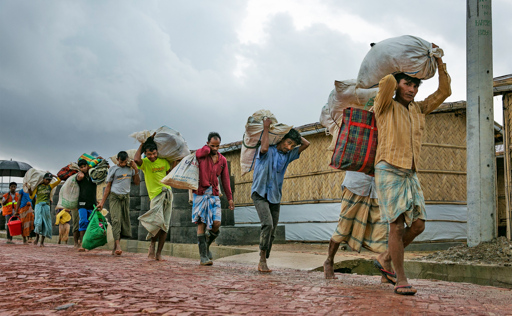
According to a report by the Bangladeshi government, released on Sept. 16, more than 150,000 Rohingya people fleeing persecution in Myanmar have entered the country’s 33 Rohingya camps in Teknaf and Ukhiya areas of Cox’s Bazar in the last few months. The camps, spread across roughly 24 square kilometers (9.2 square miles), officially host 1,170,978 dwellers — more than (more than 124,300 people per square mile) — making the densely packed settlements increasingly congested and vulnerable to collapse as new arrivals continue to enter the limited space, according to the report by the Office of the Refugee Relief and Repatriation Commissioner (RRRC). Several studies show that the camps, built on sandy hill slopes after large areas of reserved forest were cleared, are also highly vulnerable to natural disasters. Every year, heavy monsoon downpours trigger landslides in Rohingya camps. This year, between July 4 and 19, more than 200 landslides occurred in the Rohingya camps, killing at least 15 people, including five adolescent girls. Rohingya refugee camp in Ukhiya, Cox’s Bazar. Amid recurring landslides, growing numbers of Rohingya refugees in Bangladesh are being forced to adapt to increasingly limited camp space. Image by Md shameem ul islam via Wikimedia Commons (CC BY 4.0). Mohammed Mizanur Rahman, the refugee relief and repatriation commissioner, told Mongabay on Sept. 8, “The refugee community demands camp expansion with continued influx from Myanmar. But any expansion means destruction of new forests and hills, and Bangladesh cannot afford it anymore.” The Rohingya influx in 2017 initially caused…This article was originally published on Mongabay
From Conservation news via This RSS Feed.