

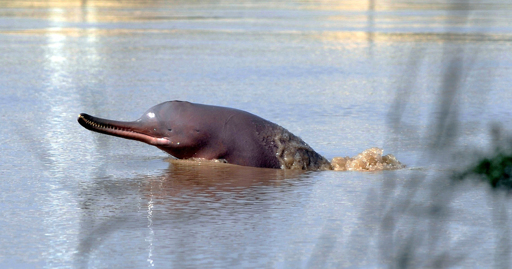
Between 11 million and 16 million years ago, during the high sea levels of the middle Miocene period, the ancestors of the Indus River dolphin entered the muddy waters of what is the Indus Basin today. Over millennia, they adapted to their new environment through extraordinary evolutionary shifts, developing sophisticated echolocation while gradually losing their eyesight. Today, these blind mammals, living mostly in Pakistan (with a small population in northwestern India), navigate the river’s shallow, dry-season waters by swimming on their sides. Yet, these evolutionary marvels offer little defense against the modern transformation of their habitat. That habitat is fragmented by vast networks of dams, human-made canals and irrigation barrages. Consequently, the Indus River dolphin (Platanista minor), locally known as the bhulan, has seen its historical range slashed by approximately 80%. The species, which boasted an estimated population of 10,000 in the late 19th century, plummeted to just 617 individuals by 2001 before rebounding to around 2,000 over the next decade. The Indus River dolphin is listed as endangered on the IUCN Red List. In response, Pakistan’s government has officially created the Punjnad Indus River Dolphin Sanctuary in June 2026, safeguarding nearly 200 kilometers (123 miles) of the river in Punjab. This new zone connects with an existing protected area in Sindh province, southeastern Pakistan, that creates a contiguous 400-km (249-mi) stretch of legally protected habitat, offering a critical lifeline to one of the world’s rarest freshwater dolphins. The timing of this legal protection is of the essence, as a…This article was originally published on Mongabay
From Conservation news via This RSS Feed.