

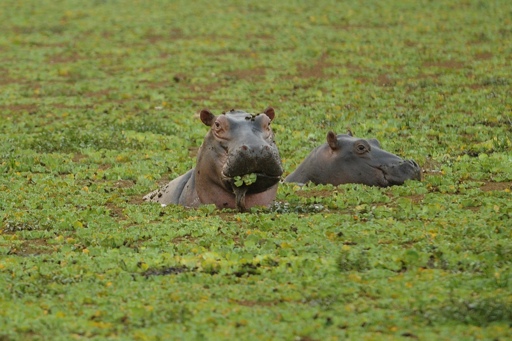
Zambia is investigating wildlife deaths and human exposure linked to an anthrax outbreak in the northern province of Muchinga, where several hippos have died since the outbreak was reported on Aug. 31. While other wildlife deaths have also been reported, hippos (Hippopotamus amphibius) are the species with the clearest laboratory evidence of anthrax, according to Raymond Hamoonga, Zambia’s national One Health coordinator. So far, 46 hippo deaths have been reported in the affected riverine area, but anthrax has only been confirmed in one animal, he told Mongabay by email. Hamoonga added that even though current mortality rates don’t indicate a threat to hippo populations, the reported deaths are still “significant enough to warrant intensified surveillance, rapid investigation of new carcasses and continued monitoring of affected populations.” “The immediate concern is the potential for further wildlife deaths, continued contamination around carcass sites and exposure of livestock and people at the wildlife–livestock–human interface,” Hamoonga said. He said samples from five buffalo carcasses didn’t test positive for anthrax. Samples from 10 elephants reported since June are being investigated; none have been laboratory-confirmed as containing anthrax. “Buffalo and elephant deaths should not presently be attributed to anthrax without supporting laboratory evidence,” Hamoonga said. Anthrax is a zoonotic infectious disease caused by the Bacillus anthracis bacteria, which mainly affects wildlife and livestock. However, humans can become infected when they eat or come into contact with infected animals or contaminated animal products. On Sept. 10, Zambia’s National Disaster Risk Management Division (DRMD), published an advisory urging…This article was originally published on Mongabay
From Conservation news via This RSS Feed.