

Earlier this month, the UK government announced plans to cut off trade with Israel’s illegal settlements in the West Bank—including weapons shipments.
But according to new disclosures made to Parliament, reported Thursday by Declassified UK, the sanctions regime has not actually led to any weapons licenses being suspended or revoked, validating warnings by some critics that the new Labour government’s effort to cut ties with Israel’s occupation was only skin-deep.
Back in 2024, as Israel’s genocidal assault on Gaza was raging, then-Prime Minister Keir Starmer had suspended 30 out of approximately 350 arms export licenses to the country.
According to the UK-based Campaign Against Arms Trade (CAAT), the UK has still approved at least £178 million ($235 million) worth of fixed-value military export licenses to Israel since October 2023—a figure that excludes exports authorized under open licenses, including much of Britain’s contribution to the F-35 program.
UK Foreign Secretary Ed Miliband described the new restriction on arms export licenses as a “double lock against arms sales” to Israel under which the government would continue its existing suspensions and refuse applications for arms that "materially contribute to the occupation” of Palestine.
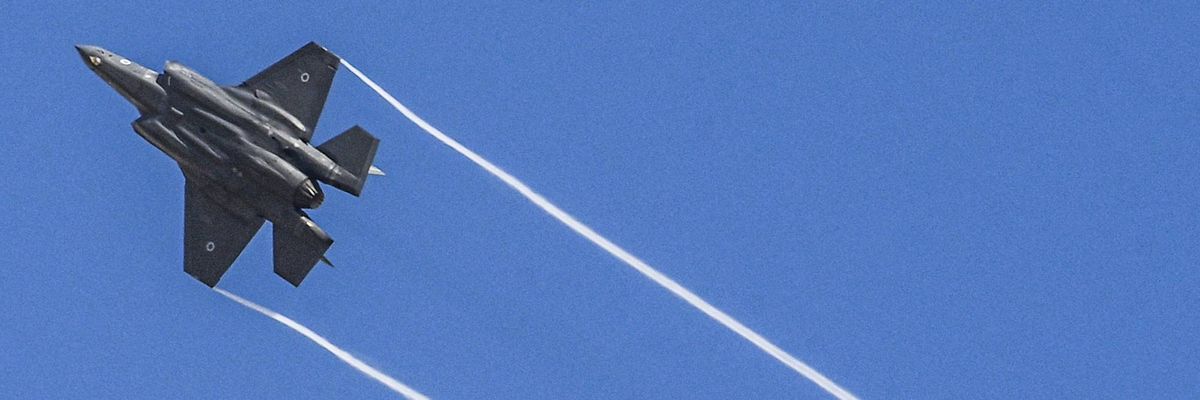
However, CAAT warned the following day that the policy, while welcome, “does not go far enough,” and included several loopholes—including one that allowed the UK to continue supplying F-35 fighter jet parts to an international pool used by the Israeli military and another allowing Israel to potentially use military equipment exported there for use by third countries.
Several prominent leftists in Parliament, including Your Party co-founders Jeremy Corbyn and Zarah Sultana, as well as Green Party leader Zack Polanski, said that the trade bans should ultimately be just a first step on the way to a full arms embargo.
On September 16, the UK’s trade department acknowledged, following a question from MP Iqbal Mohamed, that “no additional licenses have been revoked or suspended since September 8,” according to Declassified.
The department explained that this was “largely because licenses for items that might materially contribute to the occupation have already been suspended because of Israel’s conduct in the Gaza conflict.”
Declassified called this into doubt, however:
The government insists that many of the extant licenses for Israel cover items that are for re-export to a third country or military-grade goods for civilian use such as body armor.
Yet fighter jet components are still being exported to global spares pools used by Israel, and UK-made trainer aircraft parts, which help to sustain the F-35 program, continue to flow directly to Tel Aviv.
When asked about trainer aircraft, the trade department told Parliament that such components “are not used in Gaza and… do not materially contribute to Israel’s illegal occupation.”
This is despite the Foreign Office previously acknowledging that Israel’s M-346 trainer aircraft are “used to train [Israeli Air Force] fast-jet pilots” and “facilitate the development of an offensive capacity.”
Dearbhla Minogue, a lawyer from Global Legal Action Network, which took the UK to court over arms exports to Israel in 2024, told the outlet that these revelations appear to indicate that there will be “no concrete consequences for Israel after this government recognized the likelihood of war crimes, ethnic cleansing, and what it terms Israeli terrorism.”
“Successive governments have done everything in their power to continue aiding and abetting genocide and war crimes with deadly and devastating consequences,” said Sam Perlo-Freeman, CAAT’s research coordinator. “The new so-called ‘double-lock’ on arms exports to Israel exemplifies this.”
He added that it is “nothing more than a soundbite designed to appease voters, whilst failing to deliver meaningful policy change, and continuing to allow arms dealers to profit from Israel’s genocide in Gaza.”
This news comes days after Prime Minister Andy Burnham also affirmed that the UK would provide military support—specifically “defensive” air-to-air refueling—to Saudi Arabia as it launches new strikes on Yemen’s Houthis.
A new CAAT report says the UK approved £464.8 million in military exports to Saudi Arabia in just the first quarter of 2026, with most of the value consisting of air-to-surface weapons.
The Saudi-led war against Yemen that lasted from 2015-22 killed an estimated 377,000 people from direct and indirect causes. During that time, CAAT found that the UK approved £7.1 billion ($9.4 billion) worth of military goods to Saudi Arabia.
From Common Dreams via This RSS Feed.