

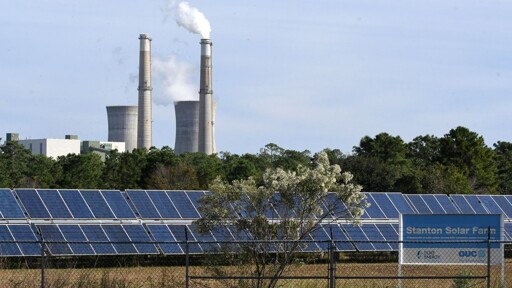
Senators are looking toward the Capitol doors as they prepare to head home and campaign for the midterms. Meanwhile, a group of them has been scrambling to reach a deal that some analysts believe is critical to meet the country’s energy needs.
A bipartisan group of Senators says it has come closer than ever before to reaching a long-desired permitting reform bill, which would make it easier to build new energy projects. Many consider the issue urgent as electricity demand surges across the country, partly because of the tech industry’s massive buildout of data centers.
“America’s energy demand is surging due to advanced technology and manufacturing, but our outdated federal permitting process remains a massive barrier to building the infrastructure we need to stay competitive,” said Marsha Blackburn, a Republican senator from Tennessee, in an August press release.
But the bill’s reception among the public is uncertain due in part to a PR problem: Data centers are a “toxic” subject for voters, according to Alex Lundry, president of DC-based public opinion research firm Redbud Consulting. In recent polls, Democrats, Republicans, and independents strongly oppose data centers being built in their communities.
“If you phrase permitting reform as serving data centers, the polling results get way worse,” Lundry said. This is putting legislators, many of whom are up for reelection in November, in a bind: They want to make it easier to build more electrical infrastructure, which facilitates the data center boom, but don’t want voters to think it’s about data centers.
The potential bill represents one of the few points of agreement for Republicans and Democrats in Washington, which is that energy permitting is broken.
Complicated studies on project impacts, lengthy reviews by different federal agencies, and legal battles from environmental groups and project opponents constantly delay all kinds of energy projects, industry leaders say.
Lawmakers have tried for years to reform the permitting process, most recently with the failed Energy Permitting Reform Act of 2024, which made it out of committee but never got a full Senate vote. Now, lawmakers from both parties say growing power demand has given the new attempt more momentum than any previous efforts. The highest-ranking members of both parties in the Senate’s two energy-related committees are negotiating the bill’s language.
President Donald Trump has signaled he would stop blocking renewable energy projects in order to entice Democrats toward a deal on the bill. Democrats have worried that even if they make it easier to build renewables in law, the White House could continue making it impossible in practice, with some Democrats indicating that these worries have stalled the bill’s progress.
“I appreciate very much what the Trump administration has done to move in this direction, but in order to brief colleagues on what this really means, we need just a bit more clarity on exactly what return to regular order for wind and solar projects looks like,” Senator Sheldon Whitehouse, the top Democrat on the Senate Environment and Public Works Committee, told reporters this week. “So that’s still to be done, but that I think can happen in fairly short order,”
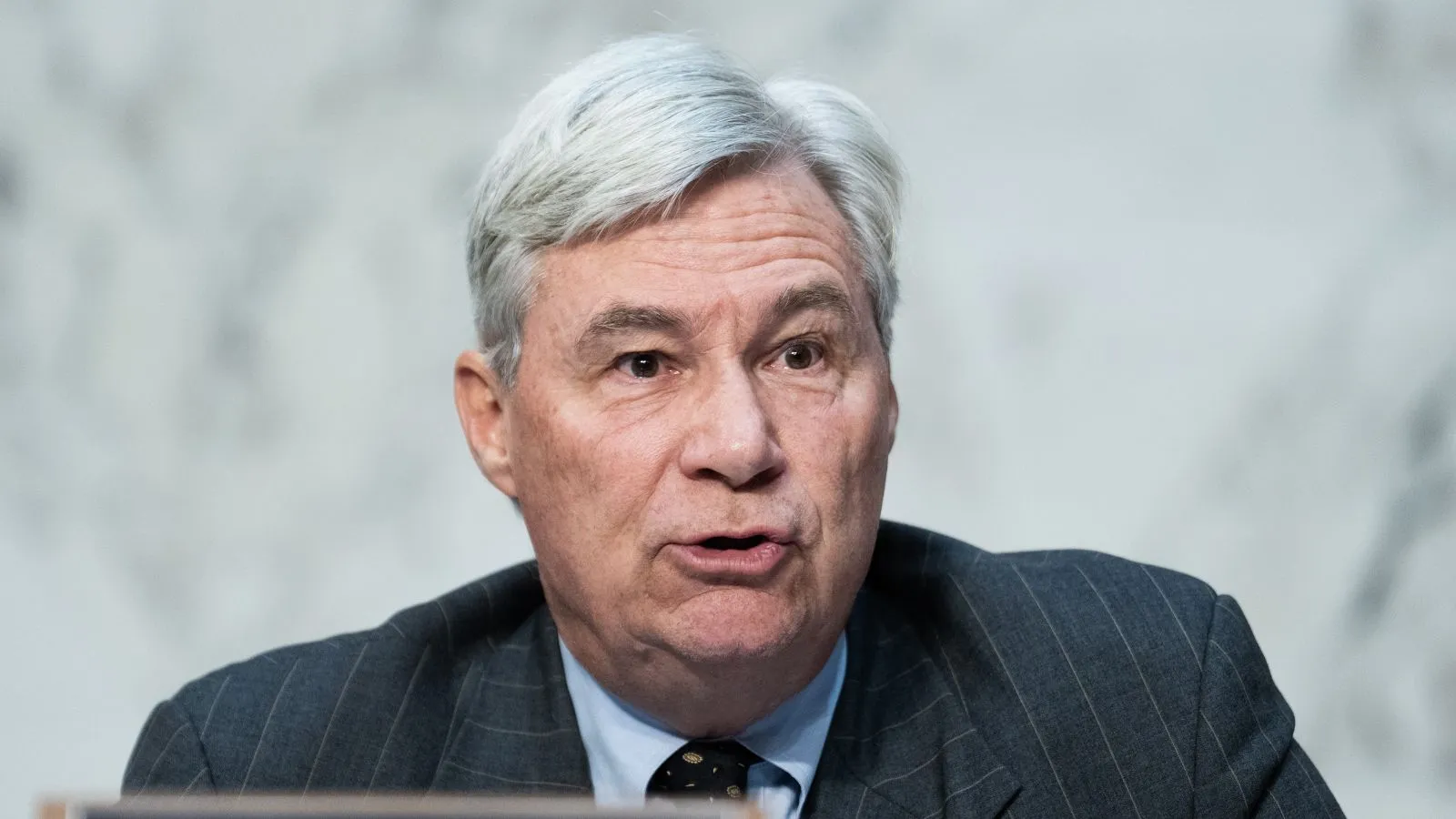
Senator Sheldon Whitehouse, a Democrat from Rhode Island, is one of four primary negotiators on a long-sought permitting reform bill in the Senate. Tom Williams / Getty
Politico reported that the senators intend to finish hammering out the bill after the midterm elections, when it could compete with other legislation for attention, especially if Republicans lose control of Congress.
The draft bill’s contents are not public, but stakeholders expect it would make building energy projects easier by reducing the potential environmental and social effects of a project that government agencies must consider when considering whether to permit it; loosening Clean Water Act and Endangered Species Act requirements that slow down transmission line and pipeline permits; and making successfully obtained permits less vulnerable to lawsuits after they’re issued.
Such a bill would ease the path to construction for renewable and fossil projects alike — especially solar and natural gas, the power sources with the most momentum. Solar power and batteries account for almost 80 percent of the new power generation expected to be built in the United States in 2026, while natural gas was the largest single source of electricity used in 2025, with projections for continued growth. Natural gas in particular has become a go-to power source for data centers, which are projected to use a lot of it in the next decade.
Unsurprisingly, both the solar and the gas industries support permitting reform. Tim Pawlenty, president of the Solar Energy Industry Association, has said the country would be “constipated” without it.
A colossal surge in electricity demand has long been expected in the United States, even before Big Tech started its data center buildout. Americans are “electrifying” their lives with heat pumps, electrical appliances, and electric vehicles, all important for reducing emissions. The country has also squeezed most of the benefits out of energy-saving lightbulbs and other fixtures, which had kept electricity use flat by reducing power needs as they spread during the 2010s. Added to all that, the United States aims to draw more manufacturing to its shores, which requires electricity if it’s successful. But data centers are accelerating and intensifying the power demand spike, and straining grids and supply chains. Data center developers like Google have helped lobby for permitting reform.
Environmental groups like the Natural Resources Defense Council want to speed up renewable energy development without weakening bedrock environmental laws; NRDC executives have called for land-use plans that make it easier to site renewable energy projects while protecting local ecosystems. But Democratic legislators are considering compromising on environmental protections to support renewable energy and keep grids reliable. Meanwhile, Republicans, many of whom deny the severity of climate change, want to power new economic growth.
There is another reason legislators in both parties are keen to build, build, build: Many are anxious that hobbling data centers, and the AI systems they enable, will allow China to become economically and militarily stronger than the United States. Trump administration officials, legislators from both parties, and energy industry leaders speaking at the Clean Energy Week conference in Washington, DC, in mid-September called on America to be “competitive” and “dominant” through energy buildout.
“While Communist China cuts corners to get ahead, a mountain of red tape has America fighting the energy war with one hand tied behind our backs,” said Senator Rick Scott, a Republican, in a statement last month.
But Lundry, the pollster, warned that these sentiments are losing popularity among voters. “Being competitive with China used to be an effective message, but it isn’t anymore,” Lundry said.
Instead, Lundry recommended framing permitting reform as a boost for clean power. Lundry’s firm, Redbud, found in a September poll that 71 percent of respondents agreed that “making renewable energy a bigger part of the country’s energy supply is the right move.” Bringing down energy costs is also likely a big win with voters, the survey showed, with 70 percent of respondents saying their energy bills have gone up in the last year.
Action in the other house of Congress makes it clear that lawmakers are well aware of the public’s antipathy toward data centers and fear about rising energy costs. A few days before Senators said they were nearly finished with their permitting draft, the House of Representatives passed a bill calling on states (but not requiring them) to force data centers to pay for their own electricity generation. The bill is meant to help shield regular people from rising bills as data centers gobble up power. That bill is now stalled in the Senate, where some Democrats say it’s too soft-handed.
This story was originally published by Grist with the headline Gas, solar, and tech companies all want this bill. Will Congress pass it? on Sep 24, 2026.
From Grist via This RSS Feed.