

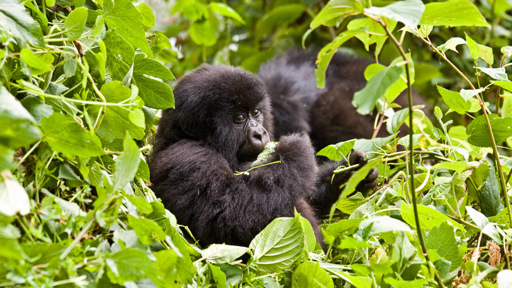
BWINDI, Uganda (AP) — In the tangled greenery of a Ugandan national park, mountain gorillas sit among the leaves, calmly carrying on as tourists trek into their forest home. Many gorilla families are used to people, but while their population grows, the forest available to them does not. Communities have planted trees for medicine, firewood and crafts along the edge of Bwindi Impenetrable National Park in a bid to reduce pressure on gorilla habitats. The idea is simple: If residents can find the trees they need outside the park, they will have less reason to cut them inside the forest. Bwindi’s forest is home to about 450 mountain gorillas, close to half the world’s remaining population. A 2018 survey put the global population above 1,000, a significant recovery for a subspecies that once faced possible extinction. “Being a neighbor to the park, I understand that the number of gorillas is increasing, but the forest habitat is not increasing,” said Christina Katushabe, founder of Change a Life Bwindi. Her organization supplies useful trees, restores degraded land while improving biodiversity. Katushabe said members of the Batwa, an Indigenous community that has helped guide the project, select species used for medicine, timber and firewood. The Uganda Wildlife Authority distributes seedlings, including medicinal trees that people might otherwise seek inside the park. Joseph Muhindo, an assistant tourism and hospitality officer with the authority, said residents can harvest what they need in their communities “without tampering with the habitat for the gorillas.” The International Union…This article was originally published on Mongabay
From Conservation news via This RSS Feed.