

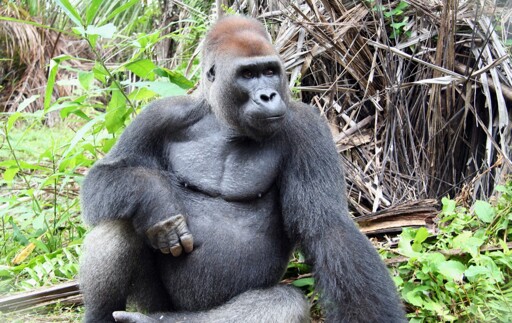
Gorillas are among humans’ closest relatives, with a common ancestor dating back around 8 to 10 million years. Both species of gorilla alive today are on the edge of extinction: The eastern gorilla (Gorilla beringei) is listed as endangered on the IUCN Red List, while the western gorilla (Gorilla gorilla) is critically endangered. In its latest assessment of the eastern gorilla, the IUCN found a mixed picture of gorilla conservation. Some of the gorilla populations remained stable, while others faced declines — of roughly 60% for the subspecies Grauer’s gorilla (Gorilla beringei graueri) — in the last 20 years. “Conservation has made the difference between survival and extinction in some regions,” Jessi Junker, a researcher at Germany’s Senckenberg Museum of Natural History Görlitz, said in a press release. World Gorilla Day has been celebrated every Sept. 24 since 2017. For 2026, we bring you the highs and lows of gorilla conservation as published in Mongabay this year. Ebola outbreak puts gorilla conservationists on high alert The Democratic Republic of Congo declared a new Ebola outbreak in May 2026. As of Sept. 22, 7,773 confirmed human cases had been registered and 3,759 deaths. While there haven’t been any suspected or confirmed cases of Ebola in eastern gorillas, which are mostly endemic to the DRC, conservationists are on high alert, Mongabay’s Kayleigh Long reported in June. A previous Ebola outbreak from 2002-2003, caused widespread infection among western lowland gorillas (Gorilla gorilla gorilla) in the Republic of Congo, killing around 5,000 of the…This article was originally published on Mongabay
From Conservation news via This RSS Feed.