

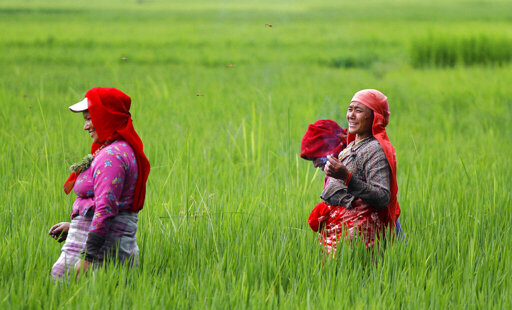
POKHARA, Nepal — Before Binita Bishwokaarma understood Nepal’s property laws, she understood the work required to sustain a farm. Growing up in the village of Sindhupalchok, east of the capital, Kathmandu, she spent much of her time helping her mother around the house and in the fields while her father worked in the city. It’s a common scenario in Nepal, where gendered divisions of agricultural labor are widespread. For Bishwokaarma, that meant she and her mother grew maize, potatoes, garlic and other vegetables. She participated in the entire agricultural cycle, from preparing fields and planting crops to harvesting them. She enjoyed plowing the most, but it was physically demanding because the family lacked modern machinery. “We didn’t have tractors,” she said. “So, everything, start to ending, we had to do with our own hands. It was really hard.” It’s what many women and girls experience. And yet, their prospects for owning the land they tend are slim: Despite gender equality under the law, in Nepal, property rights rest mostly with men. Still, it’s women — accounting for nearly 70% of the country’s farming population — whom Bishwokaarma credits most with caring for the land. Throughout her childhood, she saw how dedicated women were to conserving their environment. She explained that many women learn from childhood how to keep the soil healthy and reduce pests naturally through mixed cropping, crop rotation and intercropping. Farmers harvest paddy at Bhaktapur, Nepal. Agriculture is the main source of food, income and employment for the…This article was originally published on Mongabay
From Conservation news via This RSS Feed.