

“Premature, ill-advised and respectfully should be reconsidered.”
That’s how Pictou Landing First Nation Chief Tamara Young described Canada’s decision not to require a federal environmental review of two proposed 300-megawatt gas-fired power plants near her community. The comments came in a letter Young sent to the Impact Assessment Agency of Canada in July, two months after the agency declined to study the impacts of the Marshdale and Salt Springs natural gas power plants in Pictou County, N.S., an hour-and-a-half drive northeast of Halifax.
The letter, shared with The Narwhal by the Mi’kmaw rights organization Kwilmu’kw Maw-klusuaqn, detailed “widespread Mi’kmaq and public opposition” to the proposed projects due to concerns about climate change, water use, public health, wildlife and other “cumulative effects associated with two large fossil-fuel facilities located approximately 20 kilometres apart.” These concerns, Young wrote, “require careful assessment in relation to Mi’kmaw Rights and the lands, waters and resources upon which those rights depend.”
But according to Janiece Walsh, a spokesperson for the Impact Assessment Agency of Canada, these concerns don’t meet their threshold for a review. According to a statement she emailed The Narwhal, they fall outside “the potential adverse effects within federal jurisdiction.”
The impacts on Indigenous Rights that Young called “significant constitutional, procedural and substantive concerns” are just one of the many issues raised in public comments about the two proposed plants. Dozens of comments submitted between Jan. 5 and Feb. 9, 2026, raised questions about public health, climate change, energy access and which level of government would monitor threats to endangered species like Atlantic salmon, mainland moose and black ash.
Then there are the concerns about speed. Unlike most big industrial projects, Marshdale and Salt Springs weren’t proposed by a company. Instead, they were floated by Nova Scotia’s Independent Energy Systems Operator, an agency created by the province in 2024 to manage the province’s electrical grid. According to Chris Milligan, vice president of planning and procurement for the operator, plants like these are necessary stopgaps for Nova Scotia to meet its goal of ending coal-fired electricity use by 2030.
“Fast-acting natural gas-fired generators are the resource that can provide the firm capacity the province needs to meet demand when wind and batteries can’t,” he told The Narwhal.
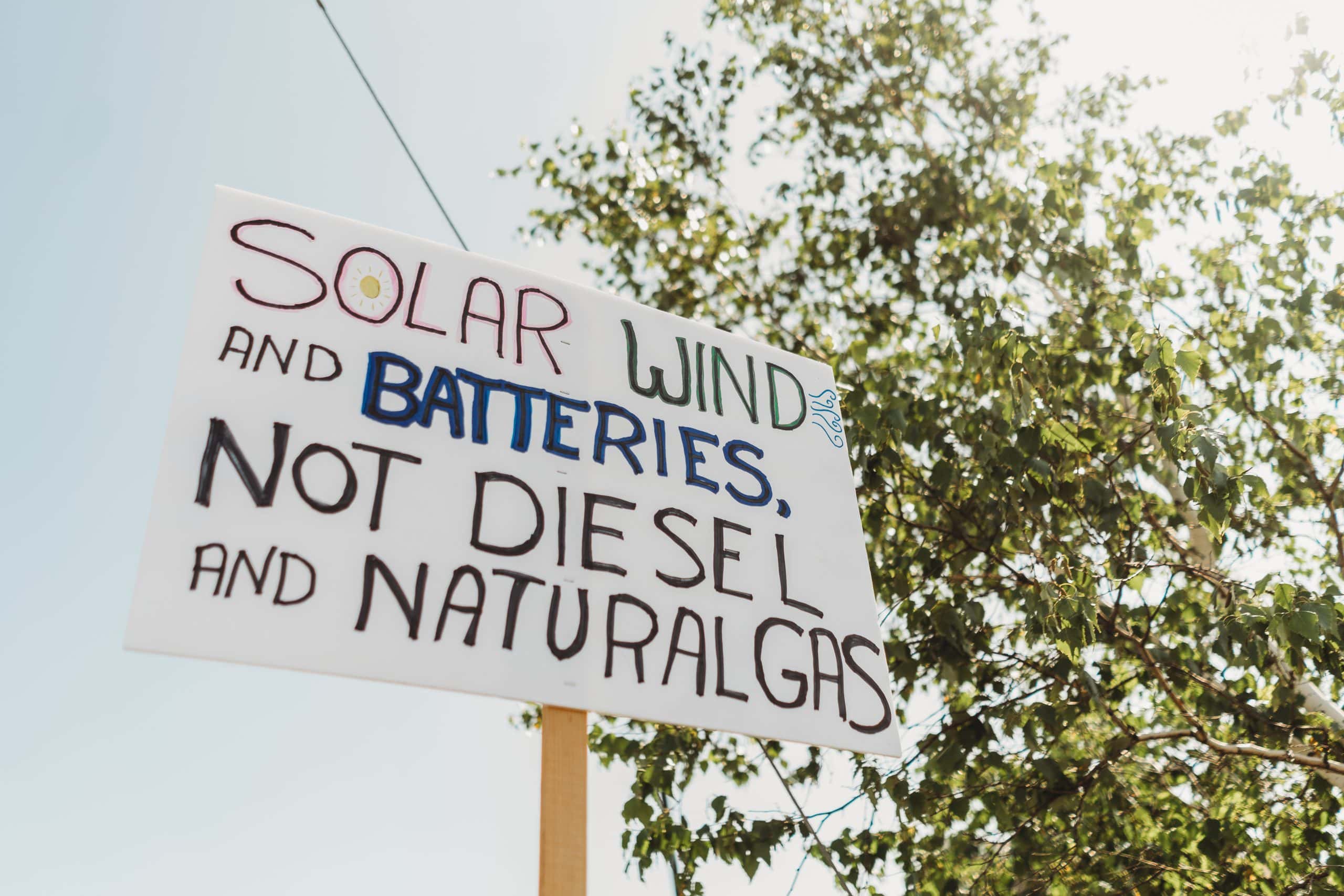
But comments to the federal review questioned this conclusion, including one from the Sipekne’katik First Nation, a Mi’kmaw community located south of the proposed plants.
“Although the project may help reduce coal use specifically, it represents an additional investment in alternative fossil-fuel-based infrastructure,” it explained, calling that inconsistent with long-term climate commitments made by both the provincial and federal governments.
This all worries Anna Johnston, a staff lawyer at West Coast Environmental Law and member of the federal Minister of Environment and Climate Change’s advisory council on impact assessment. Johnston told The Narwhal she sees the Nova Scotia power plants issue not just as one isolated decision, but part of a broader “build baby build mentality” spreading across the country that is fast-tracking project approvals without adequately considering environmental and social impacts.
“You’re effectively giving the green light to the project before you’ve done any of the studies on what the effects are going to be,” she said. “Before you’ve had any opportunities for meaningful consultation or engagement or participation. It’s a rubber stamp.”
Nova Scotia claims power plants “not likely” to affect Mi’kmaq rights, despite dozens of impacts flagged by federal agencies, communities
In December 2025, the Nova Scotia government posted a project summary claiming the power plants would have a limited impact on “traditional Mi’kmaq land use.”
“Overall, impacts on Mi’kmaq hunting, fishing, plant gathering or other traditional activities are anticipated to be low and confined to the project footprint,” it said.
Around the same time, Young’s letter to the agency stated, the provincial government sent letters to Kwilmu’kw Maw-klusuaqn advising “the nature of this project is not likely to lead to appreciable adverse impacts to credibly asserted or established Mi’kmaq Aboriginal or Treaty Rights.” As such, the province asserted, the duty to consult was not triggered.
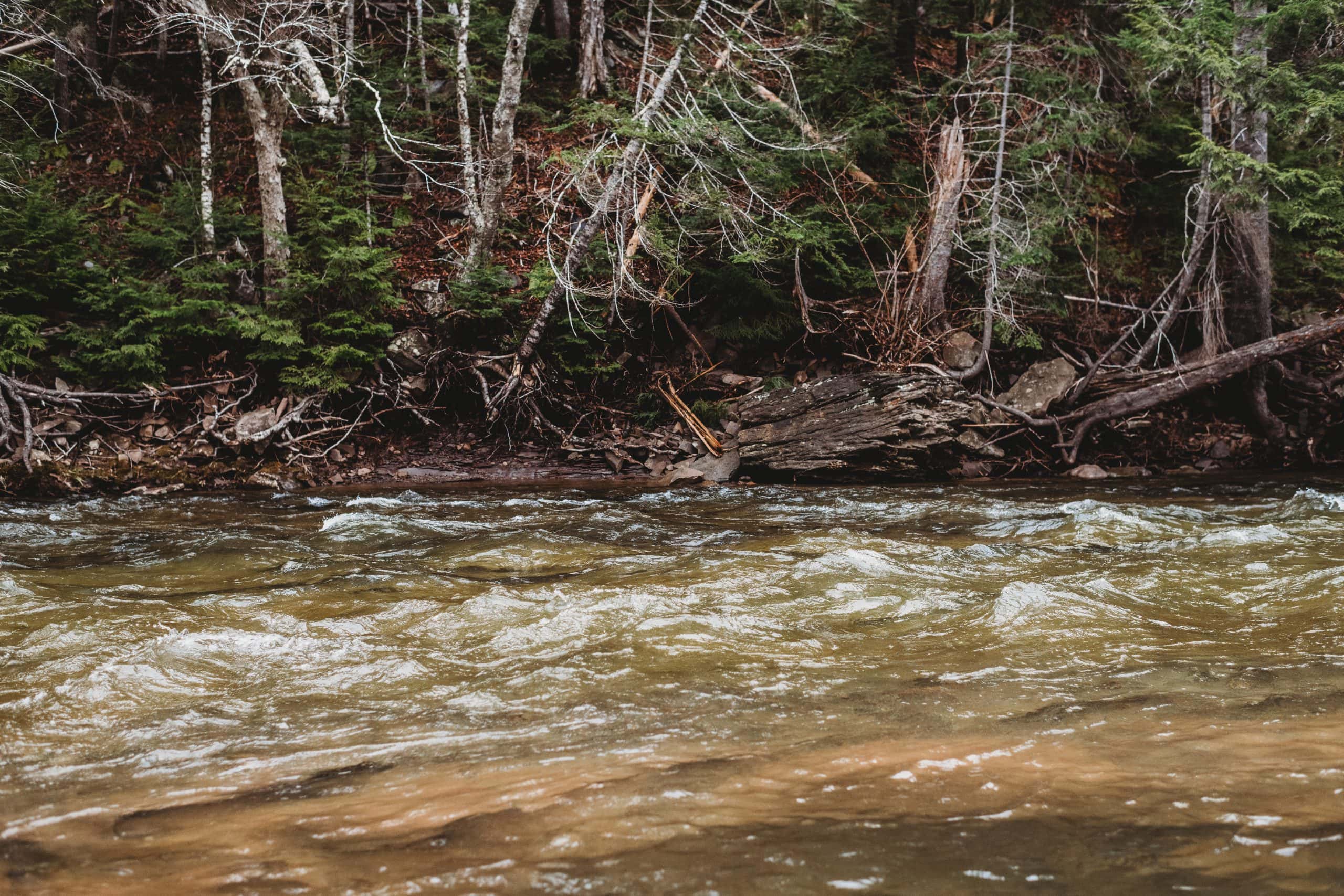
Eight Mile Brook, a tributary of West River Pictou located around 300 metres from the proposed Salt Springs power plant, is critical spawning habitat for threatened Atlantic salmon. Mi’kmaq organizations as well as federal agencies have identified possible impacts to the river from the proposed projects, including chemical pollution.
The same line alarmed Twila Gaudet, director of consultation for Kwilmu’kw Maw-klusuaqn, an association that advocates for Treaty Rights on behalf of the Assembly of Nova Scotia Mi’kmaw Chiefs. She quoted it in a letter she sent to a provincial environmental assessment officer in February 2026, in which she argued that assertion runs counter to what’s written in the actual project descriptions for the two plants. The section on Mi’kmaw community impacts states that “the Crown has a duty to consult with the Mi’kmaq of Nova Scotia” before moving forwards.
“The government has neglected their duty to consult,” Gaudet told The Narwhal.
Comments submitted to the federal review that were acquired by The Narwhal through an access to information request also raise questions about the assertion that these projects would have a marginal impact on Mi’kmaq communities.
According to these documents, Mi’kmaw organizations and federal agencies, including Indigenous Services Canada, Environment and Climate Change Canada, the Department of Fisheries and Oceans and Health Canada, submitted dozens of statements about the impacts these projects would have on Indigenous communities.
They included concerns about how water use and chemical pollution from the plants would impact threatened Atlantic salmon populations in local rivers, an important food source and cultural species for the Mi’kmaq. Kwilmu’kw Maw-klusuaqn shared similar worries about impacts on mainland moose.
Atlantic salmon in the West River could soon be listed as a federally protected population, after being declared endangered in 2025.
Some statements raised red flags about how air and water pollution could impact the health of downstream and nearby communities, a particularly important subject for Pictou Landing First Nation, which has already dealt with decades of industrial pollution in nearby Boat Harbour.Once a pristine tidal estuary known as A’se’k, or “the other living space,” Boat Harbour’s waters were used by Pictou Landing for generations. Then, in the late 1960s, a pulp mill was granted permission to discharge wastewater from a treatment facility into the area. It quickly became a toxic soup, and the community started dealing with a range of health impacts. The mills only stopped dumping waste into the estuary in 2020.
This “dark history of large-scale industrial developments” is why “it is imperative that the local Mi’kmaq communities are adequately informed well in advance of large-scale projects such as the power plants,” Gaudet explained in her February 2026 letter to the province.
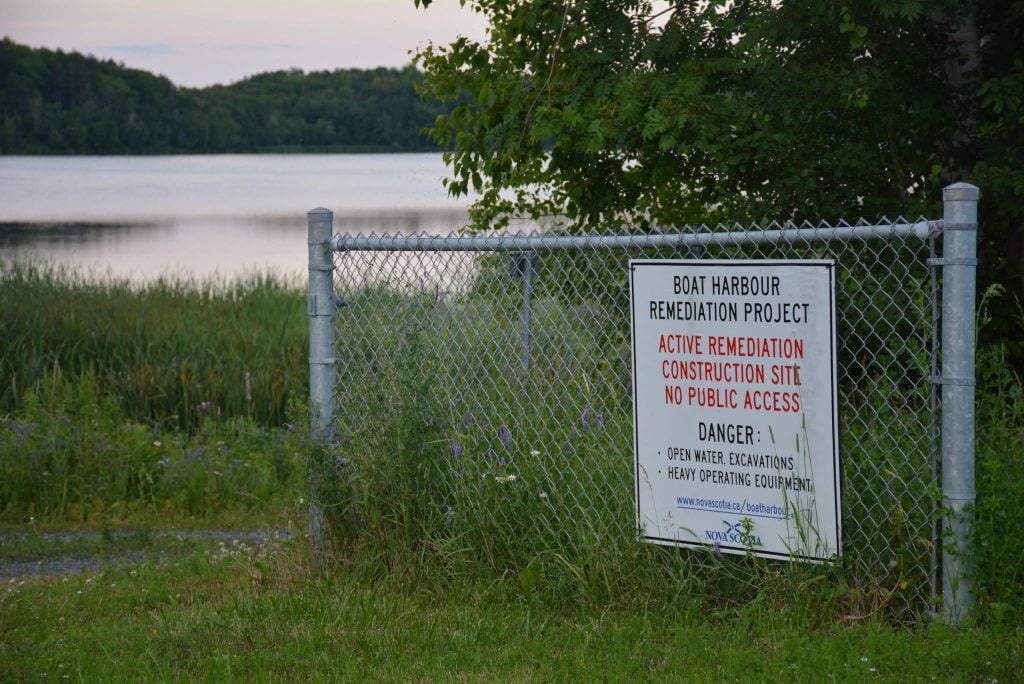
For decades, wastewater was discharged into A’se’k, or Boat Harbour, located next to Pictou Landing First Nation. A remediation project, estimated to take four to seven years, was approved in January 2025, though no updates have been posted since. Photo: Gespe’gewa’gi: The Last Land / Facebook
The federal agency grouped concerns from the review into five broad subject areas in its summary of issues: fisheries impacts, health conditions, land use and resources, cultural heritage and Indigenous and Treaty Rights.
The agency also acknowledged that Mi’kmaq communities “raised concerns about inadequate consultation by governments” but said those concerns were considered in making its decision.
“In determining whether further assessment is required, [the Impact Assessment Agency] considers several factors, including any adverse impacts the designated project may have on the rights of Indigenous Peoples of Canada,” Walsh said.
She added that provincial environmental assessment approvals require proponents to develop “a Mi’kmaq communication plan. This must include … seeking input from the Mi’kmaq on the development and implementation of project mitigation and monitoring plans.”But, Gaudet said, a communication plan isn’t the same as a consultation process that would address the nation’s “Section 35 constitutionally-protected rights and the United Nations Declaration on the Rights of Indigenous Peoples.”
“The blatant disregard for the Mi’kmaq Nation and the impacts these power plants will have on our Mi’kmaw rights is disappointing and unacceptable,” she added.
Nova Scotia’s Department of Environment and Climate Change declined to comment for this story, citing an ongoing judicial review related to the two power plants that has been brought by Living Ecosystems and Power, a Pictou County community organization that launched in April 2026 to oppose the plants.

Nova Scotia Premier Tim Houston addresses protesters at a rally organized by Living Ecosystems and Power, a community organization opposing the power plants, in July 2026.
Concerns that impact assessment agency ignores emissions
One big question is which level of government — if any — will monitor or demand mitigation of the plants’ greenhouse gases. Because they’re going to be significant: the initial project plans estimated that each plant will produce 325,594 metric tonnes of carbon dioxide annually each, the equivalent of adding nearly 75,000 cars to the road. And those emissions are based on the plants only running for 2,190 hours, about one-quarter of their actual capacity.
The federal government’s climate plan doesn’t track or apply to individual projects.
When asked to comment on the projects’ potential climate impacts, Environment and Climate Change Canada recommended “greenhouse gas and climate change impacts be assessed and mitigated consistent with guidance in the Strategic Assessment of Climate Change.”
But in 2024, the federal government amended Canada’s Impact Assessment Act, removing greenhouse gas emissions from federal jurisdiction, following a Supreme Court ruling that found this to be an overreach of constitutional authority.
At the same time, Anna Johnston explained, impact assessments “do consider whether projects would hinder or contribute to Canada’s ability to meet its climate change commitments.” If that sounds confusing, it’s because it is.
Basically, the agency can’t assess greenhouse gases as its own issue. But if greenhouse gases harm something within federal jurisdiction — “like fisheries, migratory birds and Indigenous peoples,” she explained — then the agency can trigger an assessment, and recommend ways to reduce or eliminate that harm.
Lori Skaine, executive director of the climate change division within Nova Scotia’s Department of Environment and Climate Change, responded to comments focused on emissions concerns that were sent in to the province’s project review. “The project’s overall [greenhouse gas] impact will depend a lot on how many hours the facility runs each year,” Skaine wrote, also noting the amount could vary depending on the fuel used, noting that these plants could run on diesel if natural gas isn’t available.
Burning diesel produces up to 40 per cent more carbon emissions than natural gas. It also releases more fine particulate matter and increases local health risks. On-site diesel storage adds increased spill risk to the local ecosystem.
Karen McKendry, senior wilderness outreach coordinator with the Ecology Action Centre, called potential changes to capacity or fuel type “scope creep.” Something, she said, there is no current remedy for.
“Everything can change about the project, even after it was approved,” she says. “The environmental assessment process is a one-and-done.”
A “material change” in the projects’ water use
When they were first proposed, the Marshdale and Salt Springs power plants planned to draw tens of thousands of litres of water from local watersheds each day to cool down turbines, clean equipment and mitigate emissions. But there’s a problem. According to Milligan, when the energy systems operator assessed the region, they determined there is not enough groundwater available on site to proceed with this plan.
Instead, the operator pivoted to use dry technology systems that employ chemicals instead of water. The type and amount of chemicals have yet to be disclosed, and Milligan says that there are “several commercially available technologies routinely used at power generation facilities that can accomplish this.”

Pictou Landing First Nation Chief Tamara Young is concerned that changes to the proposed plants’ operations — such as the technology used to cool turbines, which would rely on chemicals rather than water — could also change the impacts of the project on the environment. Photo: Supplied by Pictou Landing First Nation
Young thinks this change should reopen the federal decision.
“These changes may materially affect the scope, effects, mitigation requirements and cumulative impacts of the projects,” she says.
They also heighten concerns about impacts on Atlantic salmon, which spawn in Eight Mile Brook, a tributary of the West River Pictou located about 300 metres from the proposed Salt Springs facility.
It’s one of only a handful of rivers in Nova Scotia with Atlantic salmon populations robust enough that the province allows catch-and-release fishing. In their comments to the federal review, Kwilmu’kw Maw-Klusuaqn described Atlantic salmon as “a foundational food source across Mi’kma’ki.”
“Loss of access to salmon threatens Mi’kmaq food security, self-determination and rights-based harvesting practice,” it added.
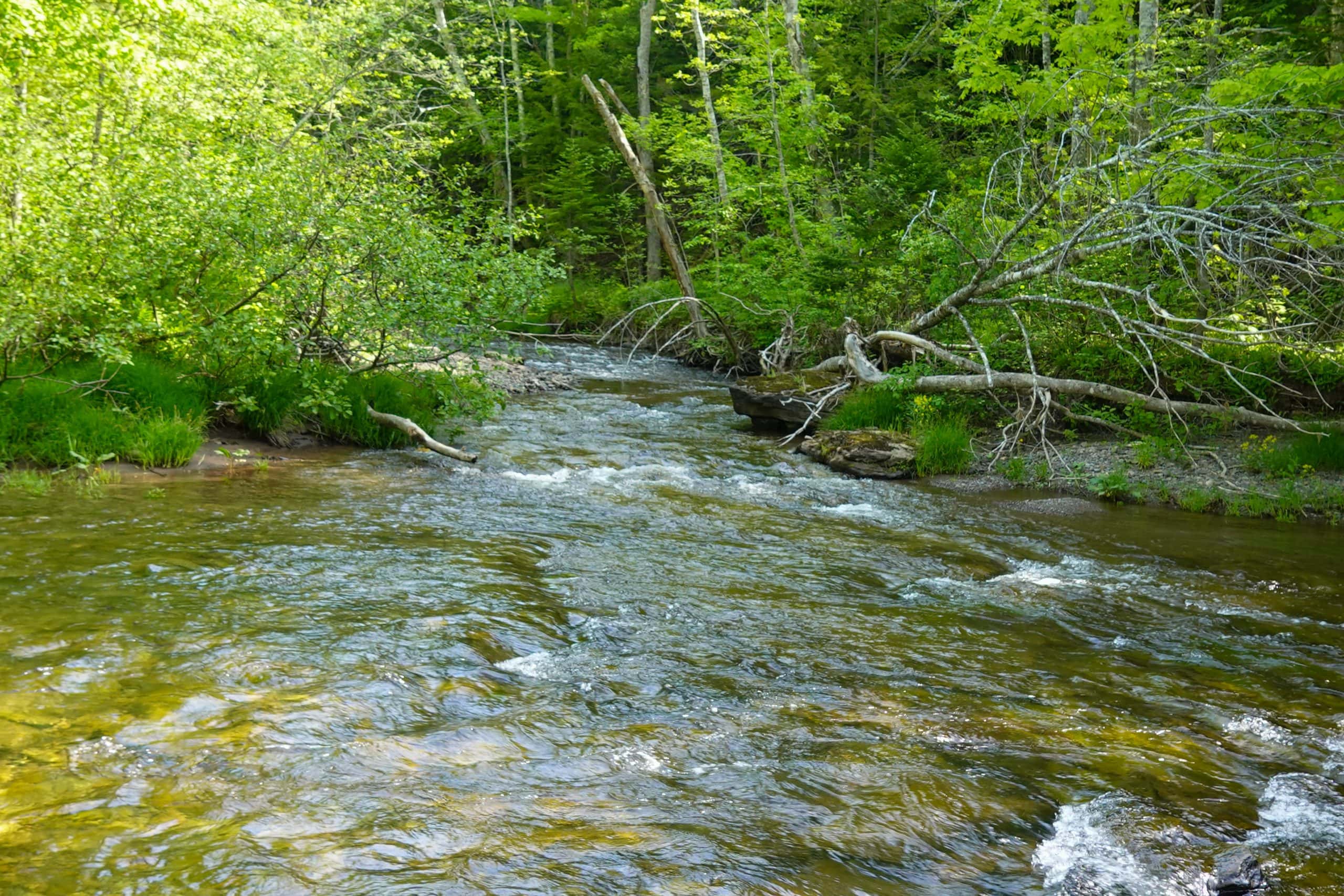
The confluence of Six Mile Brook and Eight Mile Brook, which feed into the West River Pictou. Salmon in this river could soon be listed as a federally protected population. Photo: Cameron Fenton / The Narwhal
The salmon in the West River could soon be listed as a federally protected population after the Committee on the Status of Endangered Wildlife in Canada determined that they were “endangered” in late 2025. Other threatened species impacted by this project include mainland moose, which has been listed under Nova Scotia’s Endangered Species Act since 2003, and black ash, which has been federally protected since 2018. Both were flagged as “culturally significant species for the Mi’kmaq” in the federal review.
In her response to The Narwhal’s questions, Walsh of the federal assessment agency said it “was aware of this recommendation when it issued its determinations,” and that “the proponent is still required to follow the federal requirements of the Fisheries Act and the Species At Risk Act, as well as conditions issued by the province.”
The federal government says impacts to these species can be managed without a federal impact assessment. But the provincial system has challenges. In 2020, the Nova Scotia Supreme Court found that the province had “a chronic systemic failure to implement action required” to enforce its Endangered Species Act. In February 2026, the provincial natural resources department eliminated its dedicated wildlife division.
In a statement, the department told The Narwhal “all wildlife-related functions are continuing as before” and that the move is simply a restructuring.“No scientists, biologists, forest technicians or wildlife staff were laid off, and no wildlife programs or services have been reduced, eliminated or transferred outside government,” the statement explained.But conservation groups disagreed, arguing that positions dedicated to biodiversity, ecosystems and habitat protection had been all but eliminated. They were backed up by sources within the department, who told the Halifax Examiner the changes were “absolutely gutting” the wildlife department. One source described them as something done “to punish the scientists working on behalf of wildlife and ecosystems.”
A worrying precedent for expedited project processes
On Sept. 9, the federal government announced plans to further expedite project reviews by shifting reviews for things like pipelines, power plants and oilsands mines from the impact assessment agency to the Canada Energy Regulator. These changes won’t apply to the Salt Springs or Marshdale power plants, but to Anna Johnston, they’re part of the same trend. One that she worries will “essentially eradicate federal environmental impact assessment, the best tool we had for avoiding the environmental harms of risky projects and often the only way for the public to have a say.”
These most recent changes follow previous federal actions, including Bill C-5, which allowed the government to exempt projects from some stages of federal impact assessments, and agreements between Ottawa and the provinces to streamline joint reviews. Prime Minister Mark Carney and Nova Scotia Premier Tim Houston signed one of these co-operation agreements back in March. And Ontario, British Columbia, New Brunswick, Manitoba, Prince Edward Island and Alberta all have similar agreements, while Quebec is in the process of finalizing one.
The agreement with Nova Scotia states that the province can decide when the federal government should rely on provincially “applicable environmental assessment and regulatory processes” in reviewing and regulating major projects, as the Nova Scotia agreement puts it. The agreement also directs Canada’s impact assessment agency to “[avoid] duplicative decision-making processes related to assessments by relying on provincial processes.”
Johnston worried this slew of agreements undermine the basic goals of impact assessments.
“[There is] a risk that we’ve been flagging for a while that the federal government says, ‘Oh no, we don’t need to look at that, the province is going to do it,’ ” she explains. “Meanwhile, the province is saying ‘we don’t have a role here, or we’re going to fast-track,’ or for whatever reason, it’s not going to look at the issue.”
That, she said, means no one is looking at the bigger picture, that “you’re getting an authorization under the Fisheries Act, you’re really only looking at the fisheries impacts, [and] if you’re getting a navigable waters permit, you’re only looking at impacts on navigation and navigability.”“Environmental impact assessment is meant to take a look at all of those effects under one umbrella, so that decision makers have a more comprehensive understanding of what the full-picture effects are and how they interact,” she said.
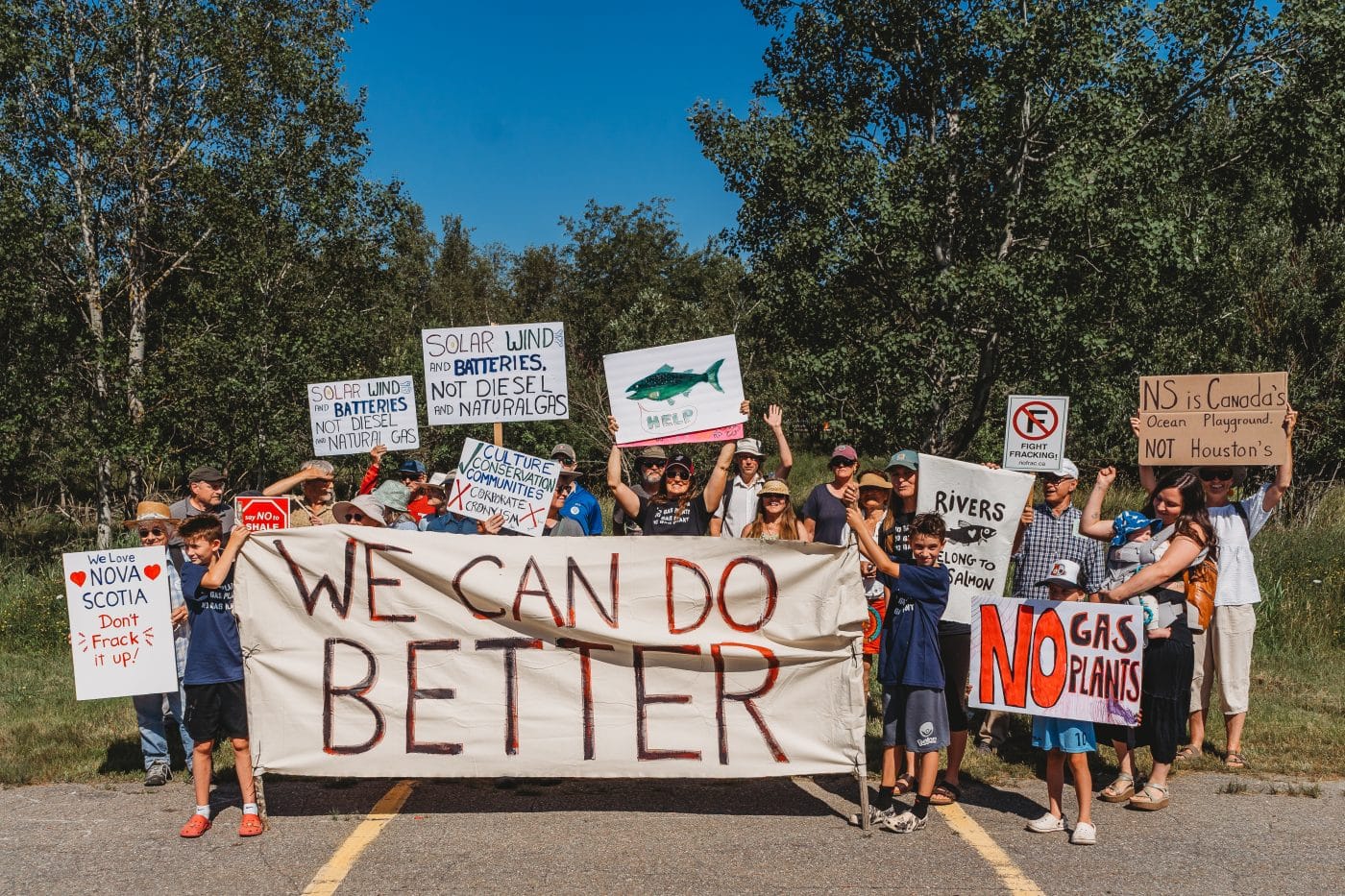
With all of these questions about the process, opposition to the two power plants has been growing, with petitions and two rallies through the summer in New Glasgow, one outside of a speech directly targeting Nova Scotia Premier Tim Houston. On Sept. 3, he weighed in on the plants, saying that he would like to see the energy system operator consider other technologies than natural gas. In a press conference, he said that the energy regulator had been “too focused on [natural] gas” and should consider “a proper and more fulsome assessment of different technologies.”
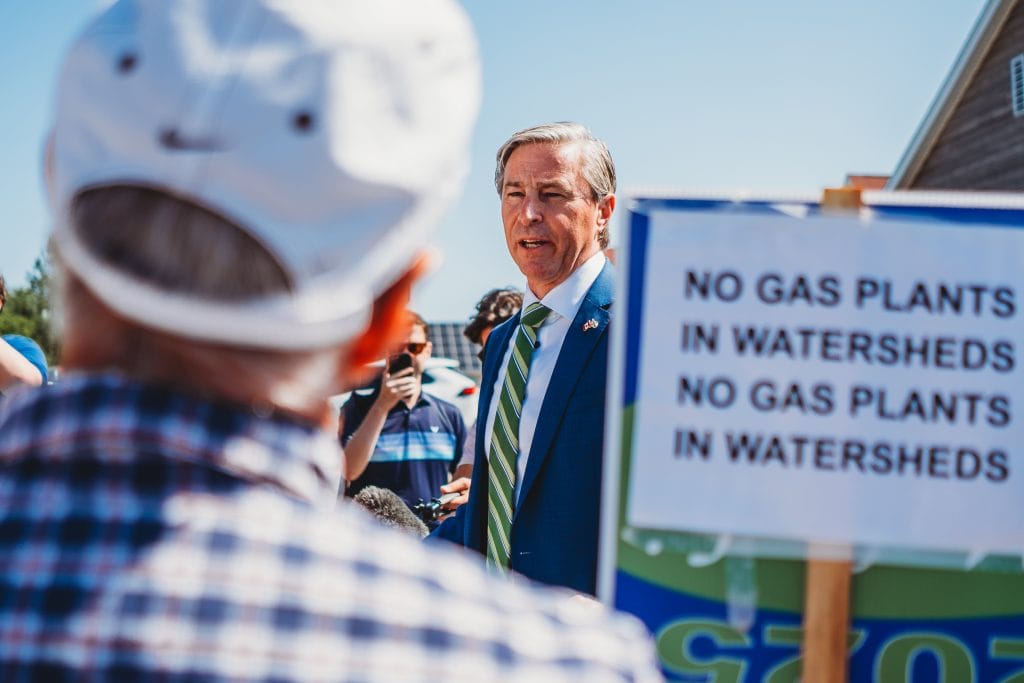
In early September, Premier Tim Houston called on the province’s energy systems operator to consider natural gas alternatives. The operator has responded by inviting proposals that could meet the power generation needs using alternative technologies.
The energy systems operator responded a week later with a press release announcing that it would open up the door to project proposals that could meet the same power generation needs of these two plants with “energy storage and other on-demand electricity generation technologies.”
In the meantime, a legal challenge filed by Living Ecosystems and Power is moving through the Nova Scotia courts. And Twila Gaudet says that Mi’kmaw leadership is considering their next move, “which may include meetings with provincial and federal ministers, legal options [and] peaceful protest.”
Johnston thinks these responses could multiply across the country as governments continue to try to fast-track project reviews.
“I think that we’re going to see a much bigger wave of lawsuits,” she says. “That’s not good for taxpayers. Litigation is expensive, and Canadians end up paying for it.”
The Narwhal’s reporters are telling environment stories you won’t read about anywhere else. Stay in the loop by signing up for our free weekly dose of independent journalism.
From The Narwhal | News on Climate Change, Environmental Issues in Canada via This RSS Feed.