

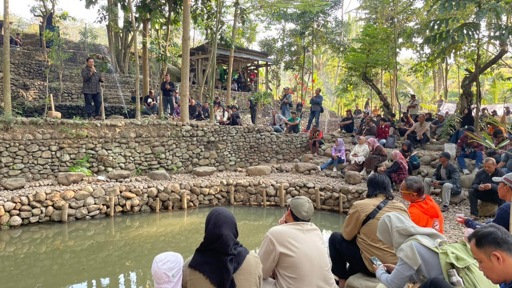
YOGYAKARTA, Indonesia — Communities living near Mount Ungaran in Indonesia’s Central Java province have slammed plans to revive a geothermal power project there, saying it could threaten water supplies and farming livelihoods. The latest opposition follows a decision in August by the Ministry of Energy and Mineral Resources allowing the state-owned electricity utility, PLN, to conduct geothermal exploration and development at Mount Ungaran. Local opposition to the plans began in 2008, shortly after the ministry first designated Ungaran, an active volcano, as a geothermal working area. The latest decision has revived the long-running dispute between the government and local communities. Rahman, coordinator of the Semarang Menggugat Alliance (ASM), said communities around Mount Ungaran depended on farming and local water sources, and feared the project could affect both. “We can already make a living from farming,” Rahman, a resident of Bawen subdistrict, said in early September. “If geothermal development goes ahead, we are concerned that our water sources could decline or become polluted, affecting agriculture.” Mount Ungaran’s peak as seen from the Tanggul Lawang hiking trail. Image by Triyo Handoko/Mongabay Indonesia. Indonesia sits in one of the most seismically active zones in the world, which gives it massive potential to generate electricity from geothermal energy: an estimated 23.2 gigawatts, according to the latest data from the Ministry of Energy and Mineral Resources. The ministry describes Indonesia as having the world’s largest geothermal resource potential, ahead of countries including the United States and the Philippines. But the country’s total installed geothermal capacity…This article was originally published on Mongabay
From Conservation news via This RSS Feed.