

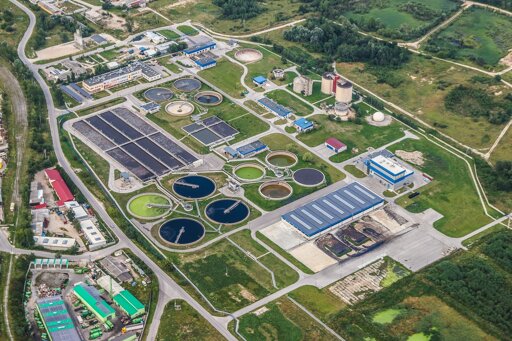
Treating polluted water flowing into San Francisco Bay to meet regulatory requirements is going to cost ratepayers money. Exactly how much depends, in large part, on whether the region’s wastewater treatment plant operators are willing and able to coordinate infrastructure construction and operation to meet these requirements, according to a Stanford University study published in Nature Water.
From Earth News - Earth Science News, Earth Science, Climate Change via This RSS Feed.
The research article is behind a paywall, but it makes it sound like this isn’t something that has been considered by these plants currently.
“Regional facilities rarely coordinate their decadal capital improvement plans or monthly operations because independent agencies monitor them and issue separate discharge permits,” said study senior author Meagan Mauter, a Stanford professor of civil and environmental engineering.
This is not true in this particular case, where there is a watershed level permit and a regulatory requirement for the formation of a consortium:
BACWA is a joint powers agency, formed under the California Government Code by the five largest wastewater treatment agencies in the San Francisco Bay Area.
I’m really wondering what was meant by this:
Several Bay Area utilities are in conversations about forming a regional coordination effort, according to Abi Farraj, but most are waiting for regulators to approve an official coordination framework before committing.
It could be about the Water Quality Trading initiative, specifically, as obviously they have a regional coordination effort already!
https://bacwa.org/wp-content/uploads/2018/06/BACWA_Final_Nutrient_Reduction_Report.pdf
https://bacwa.org/wp-content/uploads/2026/01/TFT-Report-BACWA-WQT-Feasibility-Final_12.31.2025.pdf
(To be clear, the flow isn’t getting shifted, it’s the “load” or kg/day discharge of the nutrients. That’s why shifting is possible. The plants aren’t connected.)
Yes, this is a useful tool. It’s hard to justify decisions without costs, and it’s true that it is a very hard thing to estimate how doing something at one plant can save money at another if you look at them in isolation.
But the plants are not looked at in isolation in many utilities. There are often master planning documents for utilities as a whole and/or watersheds as a whole, with individual documents for the individual plants with more details. The BACWA and total water body loading limit isn’t a new concept. In fact, the reason I know about watershed level planning is the amazing work by the Grand River Conservation Authority: https://www.grandriver.ca/our-watershed/water/wastewater/
The abstract for the paper doesn’t mention participation by the BACWA, which is something that I find annoying at times. I’ve seen papers published on plants I’ve worked at where the author’s never contacted us and their papers contain errors in fact about the plant or process. I don’t know enough to say that is what happened here, and it doesn’t make the work less valuable as a general concept but researchers: please come talk to us! We can help!
It really sucks to talk to a student about their work and to hear that they didn’t realize they could reach out. I understand the PI might have given them a project to tackle without any context, and that being exactly 1-to-1 with the real world isn’t the point, but I still think it does the students disservice in keeping them separated from the practical side. It’s hard for academics to break into industry afterwards, especially without those contacts and exposure.
Okay…putting away the soapbox.
