


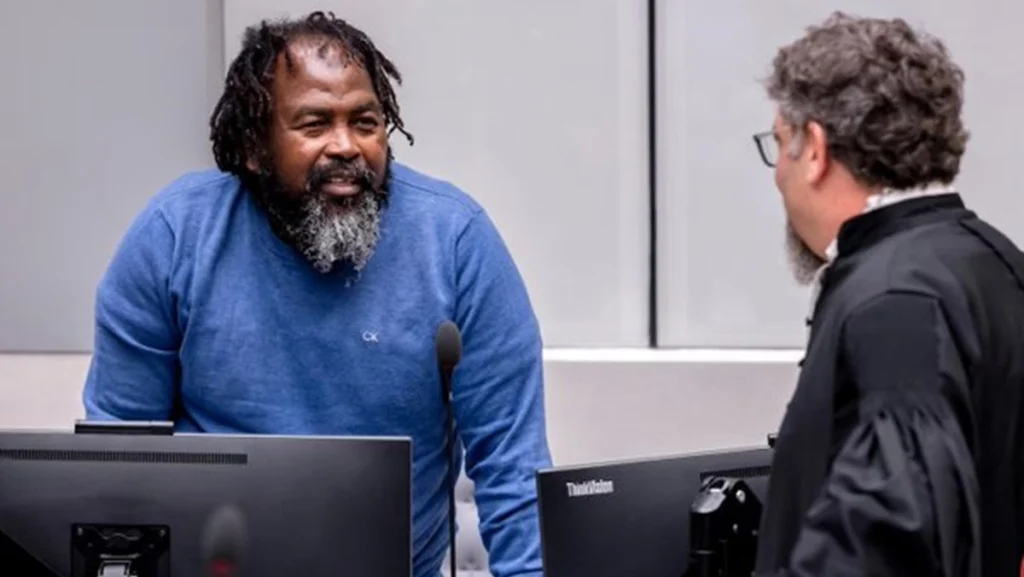
Mahamat Said Abdel Kani was convicted over imprisonment, torture, other inhumane acts and persecution.
On Wednesday, the International Criminal Court (ICC) found former leader of the Central African rebel coalition Seleka, Mahamat Said Abdel Kani, guilty of crimes against humanity for imprisonment, torture, other inhumane acts and persecution committed against dozens of people in Bangui in 2013.
RELATED:
Sudan Rises Lawsit against UAE in the International Court of Justice
However, the Trial Chamber acquitted Said of three war crimes charges against him — torture, cruel treatment and outrages upon personal dignity — on a legal issue, as it did not find it proven “beyond reasonable doubt” that the armed conflict continued during the period in which the acts under trial occurred.
Judge Miatta Maria Samba explained during the reading of the verdict that the judges unanimously concluded that Seleka carried out a “widespread and systematic attack against the civilian population of Bangui” from at least April through November 2013.
Said was found guilty of the crime against humanity of imprisonment or other severe deprivation of liberty of at least 39 people, torture of 22, other inhumane acts against 34 and persecution of 39.
Said, who was surrendered to the court in January 2021, followed the reading of the verdict dressed in a blue sweater and listening through headphones. He remained impassive throughout the session.
The judgment focuses on abuses committed at the Central Office for the Suppression of Banditry (OCRB), a detention center in Bangui that came under Seleka control after the group seized the Central African capital in March 2013.
Said became the de facto highest authority at the OCRB in mid-to-late April of that year, and Seleka members deployed there were under his command.
Extreme Poverty by Country
(Population living under $3 per day)
- 🇨🇩 Democratic Republic of the Congo → 85.3%
- 🇲🇿 Mozambique → 82.2%
- 🇲🇼 Malawi → 75.4%
- 🇧🇮 Burundi → 74.2%
- 🇿🇲 Zambia → 71.7%
- 🇨🇫 Central African Republic → 71.6%
- 🇳🇪 Niger → 60.5%… pic.twitter.com/hnNINiAqto
— Africa Today Media Group (@africatodayMG) September 18, 2026
The judges concluded that Said controlled access to the cells, gave instructions concerning detainees, took part in interrogations and mistreatment, ordered prisoners to be beaten, and was present while some were beaten and tortured.
The judges found it proven that some detainees were beaten with ropes, whips, military belts and rifle butts, while others were threatened with death.
In one of the proven incidents, Seleka members forced 16 detainees to strip naked, threw a mixture of sand, dirt or clay and water onto their backs, and repeatedly whipped them until two of them defecated on themselves.
The judgment also describes an underground cell beneath Said’s office, where several detainees were held in a dark, unventilated space and prisoners had to urinate and defecate inside it.
The Chamber concluded that there was a common plan to attack people perceived as supporters of then-deposed President François Bozize.
Seleka, a coalition of mostly Muslim armed groups, seized Bangui on March 24, 2013, and overthrew Bozize, plunging the country into a new phase of violence that later pitted its fighters against the anti-Balaka militias.
The ICC has been investigating the violence that erupted in the Central African Republic beginning in 2012 since 2014, as well as alleged crimes committed by groups linked to both Seleka and the anti-Balaka.
The Chamber also highlighted Wednesday that survivors say they continue to suffer from headaches, dizziness, insomnia and physical effects of torture, while others remain fearful of uniformed people, weapons and soldiers. The conviction establishes Said’s criminal responsibility, but it does not yet determine how long he will remain in prison.
teleSUR/ JF
Source: EFE
From teleSUR English via This RSS Feed.