

The next government will oversee World Cup preparations while facing pressure over jobs, wages, housing and living costs.
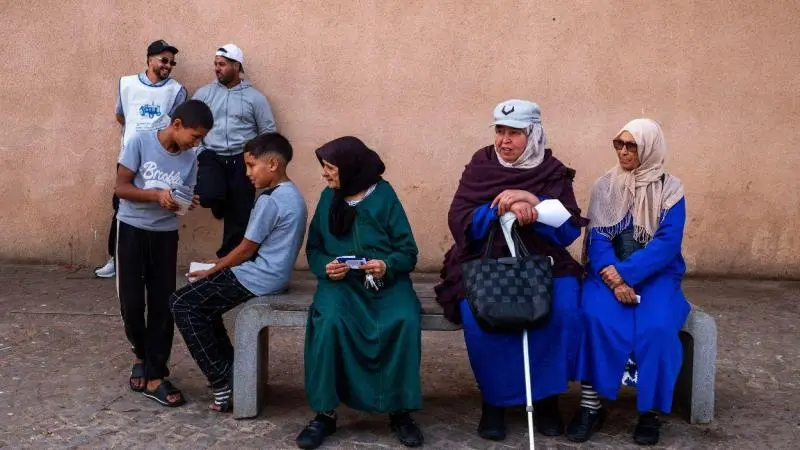
Moroccans went to the polls Wednesday to elect a new parliament, with the next government set to oversee billions of dollars in investment ahead of the 2030 FIFA World Cup while facing growing pressure over jobs, public services and the cost of living.
RELATED: Undocumented Migrants Into Ceuta Will All Return to Morocco: Spanish FM
Polling stations opened at 8 a.m. and are due to close at 7 p.m., with about 15.8 million registered voters eligible to cast ballots. Preliminary results are expected Thursday.
Voters are choosing among 7,288 candidates from 27 political parties for the 395-seat House of Representatives. The election is the first since deadly protests led by young people last year and a mass attempt by migrants to cross Morocco’s northern border into the Spanish enclave of Ceuta.
Youth concerns over unemployment, wages, housing, public services and living costs are expected to pose a major challenge for the next government. The administration will also oversee billions of dollars in investment as Morocco, Spain and Portugal prepare to co-host the 2030 World Cup.
🚨 Marruecos elige a su nueva Cámara de Representantes en medio de tensiones diplomáticas con España. Más de 15.8 millones de marroquíes votaron para renovar los 395 escaños de la Cámara, con 28 formaciones políticas y dos listas independientes en competencia. El rey Mohamed VI… pic.twitter.com/xoSNxxHKe3
— teleSUR TV (@teleSURtv) September 22, 2026
Text Reads: 🚨 Morocco elects its new Chamber of Representatives amid diplomatic tensions with Spain. More than 15.8 million Moroccans voted to renew the 395 seats in the Chamber, with 28 political formations and two independent lists in competition. King Mohamed VI will task the most voted party with forming the new Government, which will face the priority challenge of creating jobs and opportunities, especially for young people.
World Cup investment
Morocco is investing in stadiums, railways and other infrastructure ahead of the tournament and aims to double economic output per capita by 2035.
The International Monetary Fund has estimated planned spending at about 190 billion dirhams, or roughly $20 billion, equivalent to nearly 12% of Morocco’s gross domestic product in 2024.
The ruling National Rally of Independents (RNI) and the Authenticity and Modernity Party (PAM), the two largest parties in the current parliament, have each pledged to create about 1 million jobs over the next five-year term. Both have also promised improvements in housing, wages and hospitals.
The two parties currently govern in coalition but have traded blame during the campaign over rising food prices and other policy shortcomings. PAM leaders have said they would not join another coalition with the RNI if they finish first.
Prime Minister Aziz Akhannouch, who has led the government since 2021, is not seeking another term after stepping down as RNI leader this year. Fouzi Lekjaa, the budget minister and head of Morocco’s football federation and 2030 World Cup organizing committee, joined PAM’s leadership weeks before the election.
Coalition negotiations
The election is not expected to fundamentally alter Morocco’s balance of power, where the king retains broad authority over policy direction, defense and foreign affairs.
Under the 2011 Constitution, the king appoints the head of government from the party that wins the most seats. Since no party is expected to secure an outright majority, the winner will need to negotiate a coalition before presenting a cabinet for royal approval.
The current government, formed by three parties, replaced the moderate Islamist party that had governed for a decade after the 2011 Arab Spring protests. Those demonstrations prompted the king to transfer additional powers to parliament before authority over areas including foreign affairs and the interior ministry was later reasserted.
Turnout will be closely watched, particularly among younger voters, as an indicator of engagement with elected institutions. Although about 27 million Moroccans are of voting age, only 15.8 million are registered on the electoral lists, a decline from the 2021 election even as the country’s population has grown.
Some groups have called for a boycott. The far-left Democratic Way party said the election lacked the minimum conditions for democracy, while the banned but tolerated Islamist association Al-Adl Wal Ihsane made similar claims.
Moroccans living abroad have the constitutional right to vote, but there is no postal voting or ballot casting at Moroccan consulates. Those wishing to participate must travel to Morocco or authorize a registered family member or acquaintance to vote on their behalf.
Other parties contesting the election include the conservative-leaning Istiqlal Party, the Islamist Justice and Development Party, which suffered a major defeat in the previous election, and several left-wing parties.
The incoming government will take office amid competing demands to manage Morocco’s large-scale World Cup investment while addressing concerns over employment, public services, housing and living costs.
From teleSUR English via This RSS Feed.