

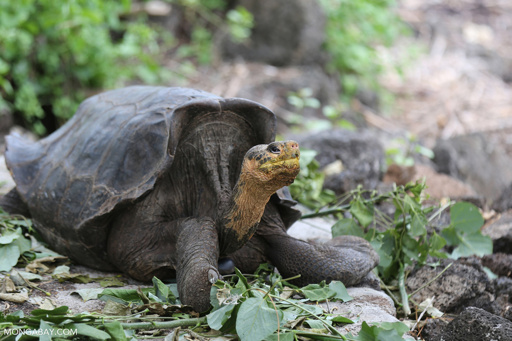
A new atlas of biodiversity of the Galápagos Islands highlights the unique evolutionary and ecological diversity of life in the famed archipelago that helped Charles Darwin develop the theory of natural selection. The Galapagos Atlas, created by the Darwin Foundation, highlights 68 species and species groups in the island chain. These include the celebrities of Galápagos biodiversity, such as the giant tortoises (genus Chelonoidis), marine iguanas (Amblyrhynchus cristatus), and Darwin finches (genus Geospiza). It also features less famous plants and animals, such as the Galápagos kelp (Eisenia galapagensis), lichens, and Galápagos carpenter bees (Xylocopa darwini). The freely available atlas was created by a team of 87 authors and artists including scientists, park rangers, and conservationists. Profiles of every species highlight both what’s known about them, but also what still remains unknown about their ecology, behavior, and conservation needs. “There is still so much we don’t fully understand about Galapagos flora and fauna, and that’s part of what makes it so fascinating,” Darwin Foundation executive director Rakan Zahawi told Mongabay by email. Zahawi called the Galapagos Atlas a starting point for people wanting to solve some of the scientific mysteries of life in the islands. “Each species entry comes with citations and references, so my first piece of advice to a young person who’s captivated by a species is to follow those leads,” he added. “Dig into the research behind the entry, see who’s been studying it and what they’ve found, and let that pull you further into the subject.” The…This article was originally published on Mongabay
From Conservation news via This RSS Feed.