

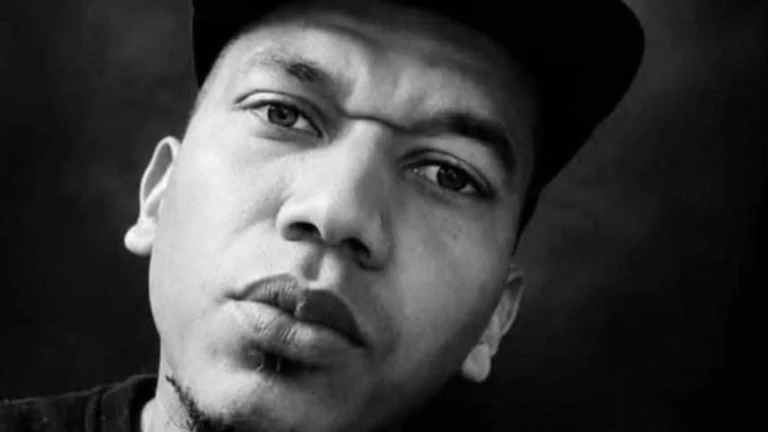
Social organizations accuse police of excessive force and racial abuse after a 34-year-old man died following a police operation in Bogotá.
Social organizations in Colombia are demanding justice over the death of Donovan Balanta, a 34-year-old father of two who died after a police operation in Caracolí, southern Bogotá, amid allegations of excessive force, racial abuse and denial of medical assistance.
RELATED: Colombia Deploys Military to Santa Marta After Violence
Between 15 and 20 police officers pursued Balanta, brought him to the ground and beat him, according to relatives and residents of the area. They also alleged that officers repeatedly used an electric shock device on his back and chest after he had been handcuffed and restrained.
Witnesses and relatives said the intervention also involved racist insults and verbal abuse.
Balanta worked for a pharmaceutical company and was studying criminalistics. After the operation, he was taken to the Cazucá police station, where he reportedly experienced severe breathing difficulties and repeatedly asked for medical assistance. His relatives said officers denied his requests.
Authorities gave a different initial account, saying Balanta suffered a “sudden health episode” and arrived alive at a medical facility. His relatives said he was admitted to Cardiovascular Hospital without vital signs.
Text Reads: Calls for justice for Donovan Balanta, a victim of torture and racism in Colombia.
Police responded by removing seven officers from their posts and opening a disciplinary investigation.
Relatives and community leaders have rejected the institutional account. Jhon Gómez, a relative of Balanta, described him as “a very focused young man, respectful and hardworking.” Local leaders also highlighted his involvement in organizing sports activities for children and adolescents in the neighborhood. He was known affectionately as “Piri.”
Lawyer and activist Alí Bantú Ashanti also criticized the police response, saying: “They hide behind the law to commit these atrocious acts against our people. That does not represent the law; they are killers. Not long ago they put chains on us; today every police officer in this country wants to put handcuffs on us.”
La muerte de Donovan Balanta Paz, Piri, tras un procedimiento policial en Ciudad Bolívar exige verdad y justicia. El abuso policial y el perfilamiento racial contra el pueblo negro no pueden seguir normalizándose.https://t.co/oYs3xtDYKs#JusticiaParaPiri #AbusoPolicial pic.twitter.com/a42wZWMSkx
— PCN (@renacientes) September 22, 2026
Text Reads: The death of Donovan Balanta Paz—known as “Piri”—following a police operation in Ciudad Bolívar demands truth and justice. Police abuse and racial profiling against Black people can no longer be normalized.
The Proceso de Comunidades Negras (PCN), an Afro-descendant social organization, called for truth, justice and guarantees that similar abuses will not be repeated. It also rejected what it described as attempts to dilute institutional responsibility through official language.
The organization said describing the incident as a person who “died after a procedure” or suffered a “sudden health condition” removes from the account the use of force, state custody and the decisions made by the officers involved.
The PCN said Balanta’s death should not be treated as an isolated incident. Its statement pointed to what it described as persistent allegations of racial profiling, harassment, unjustified searches, verbal violence, arbitrary detention and disproportionate use of force against Black people in Colombia.
The organization called for independent investigations, effective protocols against racial profiling, publicly available data with an ethnic and racial focus, and mechanisms for reporting and sanctioning abuses. It said broader changes to policing were necessary, arguing that the problem could not be addressed through superficial training or institutional statements.
“The family of Donovan has the right to know the full truth,” the PCN said. “Black people have the right to live without their bodies being treated as a threat. Piri’s life mattered.”
From teleSUR English via This RSS Feed.