

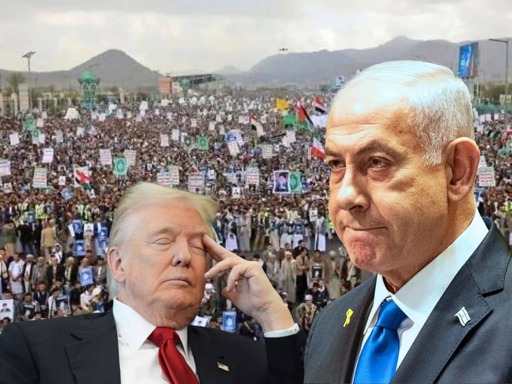

Israel’s genocide in Gaza and the US-Israeli war on Iran have set the Middle East on fire. And this regional rampage has resurrected Saudi Arabia’s war on Yemen’s Houthis, risking a possible return to one of the 21st century’s most devastating humanitarian crises.
This time, however, Saudi Arabia’s interference in Yemeni politics threatens to drag a nuclear power and NATO’s second-biggest army into the conflict too.
Saudi Arabia pulled into the US-Israeli rampage
With the Strait of Hormuz becoming part of Iran’s resistance to US-Israeli attacks, the Bab al-Mandeb Strait on the other side of the Arabian Peninsula has become much more important for Saudi Arabian trade. But true to the Saudi regime’s alliance with the US and Israel, it has risked its own interests to try and weaken regional foe Iran.
In July, Saudi Arabia reportedly tried to block an Iranian plane from landing in Yemen. It then allegedly bombed a Yemeni airport to stop another Iranian plane landing. Four years after the ceasefire that ended the devastating Saudi-led offensive on Yemen, Saudi support for hostility towards Iran was resurrecting Yemen’s conflict.
The Houthis are key allies of Iran. And they had successfully resisted the military and economic power of Saudi Arabia from 2015 to 2022 as it decimated Yemen. They then disrupted Red Sea traffic in retaliation over Israel’s genocide in Gaza between 2023 and 2025. In a similar way, they responded to 2026 Saudi attacks by announcing a blockade on Saudi shipping from July onwards.
The concerning possibility of Pakistan and Turkey joining the Saudi war on Yemen
Saudi Arabia drew a lot of international heat for its crimes in Yemen, severely damaging its reputation. So by the end, it was desperate for an off-ramp. Therefore, in a new war with the Houthis, it will no doubt want to minimise focus on its own actions as much as possible and spread the potential reputational damage more widely.
Possibly with this in mind, Saudi Arabia forged a mutual defence pact with major military powers Pakistan and Turkey in August. And this perhaps gave it the confidence to step up its attacks, with a particular escalation in early September.
The Houthis responded by attacking key energy sites in southern Saudi Arabia, while advancing towards Yemen’s Red Sea coast (where it could more effectively disrupt Saudi trade).
Turkey and Pakistan share Saudi Arabia’s love of repressive conservatism and human rights abuses. And amid increasing Houthi retaliation against Saudi attacks, both have pledged to defend Saudi Arabia. Whether they get directly involved, however, may depend on the Saudi regime’s willingness to officially invoke the defence pact.
As the US and its Middle Eastern allies have found out in recent years, it’s a tough and expensive task to take on the Houthis. So out of self-preservation, the Turkish and Pakistani regimes will likely try to avoid direct involvement if possible, especially considering that the Houthis have promised a firm response if that happens.
How Western complicity has fuelled the fire with the Houthis
The world is in its most violent moment since the Cold War, and possibly World War II, for a reason. Increasing billionaire power in Western politics has empowered corrupt arms dealers. And the arrogant hypocrisy of Western elites has been destroying international law while fuelling immense human suffering.
The chauvinist Saudi regime is just one case study. A serial human rights abuser with links to terrorism, it didn’t just create the world’s worst humanitarian crisis in Yemen – Earth’s worst famine in a hundred years. It also helped to fuel the devastating Syrian civil war.
Because the Saudi regime is a pliant pro-Western regime with lots of oil, however, the US and its allies have consistently ignored its transgressions.
The same has been true of the West’s longstanding acceptance of and support for Israel’s illegal occupation, genocide and ethnic cleansing in Palestine. And it’s the apartheid state‘s insistence on using increasingly extreme force to try and get its way in the Middle East since 2023 that has forced increasing destabilisation on the region.
And it just goes on and on. Because just as the UK backed Saudi Arabia’s devastating war against the Houthis from 2015 to 2022 and jumped to back attacks on the Houthis during Israel’s genocidal rampage through the Middle East, the government has now authorised UK support again for the latest Saudi attacks on the Houthis.
Other Western nations, meanwhile, have joined condemnation of Houthi retaliation, brushing under the carpet the fact that the US-Israeli war on Iran and Saudi attacks on Yemen sparked the current escalation in hostilities. This all adds to the incredibly concerning possibility that Turkey and Pakistan could be dragged into the war.
De-escalation is the most sensible option with the Houthis
The Donald Trump regime has so far opted not to join the new offensive on the Houthis. Already severely humbled, stretched, and weakened by its support for Israel’s war on Iran, it also has a very recent memory (from 2025) of just how hard and expensive it is to fight the Houthis.
The Saudi dictatorship, however, is absolutely not going to sit back and let the Houthis disrupt its business. It will keep calling in favours from its allies and, because it doesn’t want a repeat of the 2015-2022 disaster, it will try to make sure its anti-Houthi alliance is as broad as possible.
Further escalation will not bring peace or stability to the region, though. In part, that’s because Israel’s full-on assault on Iran and its allies since 2023 has forced them to evolve, with forces like the Houthis decentralising and focusing on flexibility and technological capabilities rather than on traditional armies.
Following the Houthis’ September takeover of Yemen’s Red Sea coast, the sensible thing for pro-US forces to do would be to try and de-escalate the situation as quickly as possible. If that’s not to alleviate the refugee crisis and immense human suffering, maybe the massive ongoing risk to regional economies will be more of a motivator.
Featured image via the Canary
By Ed Sykes
From Canary via This RSS Feed.