

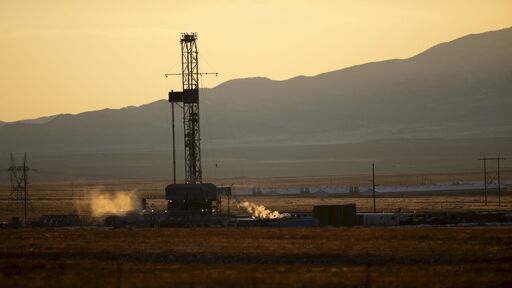
Beneath the Rocky Mountains, the Sierra Nevada, and the deserts in between, lies a massive energy source — and it isn’t a fossil fuel. The smashing and separating of tectonic plates that produced many of the West’s most dramatic landscapes have also allowed heat from the planet’s core to rise nearly to the surface. Now, an explosion of new geothermal energy companies wants to drill into the Earth and capture that heat for clean electricity. These companies have new technologies to better reach the heat, and a massive new customer base: energy-hungry data centers.
Tech giants seeking to build data centers while meeting their climate goals see geothermal as a promising option because it can produce consistent power around the clock, unlike solar and wind. Meta and Google have signed agreements with geothermal start-ups in New Mexico and Utah, including a deal announced this month in which Google agreed to buy 396 megawatts from Fervo’s soon-to-come-online Cape Station facility in southwest Utah, enough to power around 430,000 households. The federal government also received record per-acre bids from developers seeking to build geothermal on public lands in the Mountain West this year. New geothermal technology borrowed from the oil and gas industry, along with California’s renewable-energy goals, have helped drive the boom, but experts say demand from tech companies is a major factor.
“A lot of these companies have clean power goals, though they are not firm goals when other factors are on the line,” said Wilson Ricks, who manages the electricity program at the climate-focused nonprofit Clean Air Task Force. “Constant power, the kind that geothermal can provide, is really key to supplying data center growth as cleanly as possible, and specifically for providing an alternative to just building lots of gas turbines.”
These new geothermal projects are located in dry Western states because of their geology, but they face an ironic practical challenge: Most new geothermal technologies need water to produce power. If they’re serving data centers, that water use comes on top of the water that data centers pipe in to prevent their servers from overheating. Meeting Western data centers’ demand with geothermal may require careful planning, given the region’s limited water resources, and innovations to make geothermal wells less thirsty.
Geothermal’s tech and business boom is all about water. Traditional geothermal power works by punching a well into a super-hot pocket of underground water and bringing that water to the surface, like an artificial hot spring. The water either becomes steam or turns another fluid into steam, which spins a turbine to generate electricity. The water is then sent back into the ground to heat up again.
This method requires the perfect combination of heat and naturally occurring water to function, so it’s limited to a few small areas of the map. Newer, “next-generation” geothermal technologies try to get around this problem by bringing their own water to dry, hot rocks and circulating it. The amount of water developers have to introduce, however, can vary widely depending on the method.
A company called XGS Energy is trying to provide geothermal energy that requires nearly no water to New Mexico, which is currently suffering a decades-long drought. XGS uses “closed loop” technology that cycles water through the Earth in a continuous pipe, transferring the Earth’s heat to that water through a special material it layers onto the pipe, and then heating a secondary fluid that vaporizes and runs a turbine. The system recycles the same water over and over again without losing it to evaporation or seepage. In 2025, Meta agreed to support XGS’s project to produce 150 megawatts of power at a yet unspecified location in New Mexico.
XGS said its water savings are what sets it apart from other geothermal systems, and that its simple design yields benefits in terms of scalability, operating cost, and performance predictability.
“For geothermal to broadly scale across the United States, communities need geothermal systems that actively conserve water,” XGS said in a statement. “This design enables us to develop in more locations across the West, and consistently win competitive contracts.”
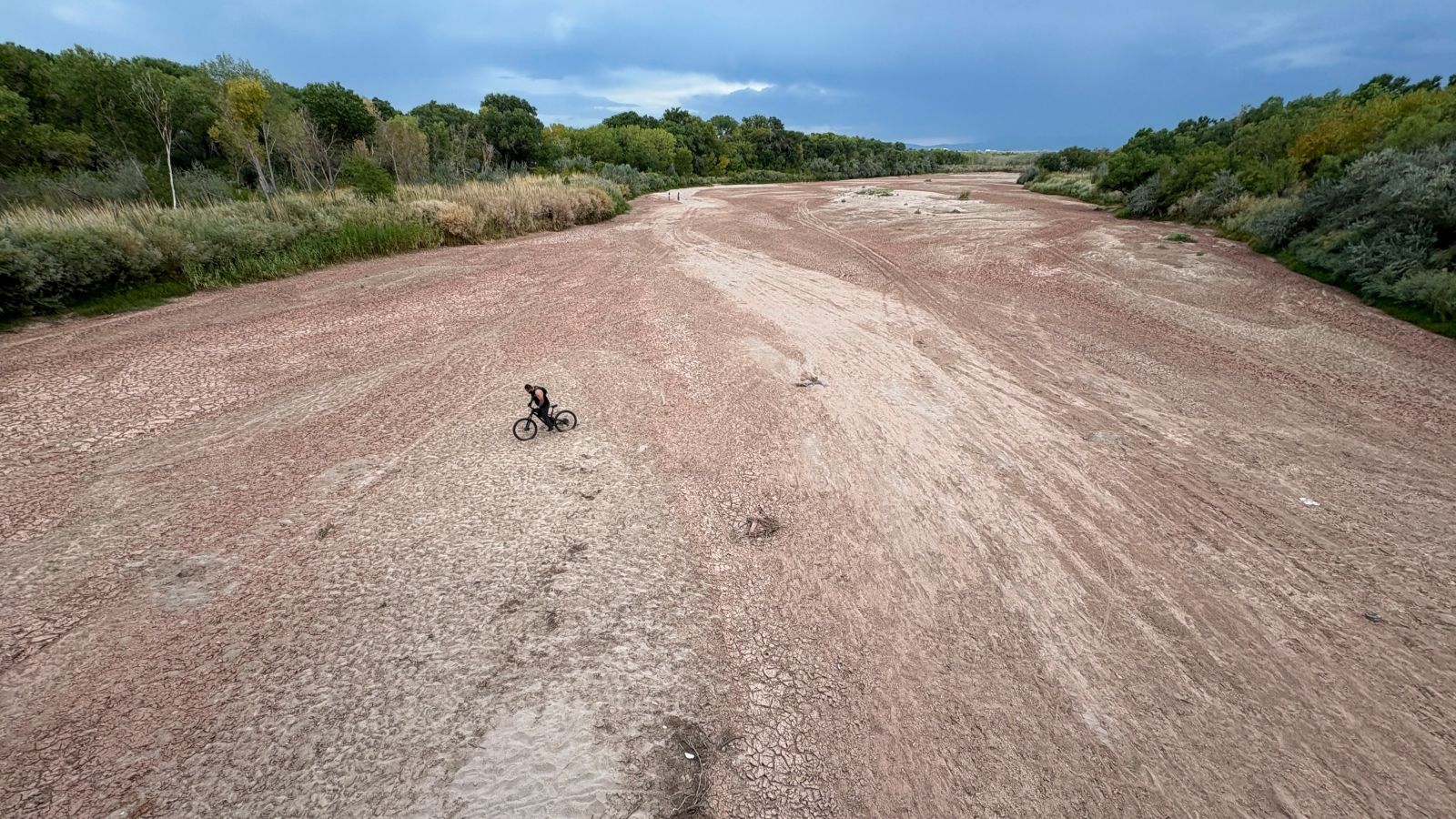
A cyclist rides across the dry bed of the Rio Grande River in Albuquerque, New Mexico, in July.
Susan Montoya Bryan / AP
But XGS’s type of water-efficient technology may not be well suited to produce power on the scale of data centers’ power needs, according to Roland Horne, who leads the geothermal program at Stanford University. Closed-loop systems generally produce less power per well, and their wells have shorter lifespans than with other approaches, Horne said. Unless technology improves or tech companies absorb the higher costs, water-free geothermal may struggle to produce large amounts of power economically.
A more popular approach is “enhanced geothermal,” which uses oil-and-gas-style fracking to circulate water through hot rock, manufacturing the kind of underground reservoir traditional geothermal relies on. Inevitably, this method involves losing some water underground. Enhanced geothermal can use less water than natural gas power, which uses it for cooling and steam generation, but the comparison varies by project.
At Fervo’s Project Red site in Nevada — the first enhanced geothermal project to produce commercial power — operators have reported losing 30 percent of the water they inject underground. Fervo says losses will be much lower at its Cape Station project in Utah, which is contracted to supply power to Google, because of its different design; but even at a 5 percent loss rate, large-scale deployment could consume substantial amounts of water.
For instance, the software company Oracle recently proposed building up to 2 gigawatts of new renewable energy generation, possibly including geothermal, in New Mexico. (The announcement came in response to criticism over the climate impacts of a gas-powered data center Oracle is constructing that could become one of the state’s largest greenhouse gas emitters.) Rough calculations by Kristie McLin, principal investigator at the government geothermal laboratory Utah FORGE, suggest that supplying those 2 gigawatts entirely with enhanced geothermal could consume 42 million gallons of water per day — about half of Albuquerque’s average daily water demand.
“This is a real problem that the industry absolutely needs to try to figure out,” said McLin. “When it’s additive and all your other water sources are already allocated to other uses, it can be challenging to find the volume of water you need to start up and sustain enhanced geothermal.”
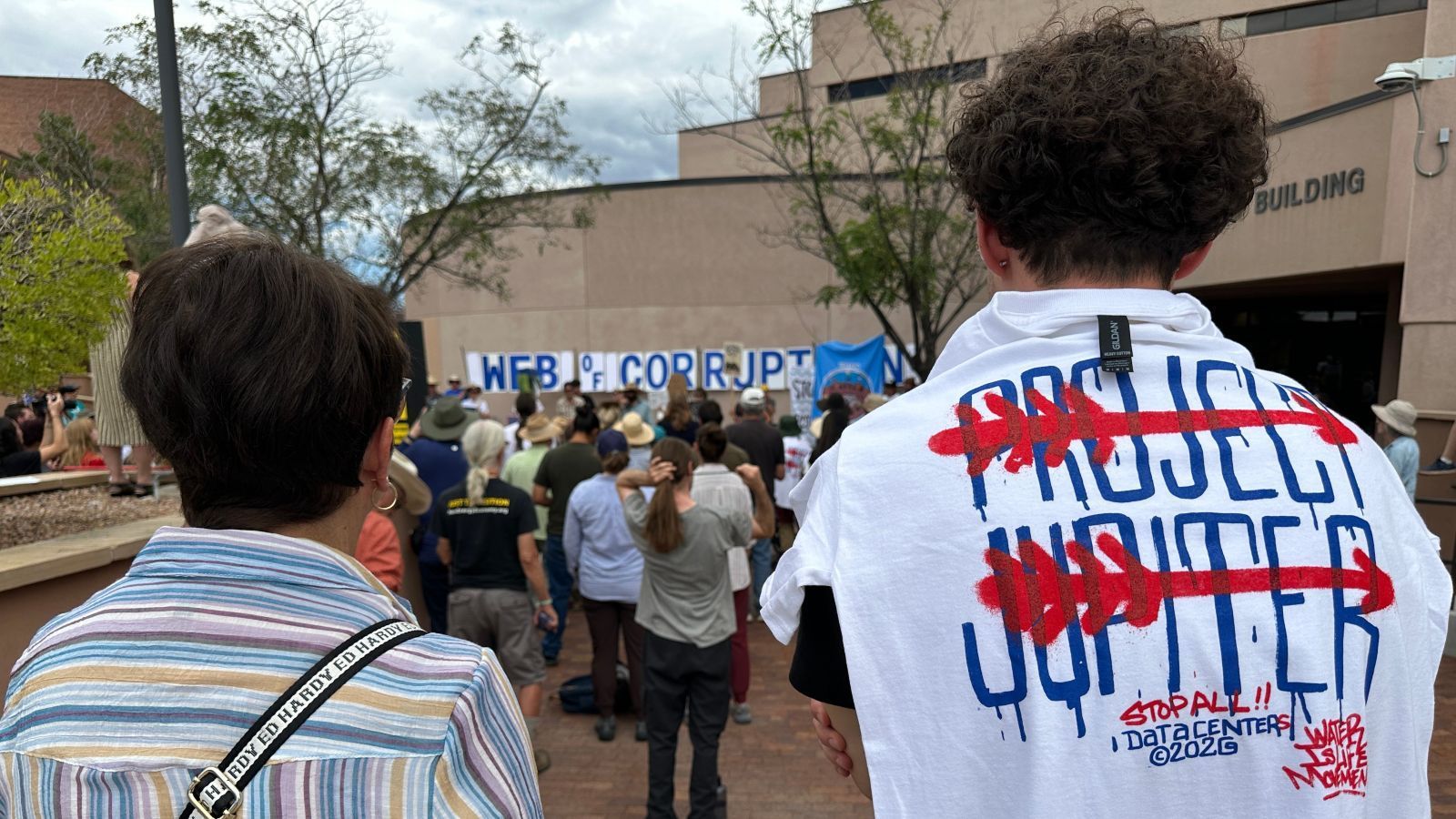
Protesters gather outside the New Mexico Environment Department to voice opposition to the Project Jupiter data center during a demonstration in Santa Fe, New Mexico, on August 21.
Susan Montoya Bryan / AP
Fervo isn’t using potable water at Cape Station; it uses salty brackish groundwater. But in a landscape where drought has made any water source valuable and potentially hard to find — and amid public outcry over data centers’ own water usage — a reliance on constant available water supplies could add another hurdle to geothermal’s spread.
Water is one of several uncertainties, including transmission access, geology, and drilling costs, that can scare investors away from geothermal projects. The unusual combination of oil-and-gas-style exploration and electric generation has already made it hard to attract capital in some cases. Data center interest has eased that strain, but not solved it, according to Mike O’Connor, director of the Mountain West Geothermal Consortium, a nonprofit research organization. O’Connor is researching new funding mechanisms for geothermal to overcome some of these challenges.
Meanwhile, Utah FORGE researchers, whose facility is located next to Cape Station, are testing ways to reduce water losses, including changing how wells are spaced and how water is injected and recovered.
“Utah FORGE is going to demonstrate these different opportunities to reduce water losses and see what performance looks like long term,” McLin said.
The geothermal industry’s ability to answer these questions doesn’t just matter for data centers. California needs clean firm power like geothermal if it wants to meet its goal of 100 percent clean electricity sources by 2045. California already gets more than half its electricity from renewables like solar and wind, but it needs reliable power that can fill the gaps when those sources and batteries aren’t operating. The state’s utility regulator has required power providers to procure a gigawatt of clean firm power by 2026, prompting a California utility to promise to buy 320 megawatts of geothermal power from Cape Station.
“There was an argument for geothermal power before data centers, and there will be an argument for geothermal power after these data centers are built,” said O’Connor.
This story was originally published by Grist with the headline A clean energy source is buried under the desert, but it takes water to use it on Sep 22, 2026.
From Grist via This RSS Feed.