

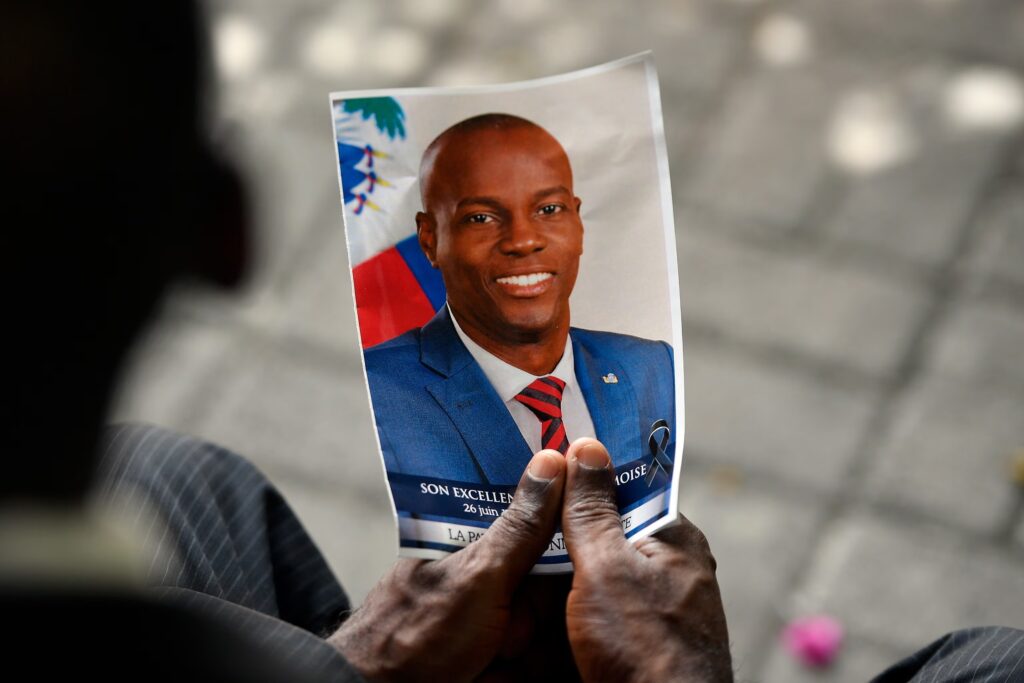
Eighteen suspects in the 2021 assassination of Haitian President Jovenel Moïse, including 17 former Colombian soldiers and accused ringleader Joseph Badio, were extradited from Haiti to Miami as part of a sweep of 30 new arrests announced by U.S. federal prosecutors.
The U.S. Department of Justice arrested 30 additional suspects on Sunday in the 2021 assassination of Haitian President Jovenel Moïse, including 18 men transferred from Haiti to Miami aboard a U.S. military plane, according to the U.S. attorney for the Southern District of Florida.
The other 12 suspects were detained in various locations, U.S. Attorney Jason Reding Quiñones said in a post on X announcing the arrests.
RELATED: UN Warns of Deepening Human Rights Crisis in Haiti Amid Escalating Gang Violence
“Today begins the next major phase in our pursuit of accountability for the assassination of President Jovenel Moïse,” he wrote, adding, “Five years later, we are still bringing defendants before US courts, and we are not done.”
Quiñones did not identify the suspects, but Haiti’s Justice Minister Patrick Pelissier said the plane was carrying 17 former Colombian soldiers along with Joseph Badio, a former Haitian Justice Ministry official whom investigators in Haiti have identified as the plot’s central architect. Badio has maintained his innocence and said he is being made a scapegoat for the killing.
30 indicted for their involvement in assassination of Haitian president. 18 transported in military plane from Haiti to face American justice in the Southern District of Florida. pic.twitter.com/T08y0x88hj
— US Attorney Reding Quiñones (@USAO_SDFL) September 20, 2026
Extraditions From Haiti
Prosecutors in Miami have already convicted 12 people tied to the conspiracy, including two former Colombian soldiers, a Haitian politician, the owners of the Miami security firm CTU Federal Academy that hired the assassins, and three people accused of helping finance the operation.
Haitian Justice Ministry confirmed Sunday that the 18 men were extradited following what it called significant progress in the U.S. legal case, adding that the domestic case against men charged in Haiti had run into major difficulties that had stalled the investigation there. Officials did not detail those obstacles, though the case has repeatedly faced threats and political interference. “The government reaffirms its determination to ensure that justice is done for President Jovenel Moïse, his family and the Haitian people,” Pelissier said in a public statement.
The suspects, including Joseph Felix Badio, a former anti-corruption official from Haiti’s Ministry of Justice, and several Colombian mercenaries, were transported via military aircraft to the southern region of Florida. The extradition process was overseen by the U.S. authorities, with federal prosecutor Jason Reding Quinones confirming the details. Quinones emphasized the ongoing nature of the investigation, stating that 30 suspects have been charged in relation to the assassination and that the process is far from over.
One mission. Unified partnerships. No borders to justice. On September 20, 2026, 18 defendants connected to the assassination of Haitian President Jovenel Moïse were extradited to the United States. This operation demonstrates FBI Miami’s reach in our extraterritorial area of… pic.twitter.com/KK7WtdoZWk
— FBI Miami (@FBIMiamiFL) September 21, 2026
Broader Conspiracy Unclear
Colombia’s Foreign Ministry said the same day it was closely following the transfer of 17 Colombian nationals from Haiti to the United States, adding that Bogota would not interfere in the decision or the process, since it falls under the jurisdiction of the countries involved.
Moïse’s assassination unleashed a wave of gang violence across Haiti, driving nearly 1.5 million people from their homes in recent years. The extradition of the suspects has raised various reactions. Milena Rey Quintero, the wife of one of the extradited Colombian suspects, expressed surprise at the news, stating that she had spoken with her husband just three days prior and he had no knowledge of the impending transfer. Defense attorneys in southern Florida, involved in the case, have indicated that they were unaware of the extradition until recently. However, several new judicial documents, filed under seal, suggest potential revisions in the charges against new defendants.
The new arrests and extraditions come at a critical juncture, just a week before another key figure in the case, Christian Emmanuel Sanon, is scheduled to go to trial. Sanon, who had sought to replace Moïse as President, has maintained that he did not intend for Moïse to be assassinated, but rather arrested and removed from power. Sanon’s trial, initially planned for this year alongside four other defendants, was delayed due to health issues.
The other four men were convicted in May and are currently awaiting their sentences. The legal process in United States continues to unfold, with the expectation that more details will emerge as the trials progress.
From teleSUR English via This RSS Feed.