

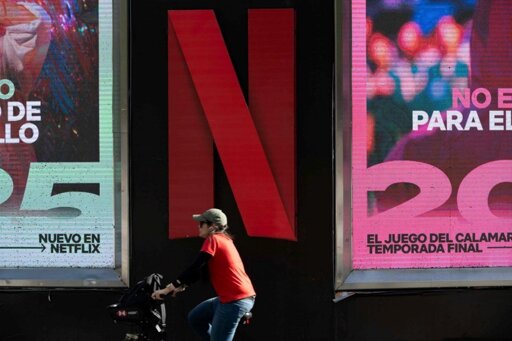
This article by Enrique Méndez originally appeared in the September 21, 2026 edition of La Jornada, Mexico’s premier left-wing daily newspaper.
Shipping and app-based transportation companies, along with video and audio streaming providers over the Internet, have begun pressuring the Chamber of Deputies not to approve—or to modify—the initiative that would require them to inform their customers, from the contract or the order, of the “total and definitive” price of their products and services.
In letters sent to the coordinators of the legislative caucuses, organizations that group together firms such as Netflix, Disney, Uber, Rappi, DHL and FedEx argued that the measure “could have significant technical and operational implications for various business models and digital services.”
The initiative, presented by Morena’s coordinator, Ricardo Monreal Ávila, states that these companies offer misleading services, with a low initial cost that grows with additional charges—a phenomenon known as drip pricing or “precios por goteo” (dripped prices)—which appears, for example, in streaming services that force users to buy an additional package to avoid ads.
It further states that this practice exploits consumers’ behavioral biases and, in the proposed reform to the Consumer Protection Law, it is proposed that, once the product’s initial price is announced, it must be respected by companies “without the possibility of adding charges not previously and visibly disclosed to consumers.”
They Request Working Groups to Submit Observations
Nevertheless, on September 14, the associations that group together the main companies of this type of service sent letters to the coordinators requesting “working groups” to analyze the scope of the initiative and present their observations.
Among other points included in their document, they state that “there are components of the price that can only be determined with information obtained during the purchasing process.”
They cited, for example, shipping costs that depend on the postal code; the specific conditions of the purchase; split shipments coming from different warehouses or sellers; as well as variable-weight products.
In addition, they argue that there are “services subject to subsequent variables,” such as installation, measured by consumption; cross-border operations to which import taxes are added; or online-marketplace models in which certain prices or charges depend on third parties or technology providers.
For this reason, they consider that a distinction could be drawn between charges that can and should “reasonably” be reported from the outset, and others that “depend on variables inherent to the provision of the service or on information that has not yet been provided by the consumer.”
-
Companies Lobby Against Mexican Reform That Would Require Them to Report the ‘Definitive’ Price
September 21, 2026
Netflix, Uber, Rappi and DHL are pressuring Congress to weaken Morena’s bill against ‘drip pricing,’ the hidden fees tacked onto a low advertised cost.
-

“I Want to Work With President Sheinbaum,” Mamdani Says; He Praises Her Policies
September 21, 2026September 21, 2026
At the Urban 20 forum, New York Mayor Zohran Mamdani called Mexico City an international ‘inspiration’ for how it confronts the cost-of-living and care crisis.
-

Mexico Sees the US as a ‘Greater Threat’ Than China or Russia, New Survey Confirms
September 20, 2026September 20, 2026
A Focaldata–Rockefeller poll finds 58% of Mexicans see the US as a major threat, more than double the figure for China and well above Russia.
The post Companies Lobby Against Mexican Reform That Would Require Them to Report the ‘Definitive’ Price appeared first on Mexico Solidarity Media.
From Mexico Solidarity Media via This RSS Feed.