

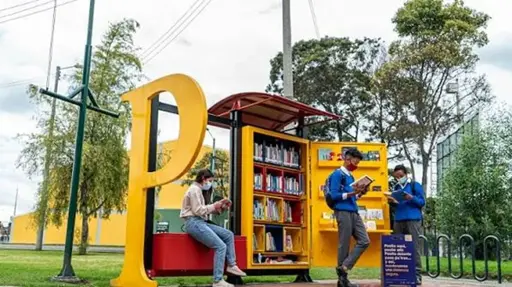
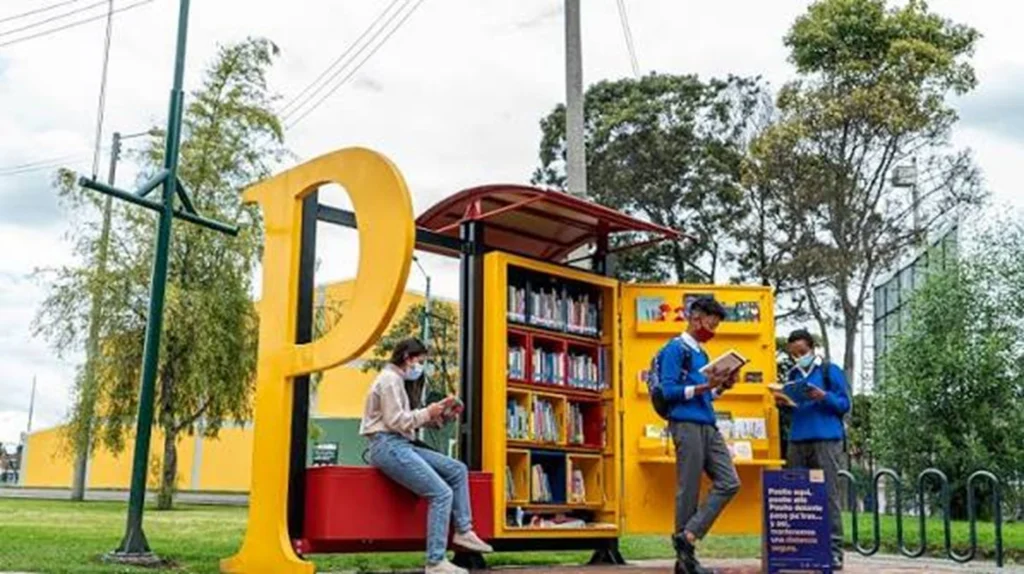
The library network collaborates with the Muisca councils of Bogota to preserve the Indigenous language.
On Saturday, Bogota celebrated the 25th anniversary of BibloRed, Colombia’s largest public library network, which was recognized with UNESCO’s King Sejong Literacy Prize for its intercultural and inclusive approach.
RELATED:
Instituto Cervantes Launches Its First Academic Chair in Northern Ireland
The award highlighted the LEO Schools program, a strategy of the Bogota Secretariat of Culture that incorporates “native languages, community knowledge, and diverse experiences” into literacy processes.
According to Secretary of Culture Santiago Trujillo, the project works with Indigenous communities, the LGBTQ+ population, and migrants. The program began in 2014 and has benefited more than 10,000 people, promoting reading and writing in different demographics.
BibloRed collaborates with the Muisca councils of Bogota to preserve the Indigenous language, strengthen ancestral memory, and revitalize cultural expressions in the urban area.
En la 20.ª Fiesta del Libro y la Cultura de Medellín, el CNMH presentó el libro «¿Quiénes son las verdaderas heroínas y los verdaderos héroes en el Oriente antioqueño?», que propone una pregunta necesaria: ¿qué significa el heroismo en un territorio atravesado por la guerra?
— Centro Nacional de Memoria Histórica (@CentroMemoriaH) September 20, 2026
The text reads, “At the 20th Book and Culture Festival of Medellin, the CNMH presented the book Who Are the True Heroines and True Heroes in Eastern Antioquia?, which poses a necessary question: What does heroism mean in a territory scarred by war?”
The model seeks to modify the traditional teacher-student relationship by promoting the idea that everyone becomes literate and learns through diverse ways of reading the world.
Among the actions taken, Muisca-language signage was installed to identify fruits, routes, and sacred spaces. BibloRed was founded with the construction of large libraries such as the Virgilio Barco Library and later incorporated spaces like El Tunal and Julio Mario Santo Domingo.
It currently has 145 reading spaces, including libraries and reading points in plazas and parks, and will reinvest the US$30,000 prize money in strengthening the LEO Schools program.
Colombian President Abelardo De La Espriella said that police may enter universities when violence, vandalism, terrorism, or extraordinary disruptions to public order occur, while pledging to protect peaceful protest.
De La Espriella announced a national protocol to define when… pic.twitter.com/waJ21u7TPH
— teleSUR English (@telesurenglish) September 14, 2026
teleSUR: JP
Source: EFE
From teleSUR English via This RSS Feed.