

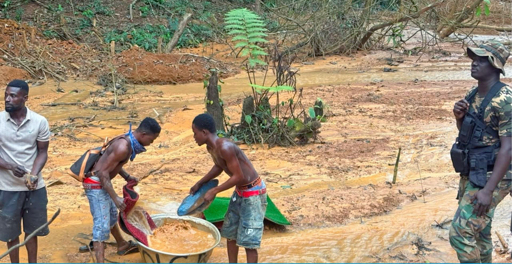
Every day, scores of illegal miners on motorbikes swarm into the Atewa Forest Reserve, in eastern Ghana — ignoring the handful of Forestry Commission guards charged with keeping them out. Inside the reserve, the miners have stripped forest cover and excavated pits, their passage marked by abandoned equipment and temporary camps and muddy and polluted streams. Their actions jeopardize the drinking water of as many as five million Ghanaians. “We say this based on a lot of records coming from the Forestry Commission staff, some court records as well,” says Daryl Bosu, deputy national director of operations at conservation initiative A Rocha Ghana, which has been monitoring Atewa and other forested areas for a decade. A Rocha played a key role in a civil society coalition opposing government plans to mine for bauxite in the reserve. Bosu says A Rocha has observed that many of the rivers and streams in the area, which previously ran clear, have turned brown with sediment since the miners overran the reserve. Miners, he says, have cut down trees along water courses, which he fears have been contaminated with mercury, cyanide and arsenic — all widely used in illegal mining operations. “The Forestry Commission team is complaining of the unprecedented attack on the Atewa forest because of mining and how they are seriously overwhelmed as a result of pressure which they have never experienced,” he tells Mongabay. Aerial view of a mine site in Atewa. Image courtesy of A Rocha Ghana. The critically endangered Atewa…This article was originally published on Mongabay
From Conservation news via This RSS Feed.