

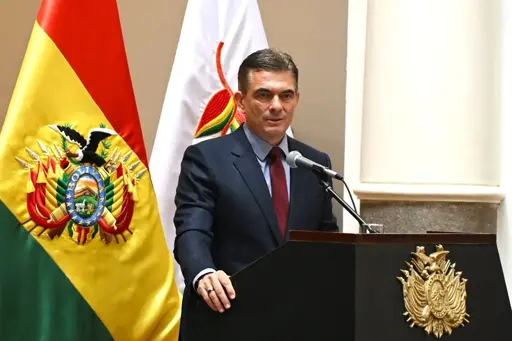
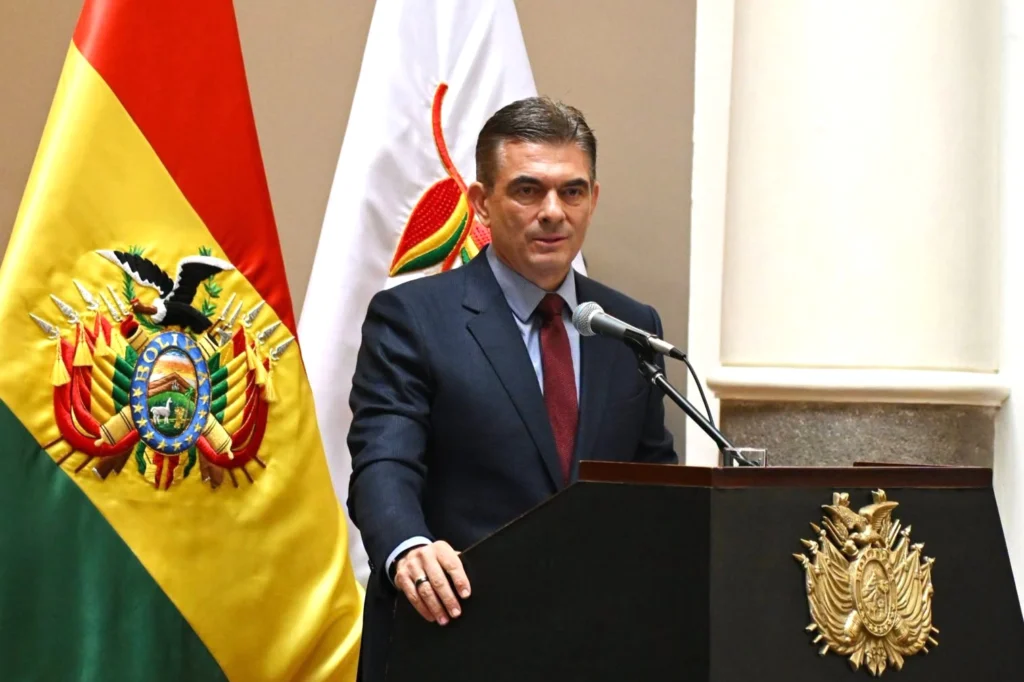
Bolivian President Rodrigo Paz enacted the agreement with the International Monetary Fund (IMF) for 1.9 billion dollars, aimed at strengthening his administration’s economic reform program and international reserves.
[Social Protests Persist in Bolivia Amid Diesel Subsidy Removal: Bolivia’s Right-Wing Government Enacts IMF 1.9 Billion Dollars Agreement](https://www.telesurenglish.net/bolivias-right-wing-government-enacts-imf-1-9-billion-dollars-agreement/)
Law 1765, which mentions the multilateral organization’s financing, was published in the Official Gazette of Bolivia without any additional announcement, thus, according to Bolivian regulations, it comes into effect.
The agreement’s validity became effective after the Bolivian president announced on Friday at midnight the lifting of the diesel subsidy, which will now be priced according to the international market value. The price of a liter of fuel increased from 9.80 Bolivianos (1 dollar) to 17.95 Bolivianos (1.83 dollars).
Entérate de la noticia completa 📲: https://t.co/86QKbmwoPQ
🇧🇴💰 Uno de los mecanismos establecidos por la norma es el seguimiento de la ejecución del crédito. El Ministerio de Economía deberá remitir semestralmente a la ALP información e informes sobre el uso y ejecución. pic.twitter.com/vM1OlNVWgZ
— Bolivia Tv Oficial (@Canal_BoliviaTV) September 20, 2026
Paz’ government committed to the IMF to eliminate fuel subsidies starting in 2027, according to the agreement for the implementation of a technical plan reached last July and published last week. The agreement grants Bolivia 1.369 billion special drawing rights (SDRs), equivalent to 1.9 billion dollars, to address the “persistent” fiscal and external imbalances that have affected it in recent years.
The repayment period for the debt is “up to 10 years from each disbursement,” with an interest rate of 3.47%, which may vary “according to the SDR quotation.
“The agreement has been harshly criticized by progressive sectors of the country. Former President Evo Morales criticized the government’s agreement with the IMF, calling it unconstitutional and treasonous to the homeland, based on Article 320 of the CPE which prohibits foreign economic impositions.
Furthermore, he accuses the government of trying to modify the Magna Carta under the pretext of eliminating subsidies and attracting investment, with the aim of privatizing natural resources. He also objects to the possible closure of ten state-owned companies, interpreting it as a step towards privatization and the sale of Bolivia.
From teleSUR English via This RSS Feed.