

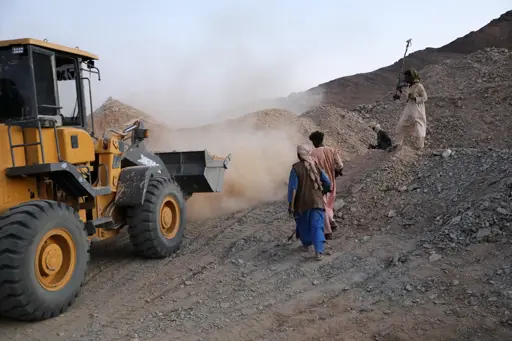

At least 82 bodies had been recovered, according to local officials and activists, while dozens of other miners were feared trapped or missing. The latest figure represents an increase from the 67 deaths earlier reported by the Sudan Doctors Network as rescue operations continued.
The collapse occurred in an area controlled by the paramilitary Rapid Support Forces (RSF), which has been fighting Sudan’s military since April 2023. The continuing war has severely weakened state institutions and access to basic services across large parts of the country.
Limited rescue efforts
In a statement, the Sudan Doctors Network said they lacked basic safety and protective measures required at mining sites. It said search and rescue operations were continuing to locate survivors and people trapped beneath the rubble, warning that the death toll could rise.
The network called out the negligence that had exposed miners to grave risks and called on the authorities controlling the area to protect mining workers, provide medical and logistical support, and prevent unregulated mining activities from continuing without adequate safety measures.
Rescue operations have themselves been severely constrained. Murtada Ahmed, spokesman for the Kordofan Human Rights Observatory, told Radio Dabanga that the operation was progressing slowly because almost no specialized equipment was available. Local residents and miners have largely been forced to rely on their own efforts and basic machinery to recover bodies and search for people trapped underground.
A wider artisanal mining crisis
The disaster in Sudan comes only weeks after another major artisanal mining tragedy in the Central African Republic, where more than 100 people were killed when an artisanal gold mine collapsed following a landslide in the western part of the country.
Informal and small-scale mining provides a livelihood for millions of people and remains an important source of income in communities where formal employment opportunities are limited. At the same time, miners frequently work in dangerous conditions, with limited regulations, protective equipment, geological assessments, and emergency rescue capacity.
In Sudan, gold mining has become particularly important following the country’s economic collapse and war. The sector includes thousands of small-scale and informal operations, while gold-producing areas have also become economically and strategically important to the rival forces fighting for control of the country.
Disaster as Sudan’s war continues
The mine collapse is taking place as the war that has devastated Sudan since 2023 continues, producing widespread displacement, hunger, and the breakdown of essential services.
Read more: The Blue Nile front: Sudan’s war intensifies along Ethiopia’s border
West Kordofan is among the areas affected by the conflict between the RSF and the Sudanese Armed Forces. The control of mining areas by armed actors has added another layer of vulnerability for workers and surrounding communities.
From BT News via This RSS Feed.