

Protests in Bolivia are still ongoing as the government eliminates the diesel subsidy and extends a state of emergency, with former President Evo Morales warning of food price increases.
Supreme Decree 5716 set the initial diesel price at 17.95 bolivianos ($1.83) per liter as of Saturday, September 19, replacing the traditional fixed price that provided certainty to the economies of workers and communities with a market mechanism indexed to the international import cost and considering transport, storage and taxes.
The decision, seen as contrary to popular interests, came after pressure from the International Monetary Fund and the Legislative Assembly’s agreement to extend the state of emergency for another 90 days, perhaps anticipating social rejection of the “dieselazo.”
RELATED: Bolivian President Rodrigo Paz Announces Diesel Subsidy End
From the opposition, Morales denounced that the suppression of the subsidy and the extension of constitutional restrictions constitute an external imposition dictated by the IMF. He said the sudden rise in input costs will directly affect small farmers and trigger an uncontrolled increase in the prices of basic foods for the population, in addition to impacting other sectors.
In Morales’s view, the Executive expanded “the state of emergency to impose the dieselazo right before the summer planting. They don’t care that small producers don’t know where to get money to buy fuel, fertilizers and other inputs.” He added that “the Government chose to unload the weight of the adjustment onto those who work the land” instead of publicly debating the measure and adopting social protection and productive stimulus policies on the eve of the El Súper Niño event. He asserted that the Government subordinated itself to the IMF and that the country is not run by Paz but by the U.S. Southern Command, which months ago made clear it is interested in controlling Bolivia’s resources.
Morales also addressed the issue this Saturday at the assembly of the agrarian union organization of coca producers Central Isiboro, and at the inauguration of the Tambaquí Fair at the Central Ayopaya of the Carrasco Federation in Puerto Villarroel, in the Cochabamba Tropics. He added that the U.S. is disputing control of Bolivia’s natural resources. Emphasizing the just popular concern over the “dieselazo,” he called on the workers gathered there to continue fighting without giving up.
During an expanded meeting, the president of the Federation of Mining Cooperatives, Josué Caricari, rejected that the IMF impose conditions on Bolivia and mortgage the future of popular sectors that — he said — will be the ones to pay the debt of 1.9 billion dollars that the Fund’s credit will entail, and another 3 billion that other credit organizations would provide.
The general secretary of the Bolivian Trade Union Confederation of Intercultural Original Communities (CSCIOB), Aquilardo Caricari, questioned Paz over the “dieselazo” and regretted that the Government lied to the people when it initially assured that Supreme Decree 5676 would affect only large fuel consumers. He warned that eliminating the subsidy will generate negative repercussions for the population.
Ampliaron el Estado de Excepción para imponer el diéselazo final justo antes de la siembra de verano.
No les importa que los pequeños productores no sepan de dónde sacar plata para comprar combustible, fertilizantes y otros insumos. Y cuando falten alimentos y suban los…
— Evo Morales Ayma (@evoespueblo) September 19, 2026
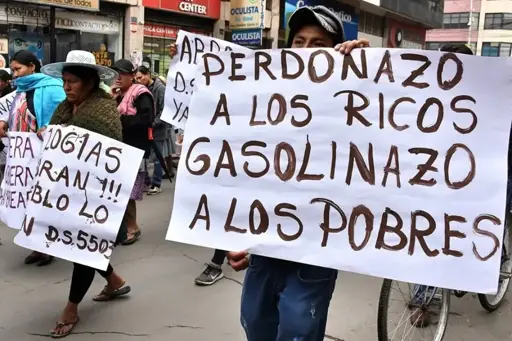
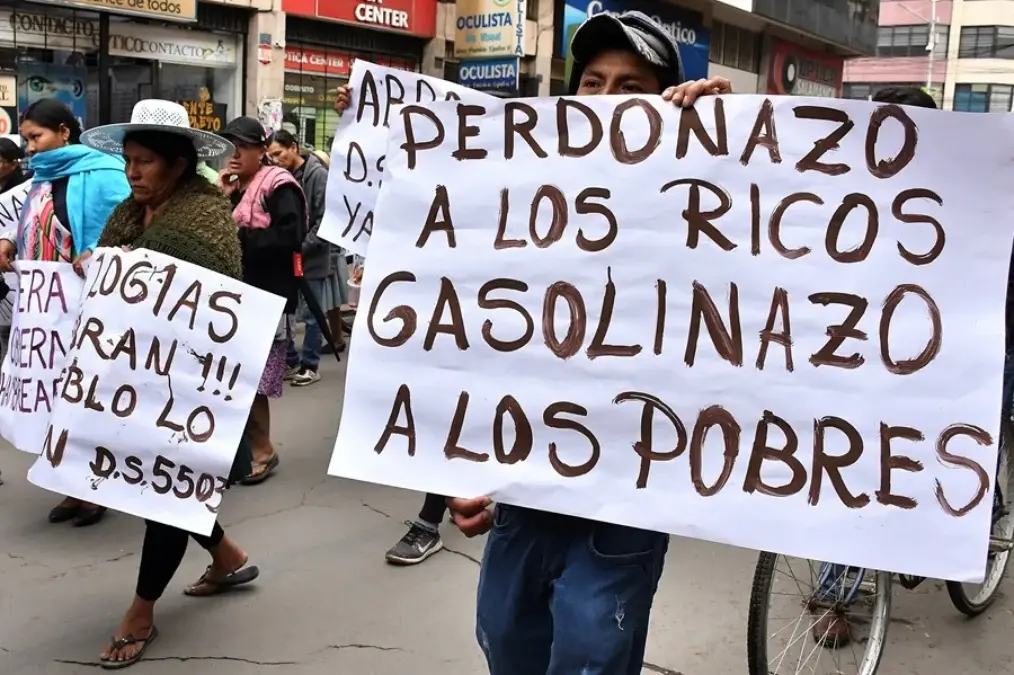
The criticisms occurred amid broad rejection of neoliberal-style decisions and corruption scandals within the Executive, including revelations about the relationship between Paz and far-right operator Fernando Cerimedo. In early 2026, the country faced intense protests after the “gasolinazo,” which the right-wing Government tried to impose through DS 5503. Months later, in May-June, it faced several weeks of mobilizations and blockades against privatizations, during which the resignation of the Cabinet was demanded.
The extension of the state of emergency endorsed by the Legislature seeks to prevent the resurgence of road blockades and social protests. The Government reproaches organizations and social movements that promote protest actions threatening circulation and supply.
From teleSUR English via This RSS Feed.