

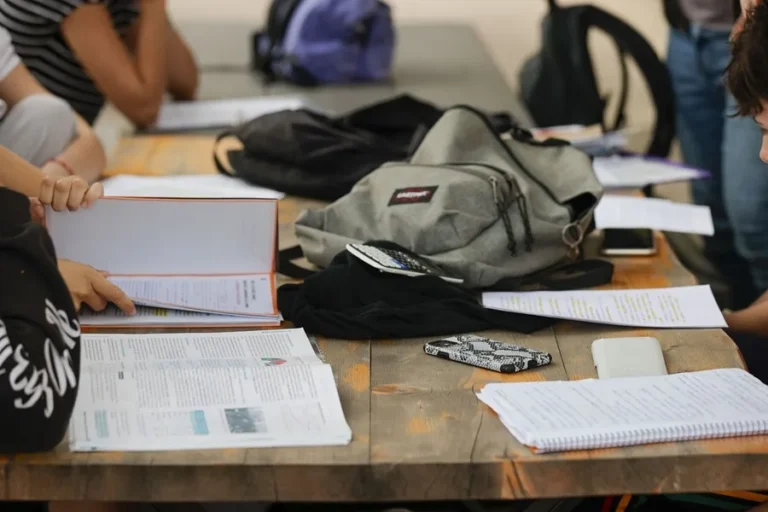
Mexico school cellphone restrictions begin in October, limiting use throughout primary and secondary school days while promoting learning and student mental health.
Related: Codex Azcatitlan Returns Temporarily to Mexico
Mexico School Cellphone Restrictions Begin in October
Mexico school cellphone restrictions will take effect in October after the National Council of Educational Authorities, known as CONAEDU, unanimously approved new rules for mobile devices in schools.
The measure will apply nationwide to primary and secondary education, where cellphone use will be restricted throughout the entire school day.
For upper-secondary and higher education, the rules will be established by each school community through assemblies and consultations involving students, teachers, administrators, and families.
Mexico’s Secretary of Public Education, Mario Delgado, said the regulation responds to concerns about academic performance, classroom distraction, and student emotional well-being.
The agreement was reached during CONAEDU’s Third Extraordinary National Plenary Meeting. The decision applies to the country’s 32 federal entities and is expected to be incorporated into school regulations before October.
In primary and secondary schools, students will not be allowed to use cellphones during the school day except in cases authorized by the school or teacher. The national policy leaves schools to determine the practical procedures for storing, supervising, and returning devices.
The SEP said the measure is not intended to reject technology. Instead, it seeks to ensure that digital tools are used for educational purposes rather than continuous entertainment, social media consumption, or classroom distraction.
The new policy comes as schools and families debate the effects of short-form videos, online games, social media, and constant notifications on children and adolescents.
Delgado said international assessments, including the Programme for International Student Assessment (PISA) conducted by the Organisation for Economic Co-operation and Development, have drawn attention to the effect of mobile-device distractions on reading comprehension and abstract reasoning.
The education secretary also linked the measure to a national strategy on mental health. In coordination with the Health Secretariat and under instructions from the presidency, the SEP has made the emotional well-being of students a priority for the new academic year.[cronica.com][diario][jornada.com]
The initiative will be accompanied by “The ABC of Emotions,” a program focused on adolescents and young people between 14 and 18 years old.
The program will provide information and activities addressing emotional health inside school communities. The SEP also plans to organize assemblies, classroom activities, and awareness campaigns for students, teachers, and families.
Authorities said more than 16 million guides will be distributed to help explain the new policy and promote responsible digital habits.
The decision has received support from some educators who say that reducing cellphone use could help students concentrate, participate in class, and interact more directly with classmates and teachers.
However, many experts have warned that restrictions alone will not resolve the challenges associated with technology. They argue that schools must combine rules with digital literacy, emotional support, and critical education about online content.
Mexico School Cellphone Restrictions and Student Well-Being
Read about the CONAEDU agreement and the October implementation.
The Mexico school cellphone restrictions are based partly on concerns about the way children consume digital content.
Educator and mother Betzaida Vázquez said that an uninterrupted stream of short videos on social networks can contribute to mental fatigue and shorter attention spans.
She described how her eight-year-old son, Aarón, can become absorbed in YouTube or TikTok videos and become frustrated while playing video games.
Vázquez said she supports limits on recreational use but does not view cellphones as inherently harmful. In her experience, mobile devices can also serve as educational tools at school and at home when their use is supervised and connected to a clear learning objective.
Her position reflects a central issue in the debate: the difference between unstructured screen exposure and purposeful educational technology.
A cellphone may distract students when it is used for games, social media, or private messaging during class. The same device can also provide access to dictionaries, digital libraries, educational applications, translation tools, and research materials.
For that reason, educators have called for rules that distinguish between unauthorized personal use and teacher-directed academic activities.
Specialists say families should also establish schedules and supervision at home. A school restriction cannot fully address problems that continue after students leave campus.
Parents and caregivers may need to agree on limits for social media, video games, nighttime use, and notifications. They may also need to discuss online safety, cyberbullying, privacy, and the reliability of information encountered on digital platforms.
Teachers have emphasized that students should participate in creating rules for digital coexistence. Involving young people in the process could make the policy more legitimate and improve compliance.
Students may be more willing to accept restrictions if schools explain the reasons behind them, establish fair procedures, and make clear how devices can be used during emergencies or for authorized educational work.
The policy also raises practical questions. Schools will need to decide where phones are stored, who is responsible for them, and what happens if a device is lost or damaged.
They will also need emergency communication systems so that parents can contact their children through official channels without encouraging unauthorized cellphone use.
The national policy may be applied differently across regions because educational authorities and school communities have distinct resources and conditions.
Some schools may have secure storage systems, while others may lack suitable facilities. In some communities, students rely on phones to travel safely, communicate with relatives, or access materials that the school cannot provide.
The SEP will therefore face pressure to make sure the restrictions do not deepen inequality between schools with different levels of infrastructure and digital access.
The debate also includes teachers’ concerns about classroom management. Educators may be required to enforce the rules while continuing to teach, supervise students, and respond to family concerns.
Clear protocols, training, and institutional support will be necessary if the policy is to avoid placing all responsibility on individual teachers.
The Mexico school cellphone restrictions are likely to be judged not only by whether students stop using phones during class, but by whether learning outcomes, attention, school coexistence, and emotional well-being improve.
🇲🇽📚 ¡Más jóvenes están en las escuelas! De acuerdo con la OCDE, entre 2015 y 2025 aumentó la escolarización de jóvenes de 15 años en secundaria y preparatoria, especialmente entre adolescentes de contextos desfavorecidos.
Nuestro país también mostró resiliencia en Ciencias y… pic.twitter.com/0wvPd3nTg9
— SEP México (@SEP_mx) September 18, 2026
Digital Literacy, Upper Education, and New School Infrastructure
See OECD information on PISA and student learning outcomes.
For students in upper-secondary and higher education, the Mexico school cellphone restrictions will follow a different approach.
Rather than imposing a single national prohibition, schools will create their own rules through agreements involving students, families, teachers, administrators, and other members of the educational community.
This model recognizes that older students may use mobile devices for research, communication, work, transportation, and academic activities.
High schools and universities may therefore establish rules that allow cellphone use during breaks or for authorized academic purposes while limiting social media, recording, or disruptive behavior during classes.
The local approach also permits schools to consider their specific conditions. A technical school, university laboratory, rural high school, and urban preparatory school may have different educational needs.
The challenge will be preventing these differences from producing confusion or unequal protections. The SEP will need to provide minimum standards on privacy, safety, harassment, and emergency communication.
The education authority has also confirmed funding to accelerate construction of schools belonging to the national “Margarita Maza” Upper-Secondary Education program.
The project seeks to expand enrollment and improve access to upper-secondary education. Authorities have not presented cellphone regulation as a substitute for investment in school infrastructure, teachers, laboratories, and educational materials.
Both issues are connected. Students are more likely to benefit from responsible technology use when schools have reliable internet, trained teachers, updated equipment, and clear academic objectives.
Digital literacy should help students evaluate online information, recognize manipulation, protect personal data, and understand how algorithms shape what they see.
It should also address the commercial design of social-media platforms. Notifications, recommendation systems, autoplay, and short-form content are designed to maintain attention and encourage extended use.
Teaching students about those mechanisms can help them understand why they may find it difficult to stop scrolling or put down a device.
The Mexico school cellphone restrictions also raise questions about health. Specialists have linked excessive screen use with sleep disruption, reduced physical activity, cyberbullying, anxiety, and emotional distress, although the effects vary depending on age, content, family support, and patterns of use.
The “ABC of Emotions” program is intended to address some of these issues by providing students with tools for identifying feelings, seeking help, and building healthier relationships.
Schools may need additional counselors and mental-health professionals if the program is to move beyond classroom materials. Teachers can identify warning signs, but they cannot replace trained clinical support.
The policy could also encourage more direct social interaction. Without phones, students may have more opportunities to speak with classmates, participate in group activities, and resolve disagreements face to face.
However, a strict prohibition without guidance could also produce conflict. Students may hide devices, resist enforcement, or feel that adults are imposing rules without understanding how technology forms part of their daily lives.
A gradual implementation with consultations, clear explanations, and regular evaluation may reduce those risks.
Geopolitical Context: Education, Technology, and Public Policy
The debate over Mexico school cellphone restrictions reflects a broader international discussion about how governments should regulate digital technology in education.
Countries in Europe, Asia, North America, and Latin America have adopted different approaches. Some have banned smartphones during lessons, while others allow schools to establish their own policies.
The debate is not simply about classroom discipline. It concerns the power of technology companies, children’s rights, data protection, mental health, and the purpose of public education.
Mexico is attempting to balance two objectives: limiting harmful or distracting use while preserving the educational potential of digital tools.
That balance is especially important because many Mexican students depend on mobile devices for internet access. For some households, the cellphone is the only tool available for online research, digital communication, or educational content.
A national restriction must therefore be accompanied by investment in school libraries, internet connections, computers, and accessible learning materials.
The decision also has an economic dimension. The technology sector increasingly shapes labor markets, communication, and public services. Students need digital skills to participate in modern economies, but they also need the ability to use technology critically rather than passively.
The government’s approach places mental health at the center of education policy. That emphasis reflects global concern about anxiety, cyberbullying, sleep problems, and the effects of social-media platforms on adolescents.
The measure could become an important public-policy experiment if Mexico evaluates its outcomes carefully. Authorities should monitor reading performance, attendance, disciplinary incidents, student well-being, and inequality among schools.
They should also consult students and teachers after implementation rather than treating the October rollout as a final solution.
The Mexico school cellphone restrictions will ultimately succeed only if they are connected to a broader educational strategy. Rules may reduce distractions, but they cannot replace quality teaching, family support, mental-health services, digital literacy, and safe school environments.
Beginning in October, primary and secondary schools will face the practical task of implementing the new national standard. Upper-secondary schools and universities will begin developing their own rules.
The results will depend on whether the policy can establish healthier relationships with technology without turning digital devices into enemies of learning.
From teleSUR English via This RSS Feed.