

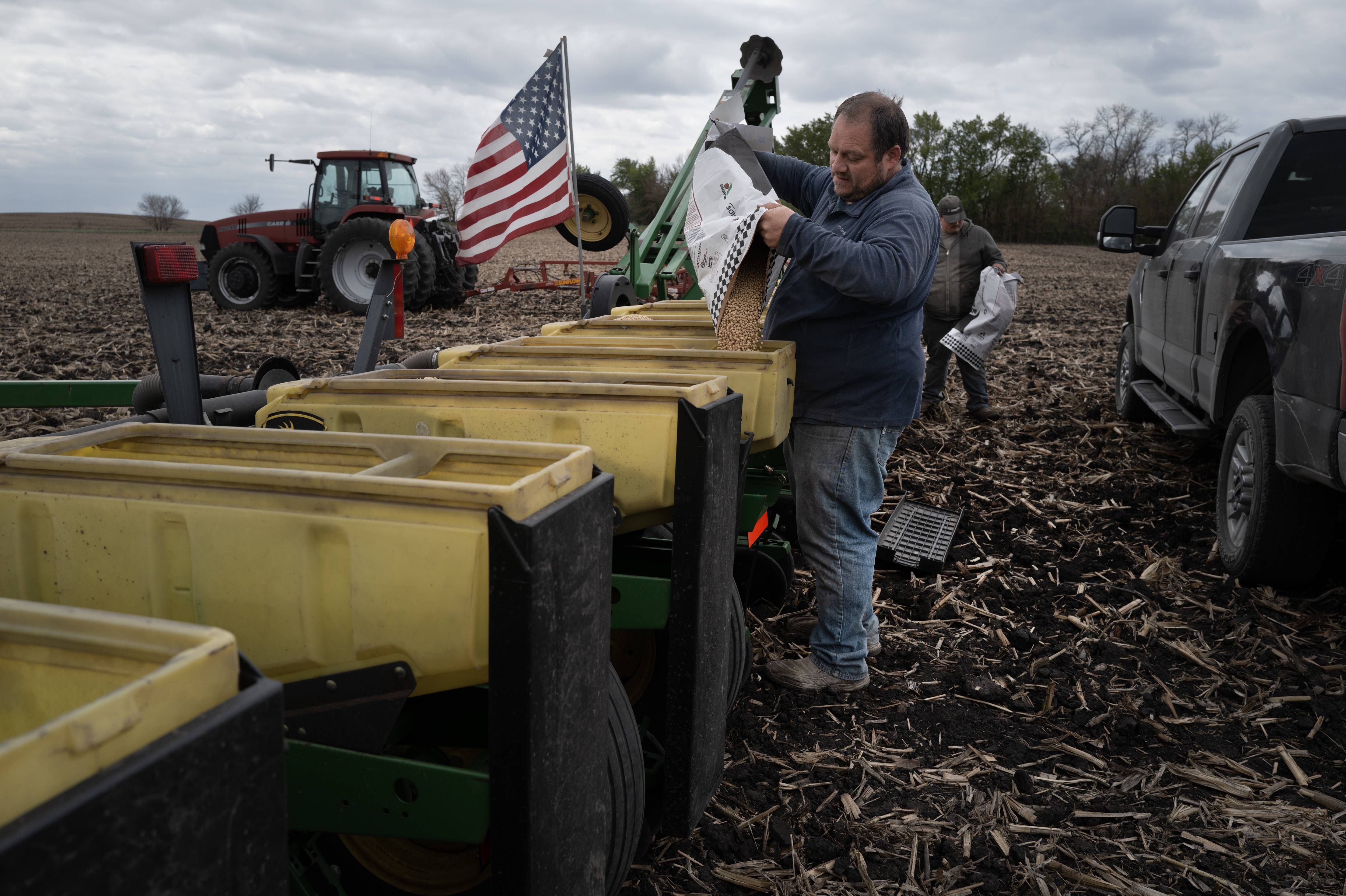
Farmers across the US are speaking up about their struggles as President Donald Trump’s illegal war with Iran and trade war with Canada are taking a hammer to their finances.
In an interview with CBS News published Thursday, North Carolina farmer Matt Bell revealed that “I have never worried and stressed like I have the last year,” thanks to the soaring costs of fuel, fertilizer, and farm equipment, all of which have gotten more expensive thanks to Trump’s policies.
“The fertilizer, fuel, chemicals, seed, parts—you know, the whole nine yards,” said Bell, “everything that we touch has gone up.”
“We are fighting for survival.”
Matt Bell, 52, has been farming for more than half his life in central North Carolina.
He grows soybeans, corn and wheat and raises beef cattle on more than 1,000 acres. But Bell, who voted for President Trump, says soaring prices for fuel,… pic.twitter.com/9ELYXkJywt
— CBS News (@CBSNews) September 18, 2026
Bell, who voted for Trump, said he feels “misled” and “strung along” when it comes to the president’s rationale for attacking Iran without congressional authorization in February.
The North Carolina farmer said his costs for diesel fuel have doubled in the last year, driven in large part by Trump’s war.
According to data released Friday by the American Automobile Association, the average price of diesel in the US now stands at a record-high $6.45 per gallon, a 74% increase of the average price of diesel one year ago.
“We are fighting for survival,” Bell emphasized, “and we’re running out of options.”
Bell is far from the only farmer struggling.
Theresa Sisung, commodity and regulatory relations manager at the Michigan Farm Bureau, said in an interview with Up North Live that farmers in the state are about to “use a ton of fuel on their farms” due to the start of harvest season, making the record-high diesel prices particularly inconvenient.
“We have seen a slight increase in farm bankruptcies across the nation,” said Sisung. “We are seeing those farms that are more stressed. We’ve had some negative margins for farms for a few years now, so there is certainly stress out in the countryside.”
Michigan farmer Russell Ketchum told Up North Live that the high diesel prices have made what was already a challenging year and farming even more difficult.
“We started out the year with a lot of cold weather, a lot of freeze damage,” Ketchum explained, “so we’ve been working on short crops all year and then the diesel fuel prices and the gas prices all on top of that, they made everything challenging to say the least.”
North Dakota farmer Chris McDonald told the North Dakota Monitor in an interview published Wednesday that diesel prices have climbed so high that they “can erase your profit.”
McDonald also tied the increase in diesel costs directly to Trump’s war, which the president said would only last a matter of weeks but has since dragged on for more than six months.
“I think a lot of people expected that maybe the war would wrap up,” said McDonald, "and the prices would go down some, and they never really did drop very much. Then it just skyrocketed.”
The Iran War isn’t the only Trump policy that’s hurting US agriculture and bringing pain to US farming families, as a Tuesday NPR report highlighted the impact that the president’s trade war with Canada is having on farmers in Montana.
As noted by NPR, Canada is Montana’s biggest trading partner, as it accounts for “$1 billion in cross-border sales.” But the tariffs imposed by Trump, and the counter-tariffs imposed by Canada, have both harmed Montana farmers’ sales and made the equipment they buy more expensive.
Steve Sheffels, a Montana wheat farmer, told NPR that he’d like to buy “a new drill” and some “grain bins that come out of Canada,” but now fears that “I won’t be able to afford them” thanks to the trade war.
Sheffels, whose wife is Canadian, also told NPR that he was not happy to see America’s relationship with its largest trading partner deteriorate throughout Trump’s second term.
“You don’t treat your neighbors like this,” he said.
From Common Dreams via This RSS Feed.