

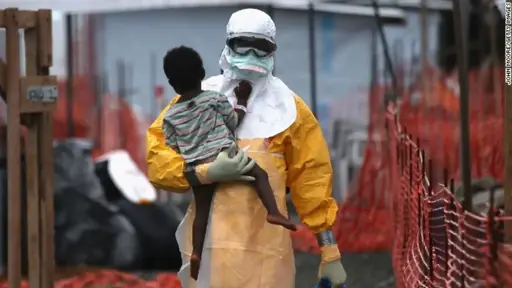
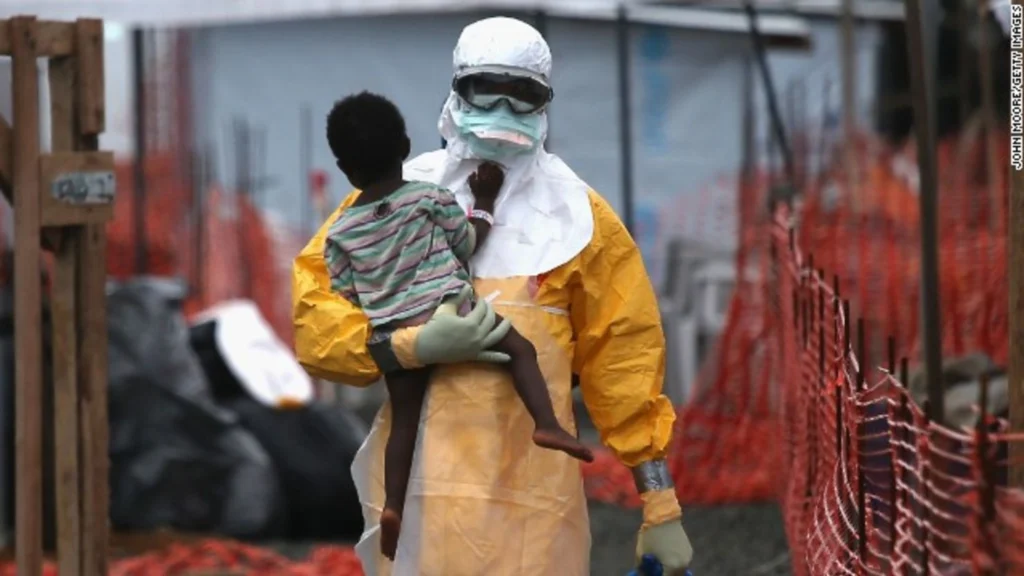
Doctors Without Borders (MSF) warned on Friday that the Ebola outbreak in the Democratic Republic of the Congo (DRC) is not subsiding but rather shifting toward provinces with weaker response capacities, despite an apparent slowdown in the initial hotspots. The organization was responding to signs of improvement reported by Congolese authorities, who had identified the epidemic’s peak as occurring in the third week of August.
RELATED:
DR Congo Faces Deadly Ebola Crisis: Over 3,500 Fatalities in 4 Months
“It would be a mistake to assume the outbreak is under control simply because some Ebola treatment centers are receiving fewer patients,” stated Anthony Kergosien, MSF’s emergency coordinator in the DRC. According to Kergosien, while the spread appears to be slowing in Ituri—the original epicenter—at least for the time being, the emergence of new cases nationwide has not decreased.
MSF highlighted that South Ubangi (northwest) has recently become the seventh affected province, while North Kivu (east) now accounts for nearly half of all newly confirmed cases and is recording a sharp rise in the test positivity rate. Kergosien warned that the outbreak’s expansion into new areas with even more precarious preparedness and response capabilities poses a serious risk.
According to the latest official data from the DRC, the epidemic has resulted in 7,475 cases and 3,605 confirmed deaths since May; however, MSF believes the actual figures could be higher due to shortcomings in surveillance and infection detection.
To address the crisis, MSF has deployed more than 2,800 staff members and manages nine Ebola treatment centers and several isolation areas across the provinces of Ituri, North Kivu, South Kivu, and Tshopo. “We are making every effort to detect and attempt to contain new hotspots early, before they turn into major outbreaks,” explained Kergosien, who called for a significant increase in operational support from United Nations agencies, including the World Health Organization (WHO).
On Thursday, the Africa Centres for Disease Control and Prevention (Africa CDC)—the African Union’s public health agency—also dismissed claims that the epidemic had already peaked and warned that transmission remains uncontrolled.
#Ebola response in northeastern #DRC update:
🚁@UNHAS delivered 1.2 metric tons of cargo, including PPE and tents, to NiaNia, Ituri, helping @WHO and the DRC Ministry of Health reach affected communities. pic.twitter.com/jE2natsfa9
— WFP Africa (@WFP_Africa) September 10, 2026
Officially declared on May 15, the current outbreak is the second deadliest and most contagious on record globally, surpassed only by the 2014–2016 West Africa epidemic, which resulted in approximately 11,000 deaths and 28,000 infections. The disease also spread to neighboring Uganda, where the WHO declared the outbreak over on August 26 following 20 confirmed cases—including 15 imported from the DRC—and two deaths.
A weaker response to a major epidemic
Reduced funding for global health also threatens to undermine the capacity to respond to new epidemics. The discontinuation of numerous programs linked to the U.S. Agency for International Development (USAID), combined with budget cuts, has curtailed projects specifically aimed at strengthening preparedness for future outbreaks.
During the 2014–2016 epidemic, countries like Sierra Leone received significant support from foreign organizations and governments—including USAID—which helped strengthen prevention and control efforts. The DRC now faces a different scenario, with reduced international support to contain the current emergency.
Although the country has accumulated experience in managing Ebola, shortages of personnel, laboratories, and healthcare infrastructure—compounded by insecurity in affected areas and limited access to diagnostic facilities—contribute to delayed detection of infections and slow down the response.
Compounding these difficulties is the DRC’s vast territory, comparable in size to Western Europe. The combination of great distances, hard-to-reach areas, and insecurity complicates the transport of equipment, supplies, and personnel to the communities where the emergency is concentrated.
Many more lives will be lost unless we get ahead of this Ebola outbreak.
The humanitarian community has the tools, courage and expertise. We need access and resources. pic.twitter.com/h1Fb2kzz7r
— Tom Fletcher (@UNReliefChief) September 2, 2026
International solidarity in the face of the outbreak
China and Cuba have expressed their willingness to contribute to the response to the Ebola outbreak in the Democratic Republic of the Congo. In Cuba’s case, this commitment was reaffirmed during a technical exchange via videoconference between health ministry officials from both countries.
Cuba’s cooperation efforts also draw on prior experience in combating this disease. During the epidemic that struck West Africa in 2014, a total of 256 members of the Henry Reeve Contingent participated in health operations in Sierra Leone, Liberia, and Guinea.
Building on that experience, Cuba strengthened its protocols to prevent the virus from entering or spreading within its territory. Given the current epidemiological situation, authorities have reactivated the National Plan for Ebola Prevention and Response, which includes enhanced surveillance of international travelers and the preparation of the country’s 24 points of entry.
China has also maintained its support for African countries affected by epidemics. Last June, it announced the delivery of new emergency humanitarian aid and highlighted the presence of Chinese medical teams working on the ground alongside local communities.
As part of that cooperation, Beijing deployed medical specialists to provide care and technical advice, while intensifying collaboration with the African Union Commission on prevention and control efforts. It has also supported the Africa Centres for Disease Control and Prevention in strengthening the response capacities of the continent’s health systems.
#DRC | Ebola cases are rising rapidly in the Democratic Republic of the Congo, with thousands of infections and more than 2,000 deaths reported as health teams work to contain the outbreak.
But what is driving its rapid spread, and why has containing the virus become so… pic.twitter.com/oiT2oicKjl
— teleSUR English (@telesurenglish) August 12, 2026
From teleSUR English via This RSS Feed.