


The Endangered Species Act has stood as a pillar of conservation in the United States since 1973, bringing animals like bald eagles, manatees, and humpback whales back from the brink of extinction.
But now, the Trump administration has taken its boldest step yet in an effort to strip legal protections for endangered species. Starting this week, the U.S. Fish and Wildlife Service says that it now considers it legal to kill a federally protected animal, as long as it wasn’t on purpose.
The directive comes after another recent revision to these legal protections went into effect this week, saying that damaging an animal’s habitat is no longer considered “harming” it. The two changes in combination take the teeth out of the Endangered Species Act and pave the way for industries to log, mine, pollute, or travel through areas without regard for what lives there.
The fate of the country’s rarest creatures could come down to the meaning of two seemingly simple words: “harm” and “take.” In this case, “take” refers to killing an animal.
“A vessel that inadvertently strikes a whale has not taken it, because the vessel’s course was not set against the whale,” said the memo, signed by Brian Nesvik, director of the Fish and Wildlife Service. “Felling a tree is not a take of the bats roosting in it unless the tree was felled for the purpose of killing or capturing them.”
Legal experts say this is an unprecedentedly narrow view of what these words mean in the Endangered Species Act, and that the moves are sure to be challenged in court. Almost two dozen states recently sued the Trump administration over changes to the law, and more lawsuits from environmental groups are expected to come. And if history is any indicator, the agency could soon find itself on the losing side of an old argument — one that’s been heard in courts before.
“They are trying to disregard 50 years of the act, and how the agency — and everybody — has always interpreted this word,” said Ryan Shannon, an attorney at Defenders of Wildlife, a conservation nonprofit that has long spearheaded endangered species recovery efforts. “This is not a bunt — they are really swinging for the fences with this.”
That’s because the words “harm” and “take” are at the core of what makes the Endangered Species Act so effective.
Efforts to protect the northern spotted owl are one such example. Decades of logging in the Pacific Northwest had eliminated much of its forest habitat. But after the species was listed under the act in 1990, cutting down those trees was considered to be harming the owl, and therefore illegally “taking” it.
The law has been a thorn in the side of industries for decades. Environmentalists have often sued companies that want to log, mine, or build in a particular area, using the Endangered Species Act to make their case.
Now, “the administration is telling every industry in America that killing endangered wildlife is fine as long as it wasn’t their primary goal,” said Andrew Wetzler, an executive at the Natural Resources Defense Council, in a statement. “But unintentional harm is exactly what is driving many species towards extinction.”
Read Next
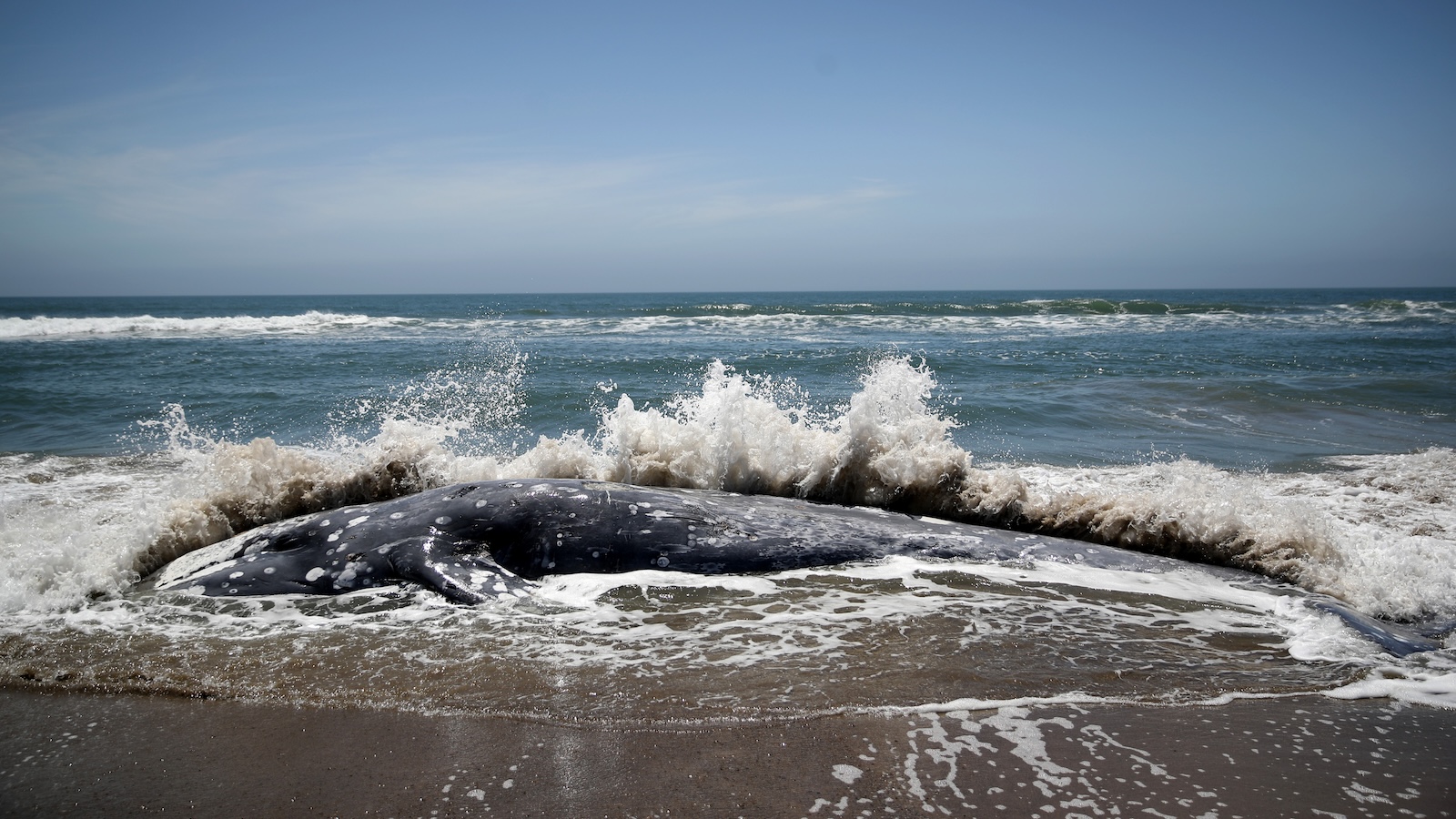
Gray whales are starving as the Arctic warms. Will the US protect them?
The Supreme Court has considered these words and their meanings before. In a 1995 case, Babbitt v. Sweet Home, it ruled that modifying a creature’s habitat — such as logging the forest where spotted owls live — counts as harming it. In a dissenting opinion, the late Justice Antonin Scalia argued that “take” means to directly kill or injure wildlife. The Trump administration’s new memo uses Scalia’s interpretation — even though the majority of the court disagreed with Scalia back then.
Earlier this summer, in a revision that changed which actions it considers to be “harming” an animal, the Trump administration argued that there’s a “traditional meaning” of the word “take,” meaning “to kill or capture a wild animal.” But the verb “take” is so notoriously difficult to define that it’s been tormenting dictionary editors for more than a century. In 2001, the lexicographer Kory Stamper spent weeks trying to capture all the senses of the word, and she reflected that the ordeal “unspooled” her sanity, leading to panic and despair.
In 2024, the Supreme Court ruled that courts — not agencies — have the power to interpret the law. That decision was generally seen as a blow to environmental efforts, but in this case, it might mean the Trump administration doesn’t have final say in how it interprets the Endangered Species Act.
All these factors make the Fish and Wildlife Service’s memo legally flimsy, if not illegal, according to Brett Hartl, director of government affairs at the Center of Biological Diversity, an environmental nonprofit.
The memo is “essentially performative cruelty for the sake of it” and “barely worth the paper it’s printed on,” Hartl said. “They’re trying to turn it into an anti-poaching statute, but it’s actually supposed to be the strongest conservation law in the world.”
Ironically enough, the administration’s rewrite may leave companies in a tougher spot than before, Shannon said, because it blows up the settled rules they’d been following for decades. Corporate attorneys now have to choose between telling clients to take advantage of the agency’s new approach, or holding off in case a court or new administration puts the old protections back into place.
For companies that actually want long‑term regulatory certainty, like timber corporations and real estate developers, Shannon said that this deregulatory swing may be “more than they ever really would have asked for.”
If the courts do end up siding with the Trump administration, some species will suffer more than others. Those listed as endangered in more recent decades were given “critical habitat protections,” which provided an extra layer of scrutiny to activities that could harm animals and were made mandatory for all newly listed animals.
But many of the species listed during the Endangered Species Act’s early years — including the Florida panther and the California sea otter — never received those protections. Instead, they depend on broader language in the law, like “harm” and “take.” That means the animals America once wanted to protect the most could now be the most exposed.
This story was originally published by Grist with the headline The fate of the Endangered Species Act rests on 2 simple words on Sep 18, 2026.
From Grist via This RSS Feed.