

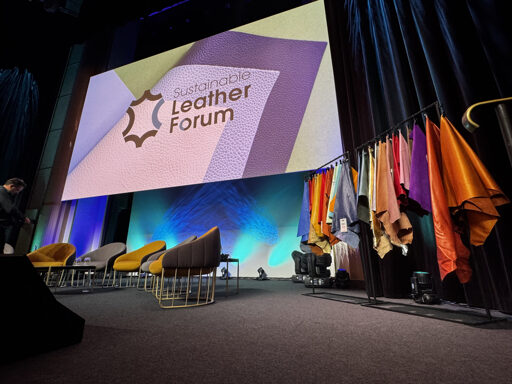
PARIS — The prestigious Maison de la Chimie in central Paris hummed with confidence as leather representatives gathered to discuss the industry’s next steps to tackle what they call an unfair “negative perception” attributed to the material. On Sept. 7, around 400 international tanners, luxury-brand representatives and meatpacking executives gathered for the eighth Sustainable Leather Forum. Speaking to their peers, panelists presented leather as a cornerstone of the circular economy: A way to make use of bovine hides that might otherwise go to waste. Beyond the ornate halls of the 18th-century mansion, after intense lobbying, the EU has exempted leather from its landmark deforestation law while simultaneously keeping restrictions on beef. Critics say this creates a regulatory contradiction: Products from the same cow will be allowed to enter Europe under two very different sets of rules. This juxtaposition has sharpened a long-simmering debate: If beef importers must prove their products are deforestation-free, why would hides from the same animals enter Europe with no equivalent oversight? Environmental and supply chain researchers argue the exemption creates a loophole that effectively splits responsibility for a single production system and this ultimately weakens the law. For industry representatives interviewed by Mongabay, the sector faces a reputational crisis. The EUDR did a “disservice” to a well-intentioned sector that benefits the environment by recycling a byproduct that otherwise would be discarded, a tannery executive said. Indeed, according to the Leather and Hide Council of America (LHCA), a U.S. trade association, around 40% of cowhides produced globally…This article was originally published on Mongabay
From Conservation news via This RSS Feed.