

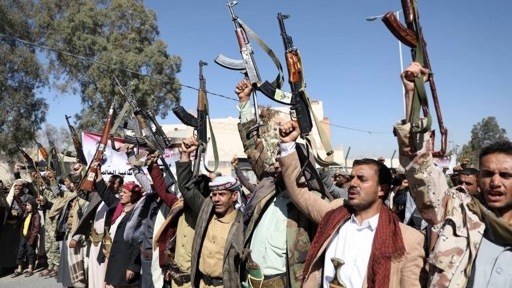
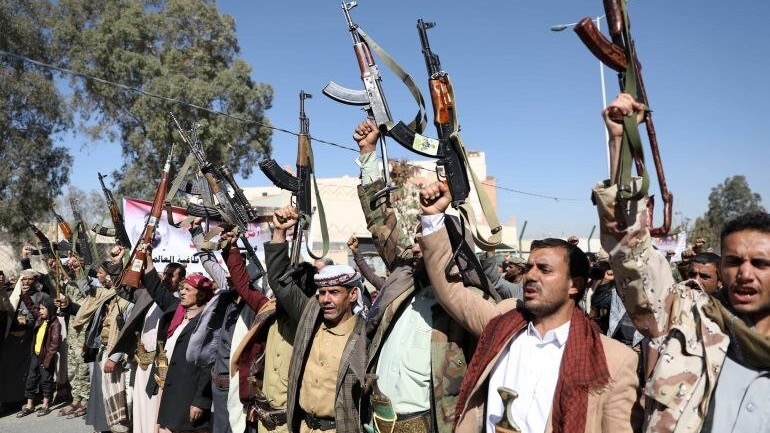
In July, Saudi Arabia joined the US-Israeli war on the West Asia region with strikes on Yemen. The Ansar Allah-led Yemeni Armed Forces retaliated by launching a maritime blockade alongside attacks targeting vital Saudi interests.
The renewed fighting between the two West Asian nations resulted in Ansar Allah’s takeover of the strategic Red Sea port city of Mokha last week and the liberation of all the group’s prisoners held by Saudi-backed forces on Yemen’s western coast.
Ansar Allah’s seizure of Mokha seaport is reshaping regional and global geopolitics, particularly because it serves as a primary gateway to the Bab el-Mandeb Strait and coincides with developments in the Strait of Hormuz.
As these major shifts underscore, Yemen holds immense strategic geopolitical significance.
Situated on the southwestern corner of the Arabian Peninsula and overlooking the Bab al-Mandab Strait, Yemen represents a vital chokepoint connecting the Red Sea to the Gulf of Aden and the Indian Ocean
Consequently, internal political developments in Yemen can have global political and economic repercussions.
This fact, in turn, has put Yemen in the crosshairs of the US-led Western imperialist bloc and their allies in West Asia, which have endeavored to subjugate the country through a devastating decade-long war and blockade.
The origin of this war coincides with the emergence of Ansar Allah, beginning when the group managed to take control of large swathes of the country, including the capital, Sanaa, in 2014.
The rise of Ansar Allah
Ansar Allah was first established in the early 1990s in the northern Yemeni governorate of Saada as a cultural and educational organization called Al-Shabab al-Mumin (the Believing Youth).
Initially, the organization introduced itself as an unarmed theological movement aimed at reviving and preserving Zaydi Shia Islam and countering the threat of state-backed Sunni Salafism, which sought to uproot the Zaydi religious identity in its homeland of Saada.
From its inception, the movement opposed the government, led by President Ali Abdullah Saleh, accusing it of corruption and criticizing its ties to the United States and its ally Saudi Arabia.
Tensions between the group and the government drastically escalated following the US invasion of Iraq in 2003. It was at that time that the group adopted the slogan (Death to America, Death to Israel), during mass protests opposing the war on Iraq.
These slogans posed a political threat to Ali Abdullah Saleh, who was attempting to position his government as a key ally in the “US War on Terror” in the aftermath of the 9/11 attacks. As a result his government led a brutal crackdown on protesters.
Security forces and riot police suppressed protests using live ammunition, tear gas, and batons, and arbitrarily detained hundreds of political activists, students, and opposition organizers without trial.
In 2004, tension between the Al-Shabab al-Mumin and the Yemeni government boiled over, sparking a series of six internal conflicts known as the Saada Wars.
These clashes began with the government’s assassination of Hussein Badreddin al-Houthi, the group’s founder, and triggered five subsequent rounds of fighting that lasted until 2010. The followers of the group became widely known as the Houthis ever since.
Saudi Arabia reportedly engaged in the Saada wars by providing immense financial, political, and material support to the Yemeni government. Saudi intervention in Yemen escalated in 2009 with a direct military incursion and unilateral airstrikes against positions held by the Houthi movement.
In 2011, the group joined nationwide demonstrations, calling for the overthrow of President Ali Abdullah Saleh. It was then that the Houthi movement formally adopted the name Ansar Allah (Supporters of God).
The ousting of Saleh weakened the central government and triggered a sweeping power vacuum, which allowed Ansar Allah to rapidly expand its territorial dominance. By 2012, the Yemeni movement consolidated firm control across the Saada governorate and large swathes of northern Yemen.
In early 2012, vice president to Saleh, Abed Rabbu Mansour, Hadi became the President of Yemen via a transition framework brokered by the Gulf Cooperation Council (GCC), as he was considered as a quiet consensus figure. Hadi was also strongly backed by the Obama administration.
In late 2014, Ansar Allah allied with forces loyal to ousted president Ali Abdullah Saleh against the transitional government headed by Abed Rabbu Mansour Hadi. The fighting that followed led to Ansar Allah’s seizure of the capital Sanaa, forcing Hadi to flee the country.
2015-2022: The Saudi-led coalition’s protracted war against Yemen
From exile in 2015, Hadi requested the Saudi-led coalition to intervene in the conflict, opening the door to one of the bloodiest prolonged wars in West Asia. A conflict that, according to UN estimates, resulted in 377,000 deaths by 2022.
Saudi Arabia was the main pillar of the coalition, leading the military campaign dubbed “Operation Decisive Storm” with a massive force, including extensive warplanes and ground troops.
The United Arab Emirates (UAE) also played a key role by commanding ground and air operations particularly in southern Yemen and along the critical coastal strip.
Bahrain took part in the operation with 12 fighter jets (some sources say 15), and deployed ground troops in the southern Saudi borders to protect Saudi Arabia from Ansar Allah’s attacks. Meanwhile, Kuwait contributed with 15 warplanes.
At the beginning of the campaign, Qatar participated with roughly 1,000 ground troops, armored vehicles, a dozen fighter jets, and transport helicopters until it was expelled from the coalition in June 2017 over a diplomatic crisis with Saudi Arabia, UAE, Bahrain, and Egypt.
Jordan and Morocco contributed six fighter jets each, while Sudan under deposed president Omar Al-Bashir sent three aircrafts and thousands of ground troops. Furthermore, Senegal committed 2,100 troops.
Western countries, including the United States, the United Kingdom, and France provided logistic and intelligence support, such as aerial refueling for coalition jets, technical assistance, military equipment, coordination support, and maritime surveillance.
The 2022 UN-brokered truce de-escalated the war rather than ending it
In April 2022, the United Nations announced an official two-month nationwide truce agreement, which temporarily halted cross-border attacks, ground and air operations, and allowed fuel imports into ports held by Ansar Allah. It also reopened commercial flights from Sanaa International Airport after years of sea, land, and air blockade imposed by Saudi Arabia.
Rather than completely removing the blockade, the agreement only resulted in the partial easing of restrictions, while regions under the control of Ansar Allah have continued to face a near-total blockade.
Read more: Yemen demands Saudi-led blockade on the country be lifted immediately
The agreement was renewed in June and extended a second time in August 2022 for an additional two months before it lapsed in October.
Regional developments reignited the conflict (2023-2026)
In November 2023, Ansar Allah launched a ban on all Israeli maritime navigation in the Red Sea and the Bab el-Mandeb Strait in retaliation for Israel’s genocidal aggression on Gaza.
About one month later, the group significantly expanded the ban to include all ships heading to Israeli ports, regardless of their nationality or flag.
The ban continued until October 2025, despite waves of deadly airstrikes launched by the US, UK, and Israel on Yemen.
An Omani-mediated ceasefire deal between the US and Ansar Allah was reached in May 2025. The deal stipulated halting Ansar Allah’s attacks on US ships in the Red Sea and Bab al-Mandab Strait, and ending US aggression on Yemen, without preventing the Yemeni resistance movement from launching attacks or naval operations against Israel.
This same period saw a shift in the conflict between the Saudi-led coalition and Ansar Allah from active military engagement toward a tense, fragile diplomacy.
In early 2026, friction between the two major pillars in the anti-Ansar Allah coalition – namely Saudi Arabia and the UAE – surfaced as different Yemeni groups backed by the two countries clashed, apparently over territorial control in Yemen.
Read more: Tensions in Yemen: Are Saudi Arabia and the UAE becoming frenemies?
The US-Israeli war on Iran has drawn Yemen back into the regional conflict
Although Ansar Allah was established as an independent Yemeni movement, it evolved into a key component of the Axis of Resistance over time. This alignment was driven by mutual ideological foundations, shared anti-imperialist ideology, and deep strategic and military cooperation with Iran and Hezbollah.
Despite its affiliation with the resistance alliance, Ansar Allah chose not to get involved in the recent regional war waged by the US and Israel against Iran, for ostensibly strategic considerations and military coordination tactics with its allies.
Read more: Reflections on the US-Israeli multi-front war in West Asia: How the Axis of Resistance remains resilient
However, because the United States and its allies in the region seemingly view the current war as an ideal opportunity to dismantle the Axis of Resistance, Saudi Arabia decided to resume its aggression against Yemen by attacking Sanaa International Airport in July. The attack aimed to prevent an Iranian plane from landing.
Consequently, Ansar Allah launched retaliatory attacks on Saudi interests inside Saudi Arabia and on Yemeni soil. It further declared a maritime blockade against Saudi-linked commercial vessels passing through the Bab al-Mandeb Strait, demanding Riyadh end its decade-long blockade on Yemen.
Concurrently, ground clashes over territorial dominance between Ansar Allah and Saudi-backed forces intensified, leading to key victories for the Yemeni group. Escalations have persisted up to the time of publication.
On Wednesday, September 16, Saudi Arabia accused Ansar Allah of attempting a drone attack against the city of Mecca, the holiest city for Muslims, located in western Saudi Arabia.
Ansar Allah dismissed Saudi accusations as false, saying that they reflect a “desperate attempt to mobilize public opinion.”
As the US-Israeli war on West Asia continues to reshape geopolitics, Ansar Allah’s emergence as a regional force has placed Yemen at the center of a struggle that may define the future of West Asia.
From BT News via This RSS Feed.