

This interview by Bruce Hobson originally appeared in the September 16, 2026 edition of the Mexico Solidarity Bulletin, the weekly publication of the Mexico Solidarity Project.
Subscribe here to receive original content and a Mexico news compilation weekly.
VOICES
Pedro Salmerón Sanginés holds a doctorate in history from the National Autonomous University of Mexico (UNAM) and has written 17 books and 50 articles. He’s an independent journalist and lifelong leftist activist
What kind of revolutionary activities were going on before 1810? Were women involved?
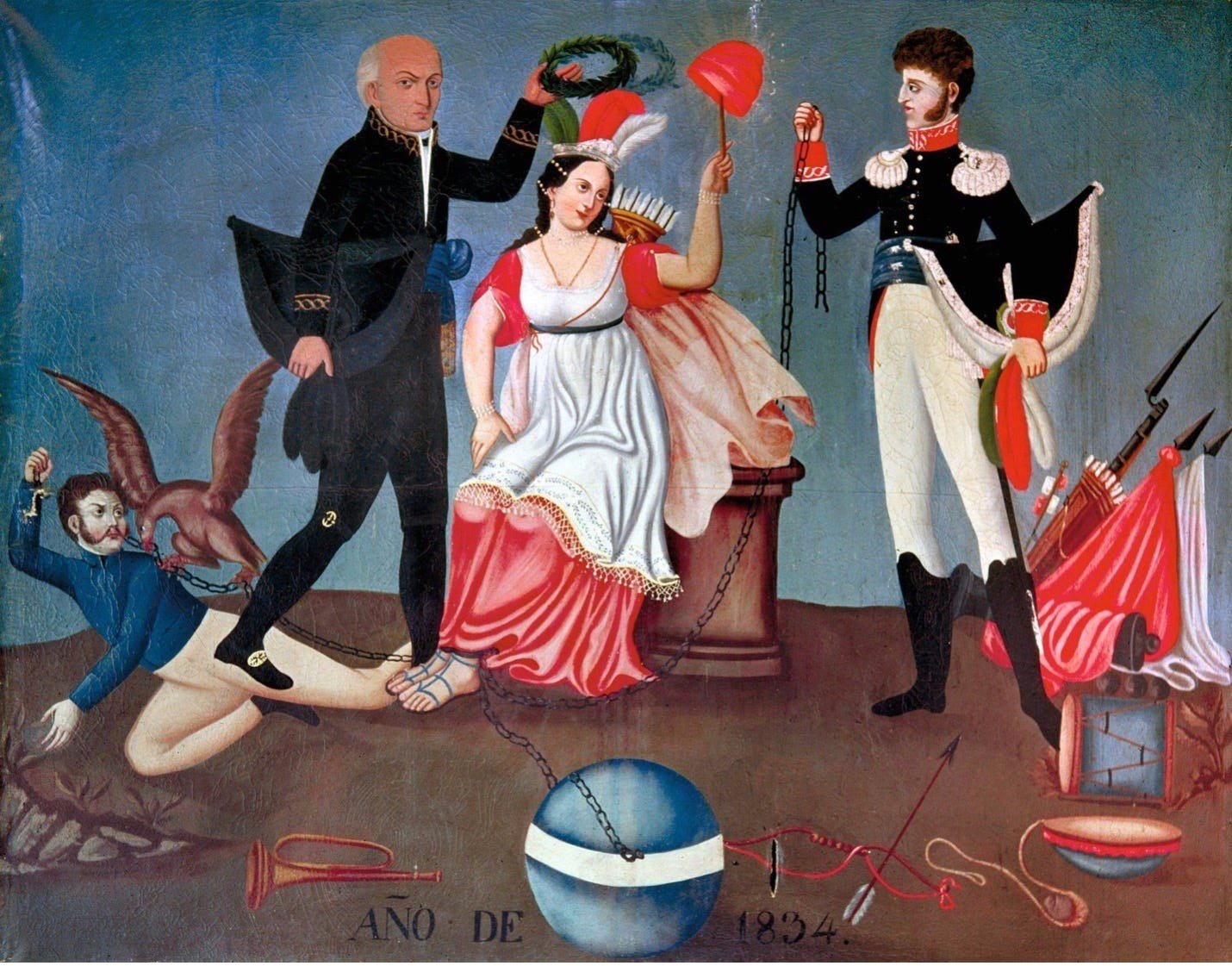
The allegorical figure representing Independence (center) flanked by Miguel Hidalgo (left) and General Agustín Iturbide (right). Anonymous, Allegory of Independence, 1834 (Museo Histórico Curato de Dolores, Guanajato, INAH)
I don’t know if you could call it “revolutionary,” but there were a ton of agrarian revolts—without a political program—in 18th-century “New Spain.” They were community-based rebellions, so of course women participated.
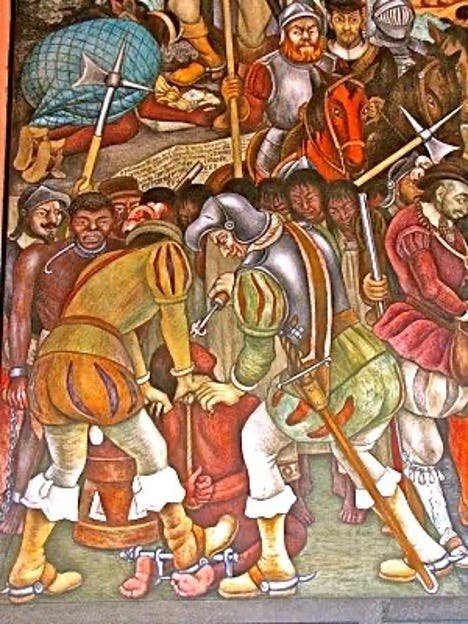
In many areas, as much as 90% of the native population died off between the start of the Conquista in 1519 and the beginning of the 18th Century.
But in terms of political revolution, those were mostly conspiratorial groups made up of middle-class criollos and mixed-race descendants of Spaniards, some holding government positions. Those who start revolutions are never slaves or those dying of hunger; they have no time to even think about revolution! Why at that time? Napoleon Bonaparte had invaded Spain and imposed his son as the Spanish king; Spain was in chaos, and that provided opportunities for the colonies. In 1810, one conspirator playing a pivotal role was Doña Josefa Ortíz Tellez Girón, the wife of a town mayor in the state of Querétaro. The conspiracy was discovered, and she sent the warning message to fellow conspirators in Guanajuato.
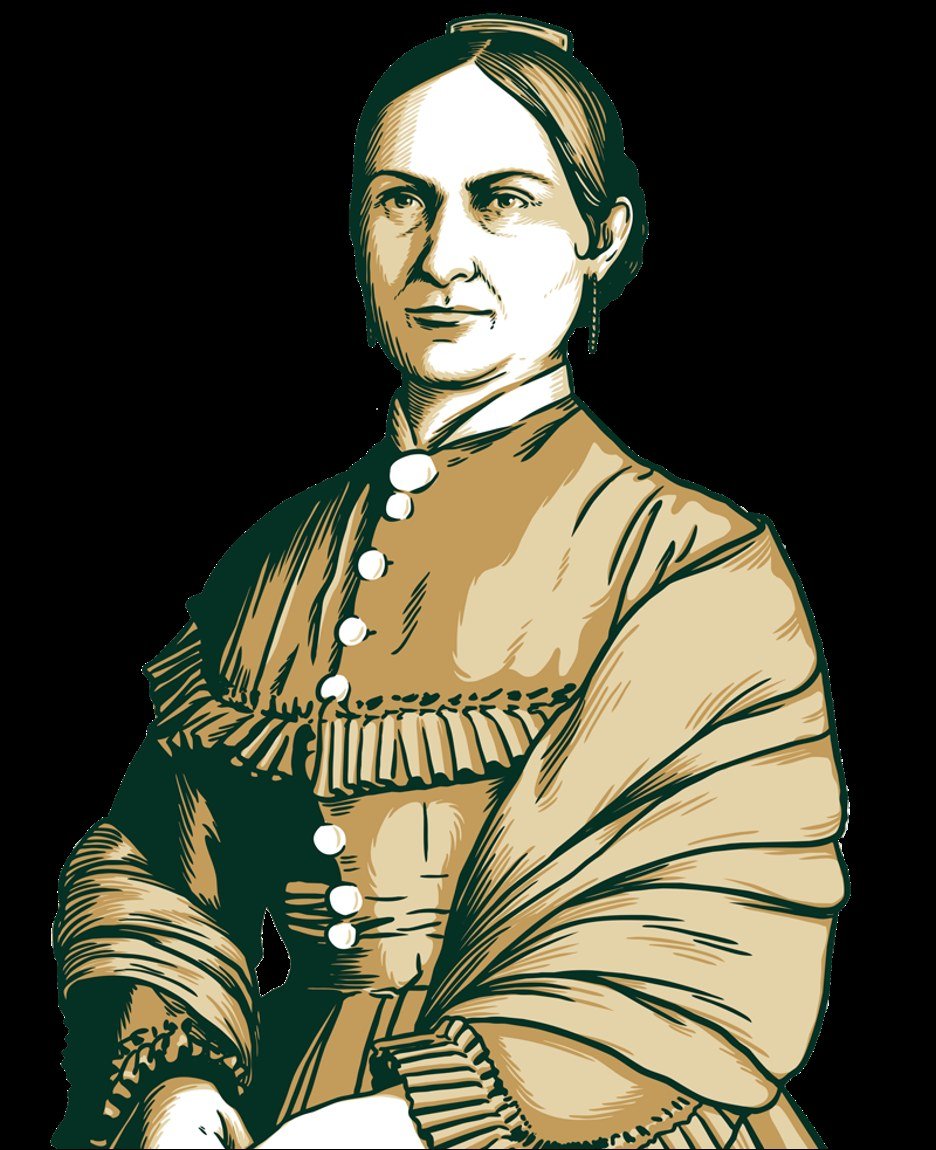
Josefa Ortiz Téllez Girón
Why did the Revolution begin in Guanajuato?
Hearing the warning, most Guanajuato conspirators wanted to flee. But not the parish priest Miguel Hidalgo! He was no bumpkin. He was cultured, read banned books, translated Moliere from the French and directed theater. He said, “We can’t get anywhere—where would we run to? What we have to do is capture the Spaniards and take over the village!”
So they captured some Spaniards, released people from prison and burned the archives—the official records of who owns and who owes what, who has a prison record, and all kinds of possibly harmful information.
After securing the town, he rang the alarm bell and called the people to mass; it was Sunday, a market day with large crowds. With his Grito de Dolores, his famous “cry” or “call to action from the town of Dolores,” he told the people to start a revolution.
In only twelve days, the rebellion spread to all the towns of the region whose inhabitants were workers on the haciendas and in the mines; these were not indigenous people, by the way. Not just men, but entire families rose up. Like the nomads of Mongolia, they all moved together. Women participated directly in this event.
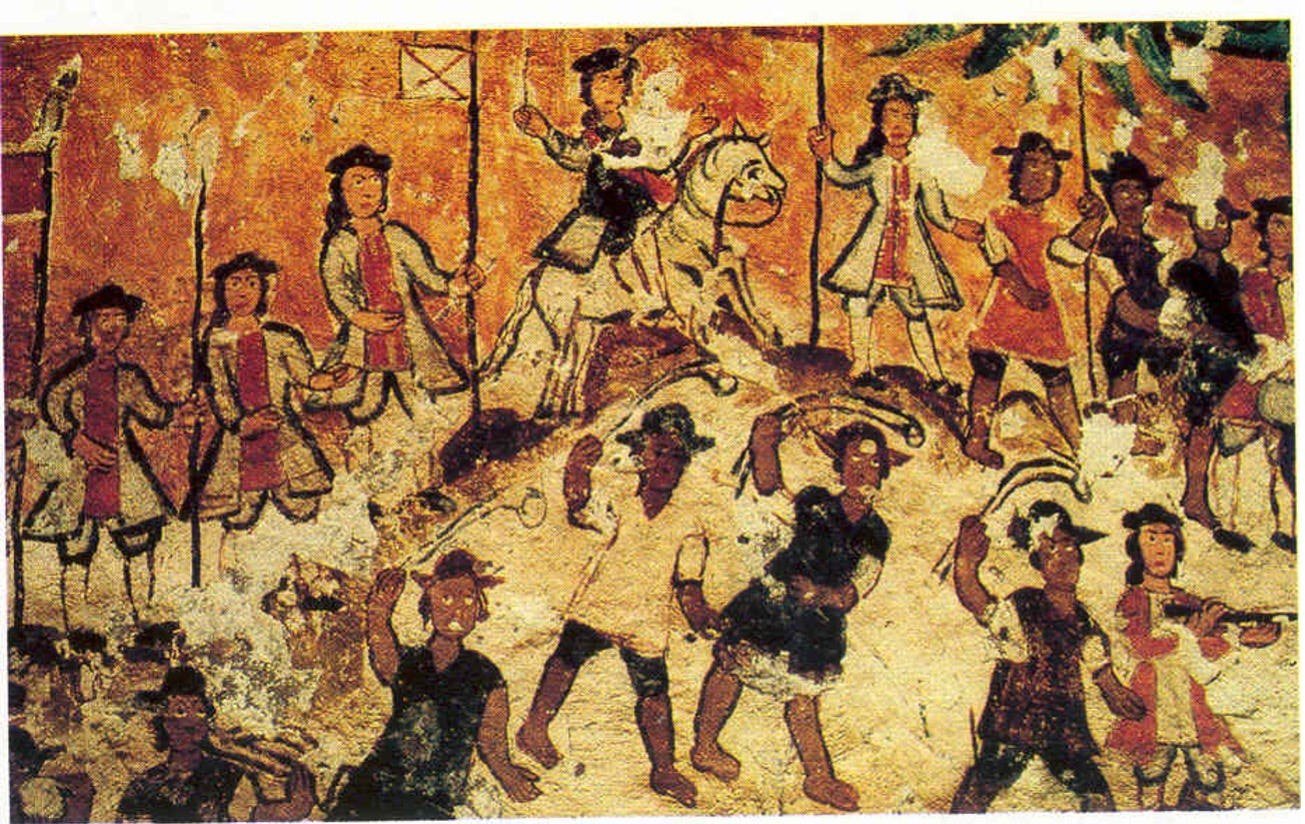
In the first years, New Spain was marked by tensions and outbreaks that questioned the solidity of viceregal authority. Indigenous rebellions, Creole conspiracies, lawsuits between authorities and popular riots showed that the Castilian administration had to invest as much effort in preserving its dominion as in acquiring it. Photo courtesy of Xikoova.com.
The workers and peasants demanded an end to slavery and an end to paying tributes to the crown; Hidalgo took up their demands, which went beyond those of the original criollo conspirators.
Did women participate actively in Mexico’s War of Independence?
Middle-class criollo women played one role—they formed support networks and carried out espionage, propaganda and journalism. Josefa Ortíz is a good example.
![Servante Indienne [Indian Woman Servant] by Claudio Linati, 1830](https://mexicosolidarity.com/wp-content/uploads/2026/09/salmeron-06.jpg)
Servante Indienne [Indian Woman Servant] by Claudio Linati, 1830
The village women played the other main role. They fed the guerillas by growing food and tending livestock—the usual economy had come to a stop.
An example: With María José Garrido, I researched the court records of Pénjamo, Guanajuato. In November 1814, about 300 women and their children were arrested and incarcerated in convents, without cause. Why were they locked up? Spanish Colonel Agustín de Iturbide wanted to stop the women from providing the rebels with food and other necessities in order to, as Mao said, “take away the water from the fish.” He proposed burning six villages of insurgents and shooting 50 of the women.
The viceroy told him not to shoot women, but the colonel declared, “In my view, women of this sort cause greater harm than men who band together; regardless of arguments citing laws designed to protect this sex—which, while deserving of consideration regarding its inherent frailty … cannot simply be left free to perpetrate wrongs of such gravity and consequence—one need only consider the power the fair sex holds over a man’s heart to understand the harm they are causing.”
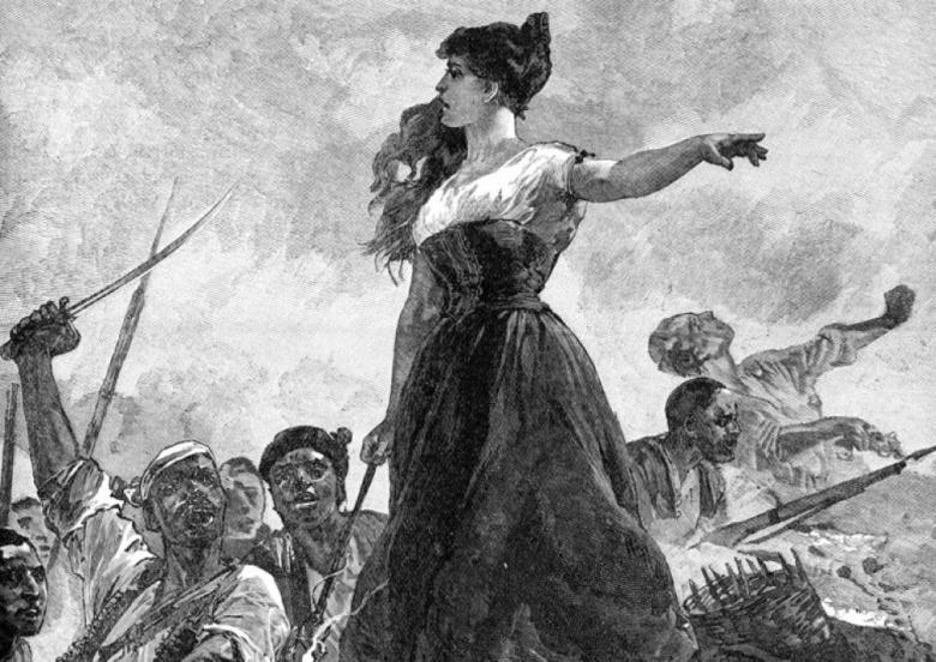
Pénjamo, Guanajuato. Although their names are not in the books of the history of Mexico, Penjamo women supporters of the revolt were imprisoned in 1814.
The women were finally released in 1817 for lack of evidence; María Regina Barrón, a woman leader of Pénjamo, argued their case before the judges. Across the southern mountains, in Bajío, Oaxaca and Veracruz, the same support from women was continuing—the guerrilla forces relied on women for logistics; women were the backbone.
Colonel Iturbide also arrested Tomasa Esteves and five other women who had seduced Royalist forces and convinced them to switch sides. The women were labeled prostitutes in the documents, negating their political role, and incarcerated in convents in Guanajuato. But they weren’t the only women who used sex as a tool in service to the revolution.
Did women see the revolution as an opportunity for women to gain greater freedom?
Not directly. However, indirectly, when the revolution dismantled the old economy based on plantations and mining, women finally escaped their virtual slavery as the wives of slaves. Feudal labor relations ended, and although they weren’t explicitly fighting for it, women subsequently began putting forward their own demands in the 30s and 40s—the right to own property, to inherit and to divorce.
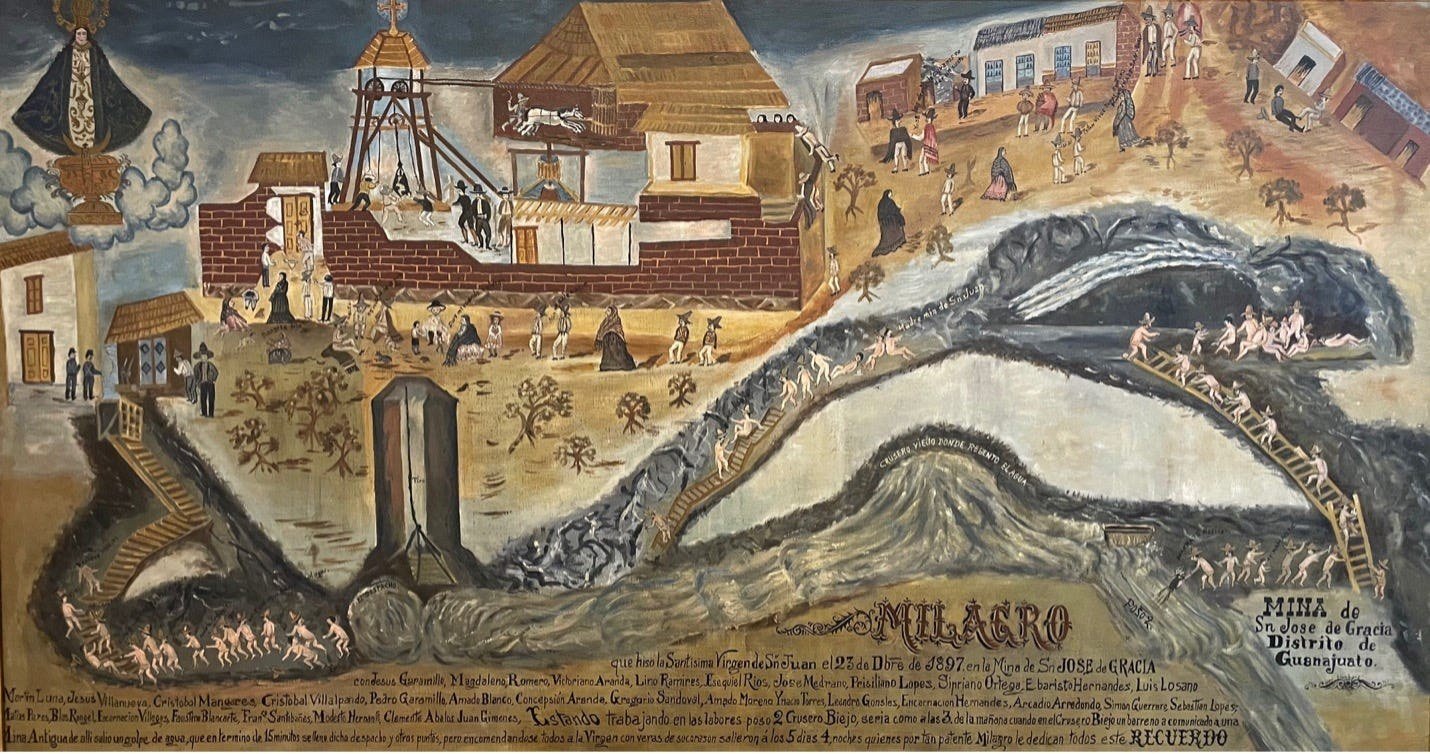
On the high plateau of central México at nearly 7000 feet is the city of Guanajuato, originally named Real de Minas de Guanajuato (Royal Mines of Guanajuato). It was founded in 1548 by colonial Spain for one reason only: to make Spain rich. Silver and gold extraction were foundational to Spain’s political economy, and in those times the mines of Guanajuato were the most productive in México. Photo courtesy of the Mexico Solidarity Project.
Can you tell the story of a woman who was particularly important?
Leona Vicario, born in 1789, was educated and attractive; she wrote and played the piano. She formed a secret group called Los Guadalupes—the Virgin of Guadalupe was the emblem of the resistance—that raised funds for the rebel army of José María Morelos. In 1813, she was arrested and put into a convent. All the funds she managed were confiscated. But, dressed as a man, she made a spectacular escape down a rope made from bedsheets and joined up with Morelos’s army. She had no other place else to go. She married Andres Quintana Roo during this time. Did she find another way to contribute? She wrote—she was the first wartime correspondent in the country!
She had her first baby in 1817 in a cave while fleeing the enemy army but was caught and incarcerated again. It was only through Quintana Roo’s negotiations that she was freed.
After the war ended, she was set to retire. But the newspapers began claiming that women played no part in the revolution, that Josefa Ortiz couldn’t even read or write, and that she herself was involved merely out of love. Leona Vicario responded in print to the conservative leader Lucas Alamán. She said, “You believe—as men do—that we women act solely out of instinct and passion. You do not know us, and you know nothing of our ideas.” And with that, she returned to politics! At her death in 1842, she was the first woman who received a full state funeral. They called her the “Beloved Mother of the Country.”
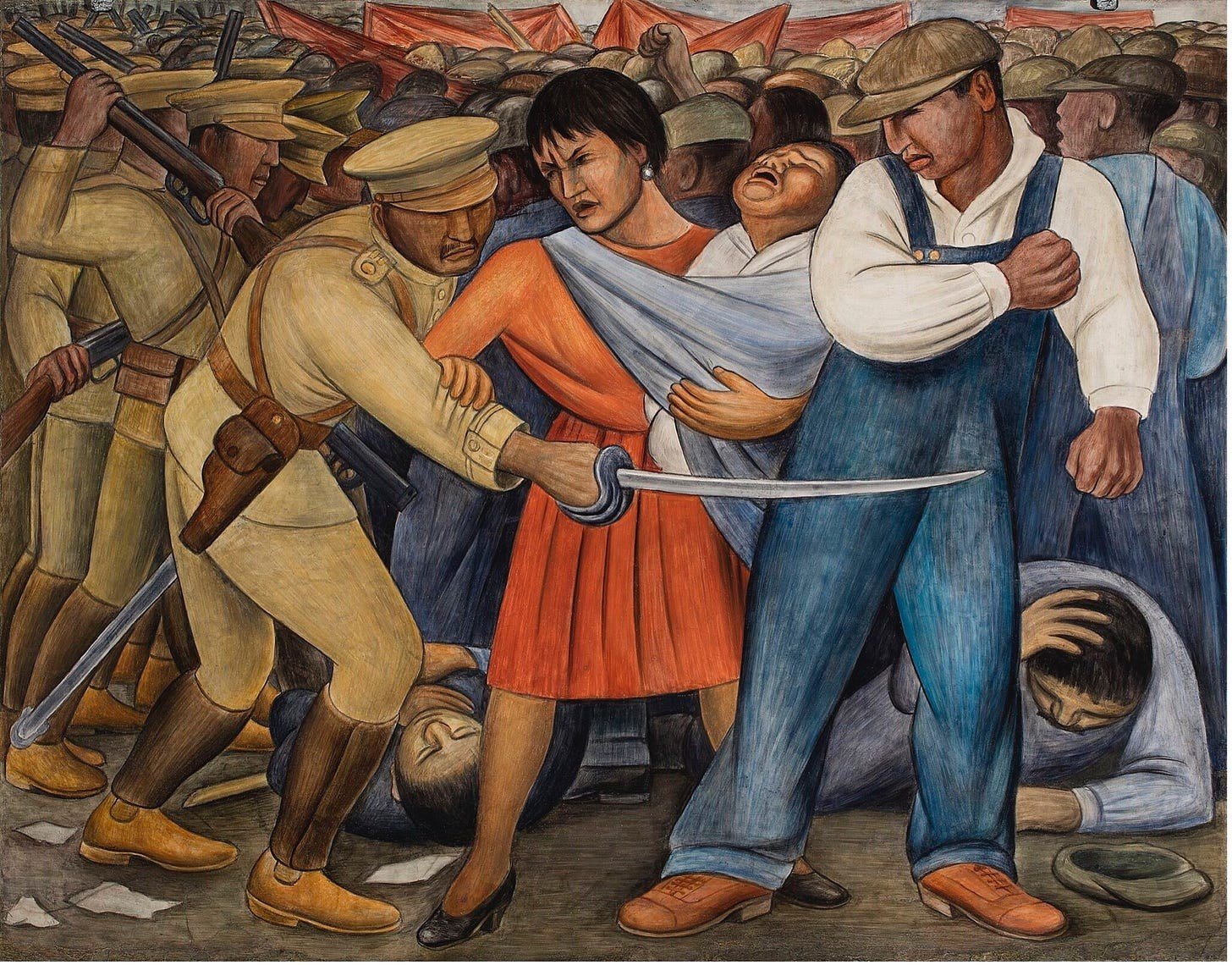
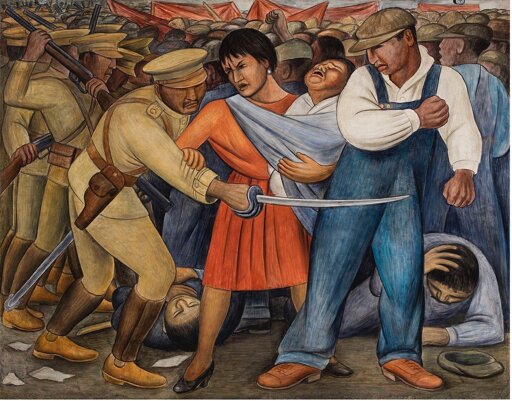
Women continue to fight for Mexico! Diego Rivera, The Uprising, 1931. Collection of Marcos and Vicky Micha Levy. © 2019 Banco de México Diego Rivera Frida Kahlo Museums Trust, Mexico, D.F. / Artists Rights Society (ARS), New York
AMLO named 2020 the year of Leona Vicario, 2019 the year of Zapata, and 2023 the year of Villa—he put her on the same level.
Does Claudia Sheinbaum come from the lineage of revolutionary women?
Every Thursday, at the mañanera, she includes a historical capsule about a woman teacher, nurse, soldier or journalist—a woman whose story is not commonly known but should be. Like Leona Vicario, she insists on the capacity of women and for us to recognize their contributions.
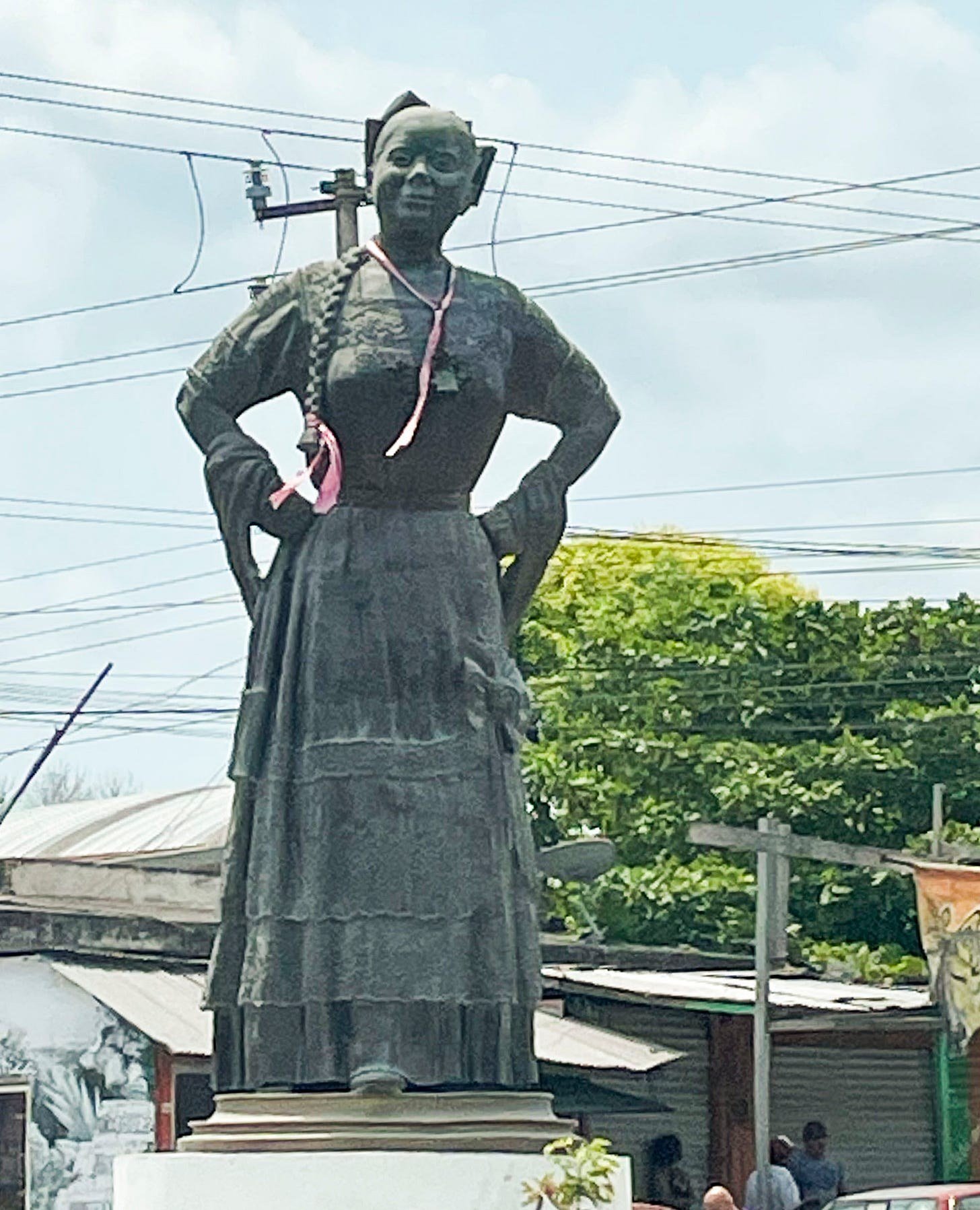
Statue of Leona Vicario, Chetumal
Chetumal, the capital of Quintana Roo, a state named for Leona Vicario’s husband, erected a statue of her. Engraved in the stone it says, “I am Leona, and I want to live like a wild beast.” Leona is Spanish for lion. I think that could apply to our ferocious Claudia too.
-
The Women of Mexico’s War of Independence
September 17, 2026
We interviewed Dr. Pedro Salmerón for our weekly bulletin to talk about Mexican Independence: “Like the nomads of Mongolia, they all moved together. Women participated directly.”
-
Mexico Stands Up to the U.S. on its Independence Day – Soberanía 124
September 17, 2026
Six fronts of Mexican sovereignty, a leaked U.S. “poll” manufacturing consent for intervention, and Rubio’s threats against Mexico.
-
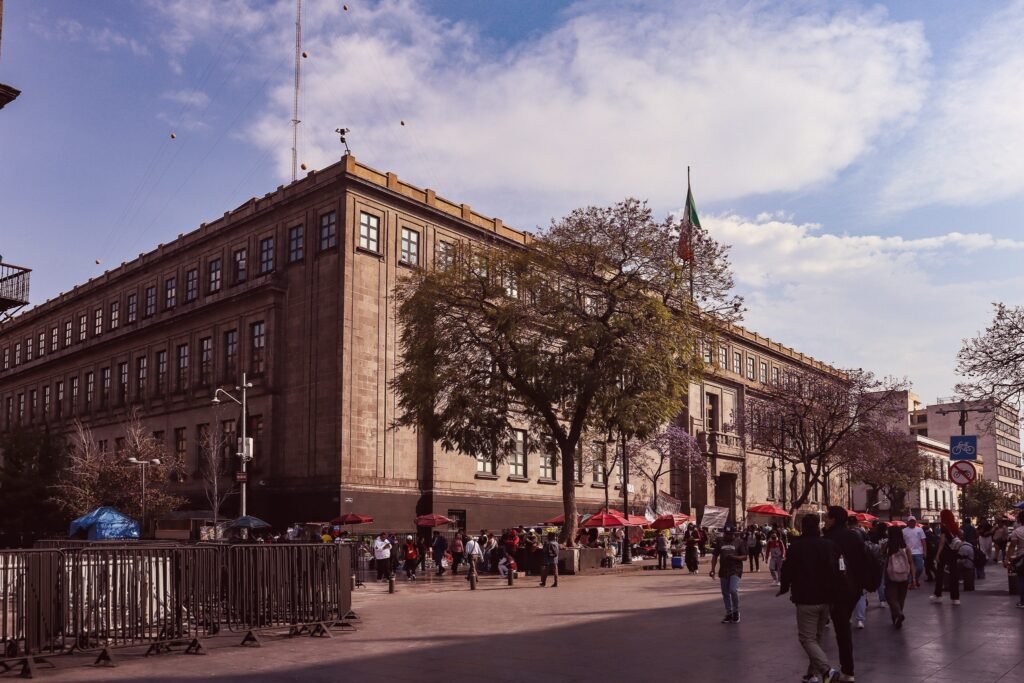
Broken Promises and Discontent: Reforms to Mexico’s Supreme Court Between 1994 and 2018
September 17, 2026September 17, 2026
In part one of his paper, Luke Pickrell explores Mexico’s Supreme Court during the neoliberal period and argues it was made to serve the elite rather than the people.
The post The Women of Mexico’s War of Independence appeared first on Mexico Solidarity Media.
From Mexico Solidarity Media via This RSS Feed.