

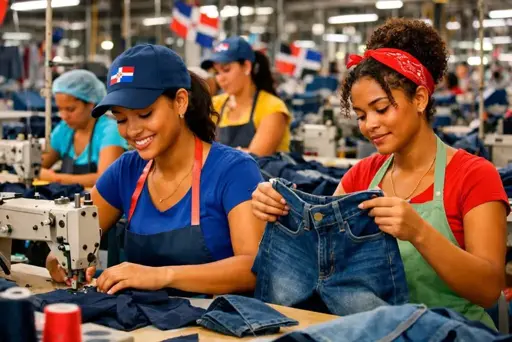
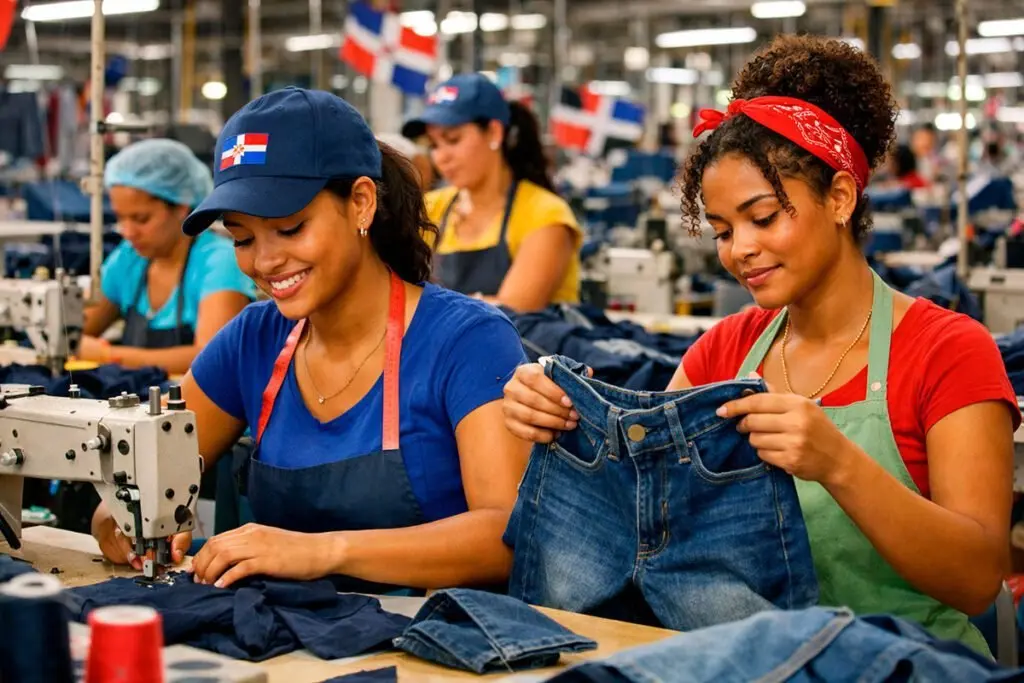
Women have steadily increased their participation in universities and the formal labor market in the Dominican Republic, according to statistics released this Thursday by the Central Bank, the Social Security Treasury (TSS), and the Ministry of Higher Education, Science and Technology (Mescyt).
RELATED:
Peruvian Congresswoman Verbally Threatens Journalist Amid Nepotism Accusations
Data from the Continuous National Labor Force Survey (ENCFT) indicate that female participation in formal employment rose from 42.6 percent in 2014 to 49.7 percent by the end of 2025. In absolute terms, women held 789,696 of the 1.85 million jobs recorded in 2014, whereas in 2025 they held 1,267,078 jobs out of a total of 2.54 million.
During that period, the proportion of men in the workforce declined, settling at a level just above that of women. By the end of 2025, the gap between the two groups was just over 10,000 jobs, demonstrating a convergence between women and men in formal employment.
This trend is also reflected in TSS records. In May 2026, there were 2,561,722 registered formal employee contributions. Of that total, men accounted for 52 percent—with 1,331,641 contributors—while women totaled 1,213,998, representing 48 percent.
This progress in formal employment is occurring alongside high levels of female participation in higher education. Statistics from Mescyt, updated through 2024, show that women made up 66.1 percent of active university enrollment, with 434,873 students out of a total of 520,524.
Men accounted for 33.9 percent, with 176,651 students. This ratio means that approximately two out of every three people enrolled in Dominican universities were women.
Durante su participación, abordó la importancia de integrar la perspectiva de género en la planificación urbana y el ordenamiento territorial, así como de fortalecer la articulación interinstitucional para la construcción de entornos seguros para las mujeres y las niñas.… pic.twitter.com/q8otYjeGed
— Ministerio de la Mujer República Dominicana (@MMujerRD) September 17, 2026
The first text reads, “The Deputy Minister for Planning and Development, Rosa Mejía, participated in the session “Safe and Inclusive Cities: Social Security, Citizenship, and the Role of the State in Preventing Gender-Based Violence,” held in collaboration with the Faculty of Engineering and Architecture.”
The second text reads, ” During their participation, they addressed the importance of integrating a gender perspective into urban planning and land-use planning, as well as strengthening inter-institutional coordination to create safe environments for women and girls.”
A female majority was also recorded among new entrants and graduates. In 2024, 109,356 students entered higher education institutions; of these, 70,880 were women, representing 64.8 percent.
That same year, 55,854 students graduated in various professional fields. Women accounted for 38,630 of the graduates, representing a 69.2 percent share. According to sources, this trend has persisted since 2020 and may continue, given the average four-and-a-half-year period required to complete a university degree.
The concentration of women is more visible in administrative and service-related fields than in certain scientific, industrial, and technical areas. This educational focus influences the distribution of female workers within the labor market.
Employment: sectoral differences and outstanding gaps
Women play a prominent role in services, administration, and public institutions. In the public sector labor market, they hold approximately 55 percent of jobs—a sector characterized by high demand for professionals and administrative staff. Public sector positions account for roughly 31 percent of formal employment in the Dominican Republic.
In the private sector, men maintain a majority presence, particularly in construction and certain industrial branches. The nature of these activities also contributes to the average wage gap between men and women.
Although female participation in formal employment is approaching that of men, a significant gap remains in the labor market as a whole. According to the cited Central Bank data, men hold approximately 2.9 million jobs, compared to the 2.1 million held by women. The absolute difference is 842,455 people, equivalent to a gender gap of 16.4 percentage points.
Cada decisión que tomamos desde el servicio público deja una huella: en cómo administramos los recursos, en cómo respondemos a la ciudadanía y en la confianza que construimos con nuestras acciones.
Por eso, en el Ministerio de la Mujer, la legalidad no es solo cumplir una norma.… pic.twitter.com/qfc8oVrqwD
— Ministerio de la Mujer República Dominicana (@MMujerRD) September 13, 2026
The text reads, “Every decision we make in public service leaves a mark: on how we manage resources, how we respond to the public, and the trust we build through our actions. That is why, at the Ministry for Women, legality means more than just complying with regulations; it means acting with transparency, responsibility, and respect for women’s rights at every step.”
Furthermore, informal employment accounted for 54.1 percent of total employment during the first quarter of 2026, while formal employment represented nearly 45.9 percent. This structure keeps a significant portion of the female population engaged in activities lacking the protections associated with social security and regulated employment.
The increased presence of women in universities and the workforce has not eliminated the domestic and family responsibilities that fall disproportionately on women. This situation particularly affects single-parent households, where mothers often bear the sole responsibility for raising and financially supporting their children.
Minister Jiménez emphasized the need to develop care policies for early childhood, the elderly, and people living with disabilities. In her view, these tasks “have cost women many opportunities to enter the labor market.”
The Government also links training to female employability in light of the expansion of the National Institute for Technical-Vocational Training (Infotep), which grew from five or six centers to 57 nationwide. Authorities aim to raise women’s formal employment rate above 51 percent and continue strengthening their access to jobs and resources.
#DominicanRepublic | The 12th Ibero-American Meeting of Museums convenes professionals from the region in Santo Domingo to discuss the social appropriation of heritage, artificial intelligence, and the protection of biocultural territories.https://t.co/cbqZW4P1xB
— teleSUR English (@telesurenglish) September 16, 2026
From teleSUR English via This RSS Feed.