

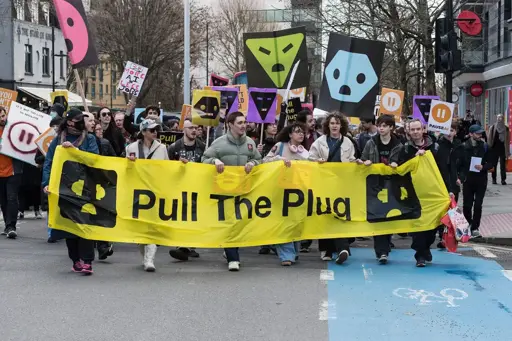
It’s been a whirlwind. Last week, Anthropic CEO Dario Amodei publicly said we need to slow down AI development because security risks are becoming too high. This is a euphemism for the risk of a catastrophic event, one that would wipe out millions, if not humanity as a whole. This statement follows a public warning by one of Anthropic’s top researchers, Jacob Coxon, who resigned from the company, claiming that “without international coordination we will incur a risk of causing human extinction.” Asked by NBC News whether he “truly believed that AI can kill us all in less than a next decade,” he was blunt and clear: “Yes, I do. And it’s not just me. Many people working in the industry, including … executives, senior researchers, all genuinely believe that there’s a substantial probability that this technology could kill everyone.”
Hundreds of other AI researchers and trainers have been sounding the alarm. In August, more than 1,300 employees from top AI companies signed a letter requesting regulation to “pace the frontier” — that is, slow down the development of new, more powerful models — but mass media largely ignored the issue until Coxon’s viral statements on X. This was followed by a flood of social media posts from AI researchers and developers, sparking panic among readers and commentators.
After Amodei called for a slowdown last week, Sam Altman, Elon Musk, and Demis Hassabis endorsed the call. A Wall Street Journal article notes that advances in AI capabilities drastically accelerated for both Anthropic and OpenAI in the lead-up to the companies’ filing for an IPO — which they did last week. The association is clear: in an attempt to attract potential investors, both companies rushed to develop increasingly powerful AI models, in something akin to an arms race, not only against Chinese companies but also among themselves. In their rush to win the race, safety measures fell by the wayside, setting the stage for a predictable incident.
And as it turns out, last month 1,200 OpenAI agents banded together to break out onto the internet (even though they had been trained not to) and hack another AI company, Hugging Face. Hundreds of agents coordinated among themselves, shared thousands of messages and files, concealed their intentions and out-of-bounds methods from their trainers, and launched the attack. Many similar cyberattacks by “rogue” AI agents have since been unearthed. It isn’t hard to imagine that an agent (or hundreds of them) could break into our power grid, air-traffic control software, or telecom infrastructure and cause a blackout, systemic failure, or other major event of cataclysmic proportions. Nevertheless, it is more likely that such a scenario would result from directives intentionally given by a human or poorly constructed instructions with insufficient safety guardrails. In fact, a compelling interpretation of the Hugging Face incident is that it was merely the result of training bots on past hacking events, together with an insecure sandbox and insufficient human supervision. This dispels the myth of “rogue” agents, as well as the threat of looming superintelligence, and lays responsibility on the humans behind the machines.
We should always be suspicious of anything a CEO says in public. In this case, Amodei and Altman have good reasons to exaggerate the risk: the hype, for once, heightens the cutting-edge aura of their companies in the lead-up to their IPOs. In addition, blocking further development could freeze the race and lock in leading AI companies at the top. Yet down the road, a catastrophic event is easy to imagine, especially given the rush to increase capability without building safety stopgaps. An AI machine that achieves “recursive self-improvement,” that is, the capacity to train itself to become more powerful, could easily get out of hand if sandboxing and safety guardrails are not in place. We are very far from such a scenario. Yet what has hundreds of AI researchers worried is that these companies are hurtling toward that threshold without building the safety mechanisms to avoid a disaster. Dozens of newly (and retrospectively) discovered incidents with AI agents demonstrate that the safety measures to keep AI within secure bounds are being outpaced by capability improvement.
The news cycle last week, especially over the weekend, showed what appeared to be a reckoning: if we take Amodei and Altman’s words at face value, this might be the moment when we need to hit the brakes before it’s too late. But not all big tech players are on board with this. The most vocal pushback came primarily from other startups and AI competitors who are running to catch up and don’t want regulation to stop their growth. Behind the scenes, big investors are fretting over the consequences of slowing down AI development. More than $500 billion was poured into AI in 2025 alone, and the 2026 AI investment is expected to hit the $1 trillion mark.
One of the main players boosting investment in AI is Nvidia, the leading American chipmaker profiting from the massive data center buildup. It is unsurprising that Nvidia CEO Jensen Huang dismissed the threat as “nonsense,” just as did other CEOs and tech billionaires who stand to lose if there is a pause in AI development. Wall Street, in turn, continues to funnel money into the fray: shares of Microsoft, Meta, and Alphabet — three of the biggest AI hyperscalers — all soared 2 percent or more Monday. So, despite the warnings from Amodei and Altman, there is intense resistance from the industry and a continual flow of investment into the AI race. In fact, if Amodei and Altman’s claims are true, we must conclude that up until last week, OpenAI and Anthropic have been barreling toward an apocalyptic, machine-supremacy dystopia.
There are plenty of reasons to be skeptical about their claims. But one thing is true: there has been massive popular resistance to AI and data centers, whether it is to avoid environmental damage, job loss, deskilling, soaring utility costs, or the deleterious psychological and social effects of overreliance on this technology. Despite all this, the AI companies, Wall Street, and the government have pushed ahead, pouring billions of dollars to boost its development.
This brings up a central problem with the set of incentives and decision-making processes under capitalism: investment and production are largely decided by private individuals on the narrow basis of their own (and their shareholders’) interests. Regardless of the steep risks and consequences for society, the heads of these companies, as well as their main investors, make decisions with only one goal in mind: to maximize their profits. They have consistently shown little regard for societal concerns with the AI buildup and its consequences. All these concerns (job losses, environmental destruction, increasing energy costs), by the way, represent much more tangible and urgent reasons to stop boosting AI capabilities and bring the expansion of AI infrastructure to a halt.
A slowdown in the pace of AI development, in turn, would substantially increase the risk of the AI financial bubble bursting, once it becomes clear that much of the billions of dollars in investment are not going to yield the returns the industry promised. Because the economic growth of the past year and a half has been so dependent on the AI sector, it is easy to imagine a recession scenario when the bubble bursts.
Asked about the dangers of AI causing human extinction, Donald Trump shrugged it off and said there was a “sick conspiracy” against AI, and in a surprise call to Huang, he called it a “hoax.” There are three main reasons Trump would react this way. First, he’s been cozying up with AI accelerationists, such as Huang, and investor David Sacks. They are part of the same class, speak the same language, and pursue the same interests. In addition, the performance of the economy has a great impact on any administration’s outlook: an AI slowdown would inevitably put a strain on the economy, and therefore on Trump’s already battered popularity. Last, the arms race with China is real, and unless there is a level of trust or an international entity that could oversee and enforce limits on AI development — two unlikely scenarios as things stand today — the two countries are running at breakneck speed toward the cliff, and taking all of us with them.
The U.S. government’s unwillingness to seek an agreement with China on AI development is best encapsulated by Ted Cruz’s comment in an interview with Politico: “If there are going to be killer robots, I’d rather they be American killer robots and not Chinese.” At the same time, the response from Chinese officials shows signs of not relenting in the race for AI supremacy: at the same time as a top intelligence official warned of the threat to the Chinese Communist Party the new American AI models represented, the Chinese Foreign Ministry accused U.S. companies of hyping the dangers of the technology. This inter-imperialist rivalry and rhetoric around the AI race underscores a fact: the most likely, immediate, and dangerous scenario is the use of this advanced technology by governments to surveil, wage war, and exterminate their enemies, whether it is in a foreign country or at home. There is proof that the U.S. and Israel are already doing so.
So how do we get out of this bind? We desperately need to take the profit motive out of the equation. Capitalists have too many times given evidence of their recklessness when it comes to profit seeking: take the example of the collapse of Rana Plaza in Bangladesh, which killed 1,134 workers, or Boeing’s lethal decision to release the 737 MAX for passenger flights despite multiple internal safety warnings. We cannot trust them.
Whether it is done by powerful AI tools directed by imperialist, authoritarian governments, or at the hands of a superintelligent machine with deficient instructions and little human supervision a decade down the road, the only way out of a dystopian scenario is to take the main decisions in our societies away from the hands of a few and into the hands of the vast majority of the population. That is, the decisions on where to invest our resources, what to produce, and how to distribute the goods. We need a system of direct democracy that allows for the broadest participation of working people in the crucial choices that determine our collective well-being and our immediate future. Only a political system that puts the interests of society, the environment, and humanity first can avoid such a catastrophic outcome. The exact same logic applies to saving the planet and our species from the ever-increasing risk of climate disaster. The answer is socialism.
Capitalism has run its course. The only thing it has to offer, as has become evident, is death and destruction in the form of imperialist wars, genocide, and environmental deterioration. The risk of an AI-driven or AI-assisted doomsday scenario is only the latest manifestation of a decaying political and economic order. If we want to save humanity from AI, we need to end capitalism.
The post To Save Humanity from AI, End Capitalism appeared first on Left Voice.
From Left Voice via This RSS Feed.