

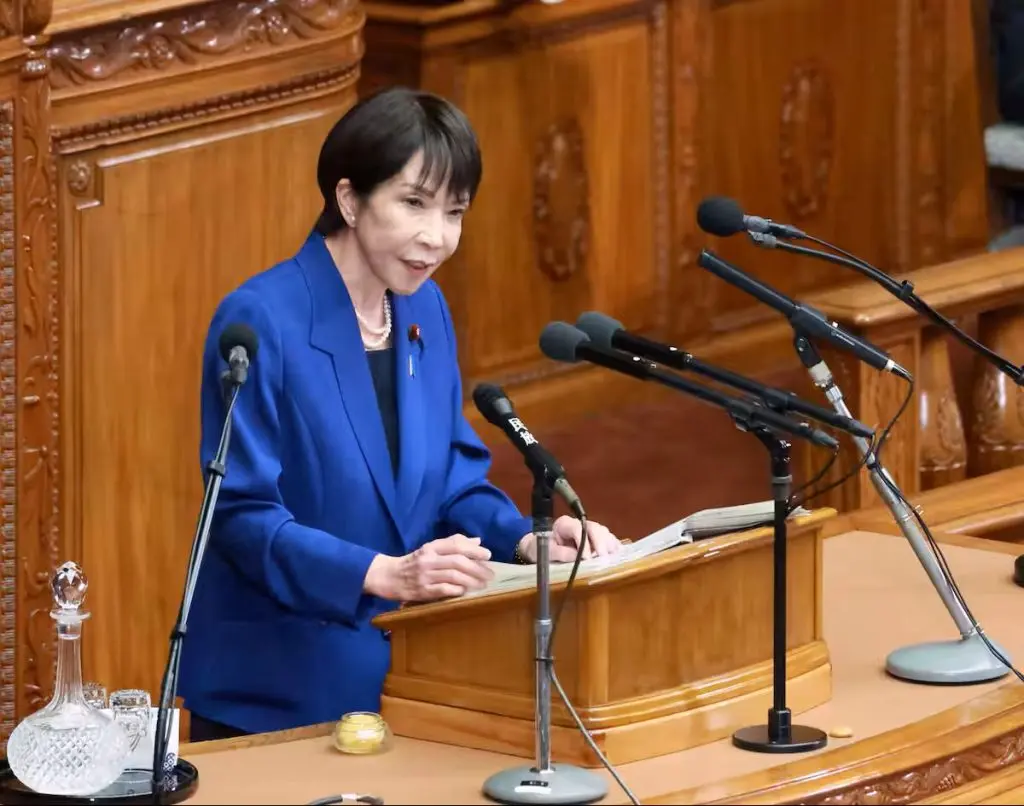
Japanese Prime Minister Sanae Takaichi reshuffled her cabinet on Thursday, though she retained the heads of key government portfolios, including Finance, Defense, and Foreign Affairs. The move aims to give fresh momentum to her fiscal expansion policies, which are designed to foster economic growth and strengthen the archipelago’s resilience.
RELATED:
Japan Seeks to Cover Up Its Military Moves by Lashing Out at Russia: Lavrov
The main change announced was the appointment of Hiroshi Nakatsuka, from the Japan Innovation Party (Ishin), as Minister of Administrative and Regulatory Reform. According to Chief Cabinet Secretary and Government Spokesperson Minoru Kihara, this marks the first time a member of that party has joined the executive branch since Takaichi took office.
Ishin is the current coalition partner of the Liberal Democratic Party (LDP), led by the Prime Minister. Nakatsuka’s inclusion expands the allied party’s role in government administration, even though the reshuffle maintained continuity in most strategic areas.
Changes also included the replacement of Hiroshi Hiraguchi by Takashi Yamashita at the Ministry of Justice. However, Satsuki Katayama will remain as Finance Minister—a pivotal role for coordinating the recent joint currency intervention by Japan and the United States aimed at reversing the yen’s weakness.
Japan vows to curb yen depreciation!
The Japanese
government has announced that it will take measures to curb excessive fluctuations in the yen.
Chief Cabinet Secretary Minoru Kihara said that Japan will try to maintain order in the currency market, following close… pic.twitter.com/CjqvnqYFFm
— mishra (@Shivasunth21718) September 17, 2026
At a press conference, Takaichi stated that Katayama would be instrumental in ensuring medium- to long-term fiscal sustainability, amidst investor concerns regarding the scope of the Japanese government’s expansionary fiscal policy.
Defense Minister Shinjiro Koizumi will also remain in his post as Tokyo reviews its defense principles and debates the possibility of addressing the issue of nuclear weapons without taboos. The government believes Japan faces growing challenges involving China, North Korea, and Russia.
Regarding relations between Tokyo and Beijing, Takaichi noted that both countries maintain communication channels despite their differences. “Given the outstanding issues and challenges between Japan and China, we are maintaining dialogue and communication at all levels and on various occasions,” he stated.
The administration will also retain Toshimitsu Motegi as Foreign Minister, Ryosei Akazawa as Minister of Economy, Trade and Industry, and Minoru Kiuchi as Minister in charge of Growth Strategy.
The cabinet reshuffle took place a day after changes to the LDP leadership, which were also marked by continuity. Takaichi maintained that the adjustments would accelerate policies “aimed at achieving a strong economy and making the Japanese archipelago prosperous and resilient.”
#DPRK | Kim Jong Un attended the commissioning of the Kang Kon, North Korea’s second 5,000-ton destroyer, as he called for expanding nuclear-capable systems across the country’s naval forces.
The ceremony comes amid U.S.-South Korea-Japan military drills.#NorthKorea… pic.twitter.com/vnnYzdlYAc— teleSUR English (@telesurenglish) September 7, 2026
From teleSUR English via This RSS Feed.