

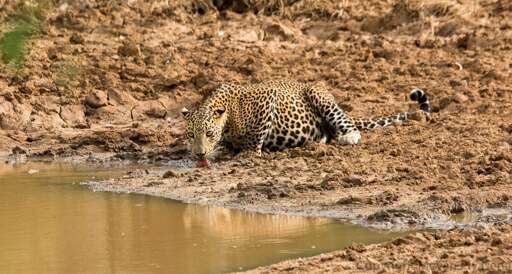
YALA, Sri Lanka – One early morning in July 2016, six wildlife officers waited in a patch of scrubland close to a small pond in southern Sri Lanka. They had received information that poachers had poisoned the water hole to kill wild animals for meat. A dead deer lay beside the poisoned pool as the officers waited for the poachers to return. When two men approached the carcass, the officers moved in. One suspect fled, while a wildlife ranger tackled the other as he tried to escape. During the struggle, the ranger’s rifle discharged, fatally wounding him in the stomach. The officer was pronounced dead after being taken to a hospital. The incident, in the Sinukkugala jungles about 16 kilometers (10 miles) from the town Hambantota in the South exposed the deadly chain behind a seemingly simple act: Putting poison into a water hole. The poachers were not just killing a single animal; they were turning water — one of the most vital resources in Sri Lanka’s dry-zone landscape — into a trap. Nearly a decade later, wildlife officials continue to warn against the practice as poisoning incidents persist. In one such incident in July of this year, wildlife officers found 17 deer carcasses beside an empty agrochemical bag that may have been used to poison the animals. This pregnant doe died after drinking from a poisoned water hole, which also killed her unborn fawn. Image courtesy of the Department of Wildlife Conservation Facebook page. During droughts, wildlife becomes concentrated…This article was originally published on Mongabay
From Conservation news via This RSS Feed.