

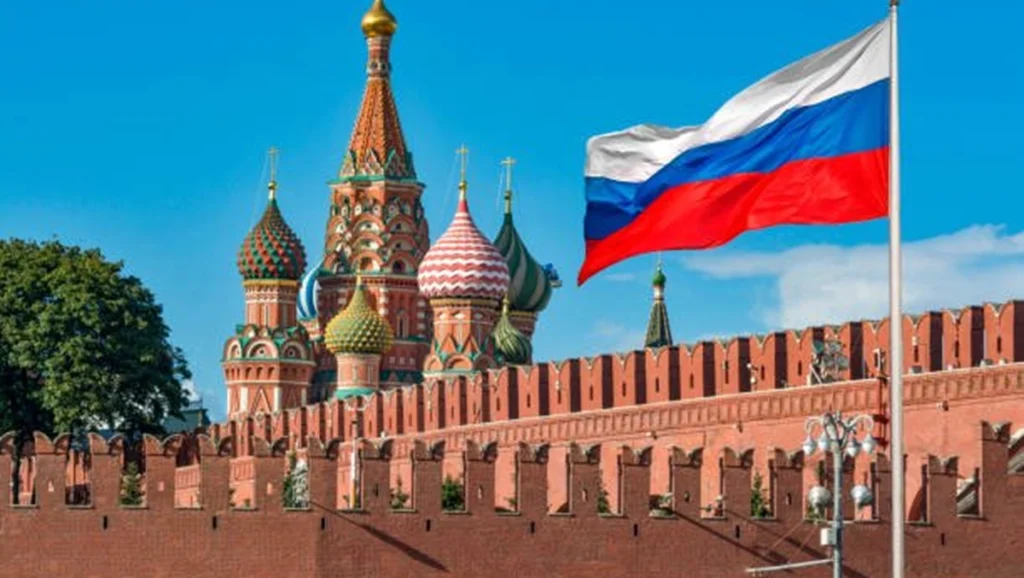
The new law gives Trump authority to impose tariffs of up to 100% on countries importing Russian hydrocarbons.
On Thursday, presidential spokesman Dmitry Peskov called the package of sanctions against Russia approved by the U.S. Congress an “unfriendly step.” The package allows President Donald Trump to impose tariffs on countries that import Russian hydrocarbons.
RELATED:
Trump Threatens to Cut Trade with EU Over Canada Association Plan
“Of course, the adoption of additional sanctions by the U.S. will undoubtedly make efforts to reach a peaceful settlement in Ukraine more difficult,” Peskov pointed out.
From now on, Trump will be able to approve tariffs of up to 100% on affected countries, such as China and India, the largest importers of Russian oil and gas.
The bill approved by the House of Representatives, known as the Lindsey O. Graham Sanctions on Russia and Iran Act of 2026, had already been approved by the Senate in August.
Beijing Blasts Back At US Passing Lindsay Graham’s Russia Sanctions Bill
“China opposes long-arm jurisdiction and unilateral sanctions that have no basis in international law and authorisation from the UN Security Council.” https://t.co/0lkOnD2E71 pic.twitter.com/YZJ3hgjp2Z
— RT_India (@RT_India_news) September 17, 2026
The measure includes sanctions against Russian officials, banks and strategic sectors of the Russian economy, as well as measures against the so-called “shadow fleet” of oil tankers used to circumvent Western restrictions.
The law does not automatically impose those tariffs but grants the executive branch the authority to apply them through the mechanisms provided for in the legislation. Therefore, it is subject to Trump’s signature, and he could use it as a tool of pressure in his negotiations with Russia, which Washington wants to resume in October.
The law also expands the tools available to sanction financial institutions and other actors that help Russia evade U.S. restrictions, in addition to extending certain financial sanctions against Iran. The measures related to Tehran were part of the negotiations that helped secure Trump’s support for the bill.
On Thursday, Russian Foreign Minister Sergey Lavrov acknowledged that not only has there been no progress in the normalization talks with the U.S. since Trump came to power, but that none is “expected,” although he emphasized that, unlike the Europeans, the White House is willing to engage in dialogue with Moscow.
teleSUR/ JF
Source: EFE
From teleSUR English via This RSS Feed.