

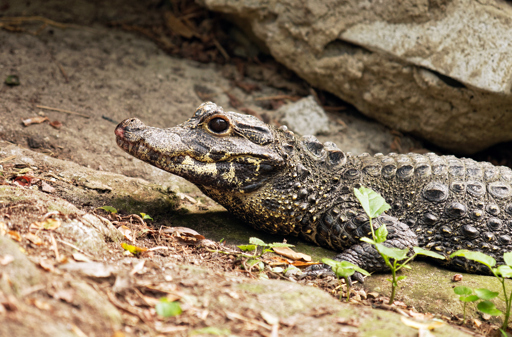
The African dwarf crocodile is the world’s smallest living crocodile. These reptiles, nocturnal predators of crabs, gastropods and the occasional fish or small mammal, can reach 2 meters (6.6 feet) in length. They are found in dense swamps and flooded forests across large parts of West and Central Africa. Despite being listed as vulnerable on the IUCN’s Red List, the African dwarf crocodile (Osteolaemus tetraspis) has not been assessed by the conservation organization for 30 years. Anecdotal evidence suggests the crocodile’s numbers have declined sharply in many places where they were formerly common due to over-harvesting and destruction of their habitat. “The dwarf crocodile is particularly well-suited for the commercial trade,” ecologist Mitchell Eaton wrote in 2008. “Its small size and slow metabolism allow it to be captured and transported live over long distances without the need for refrigeration.” These unfortunately convenient characteristics have made the species a prized target for hunters across the reptiles’ range and conservationists fear this is putting crocodile populations under unsustainable pressure. Researcher Israel Ogorode with a dwarf crocodile (Osteolaemus tetraspis) at the Uwa bushmeat market in Benin City, Nigeria. Image courtesy of Israel Ogorode. For a study published in August in the journal BMC Zoology, conservation biologist Israel Ogorode and colleagues surveyed sales of African dwarf crocodiles at three markets in the Niger Delta, aiming to collect data about how many of the reptiles are sold — and who is doing the selling. Ogorode and the researchers visited three bushmeat markets in the Niger…This article was originally published on Mongabay
From Conservation news via This RSS Feed.