

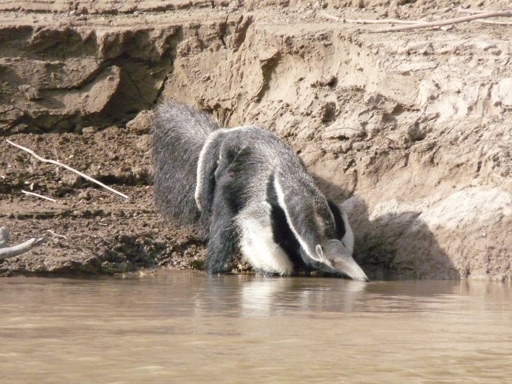
In 2025, a giant anteater returned to the Alma Guaraní reserve in Argentina’s Corrientes province. It marked the first sighting of this vulnerable and emblematic mammal in the region since 1986. That return is believed to be the result of restoration work that began in the reserve in 2021, according to a paper published in Restoration Ecology, which makes the case that passive restoration in particular may have triggered the species’ return to the area. “It was the first register of the giant anteater in 40 years in Corrientes province, and it was spontaneous,” said co-author Rosario Montiel, from the National University of the Northeast and CEO of climate and environmental startup RestoreData. “We think that in this area, in this reserve, this animal has found food and all its needs to settle there.” It’s not known where the giant anteater came from. Montiel and colleagues suggest the individual, thought to be a male, may have crossed over from neighboring Chaco province, swimming across the nearby Parana River when water levels hit a historical low in 2024. Giant anteaters (Myrmecophaga tridactyla) are classified as vulnerable on the IUCN Red List. Habitat loss is a major threat, driven primarily by the expansion of agriculture and livestock ranching, and is behind much of the species’ decline across Argentina and the wider Gran Chaco region. Infrastructure development, such as increasing road networks, and hunting are also significant threats. Anteaters are caught for the pet trade and accidentally killed by hunters’ dogs. These pressures still…This article was originally published on Mongabay
From Conservation news via This RSS Feed.