

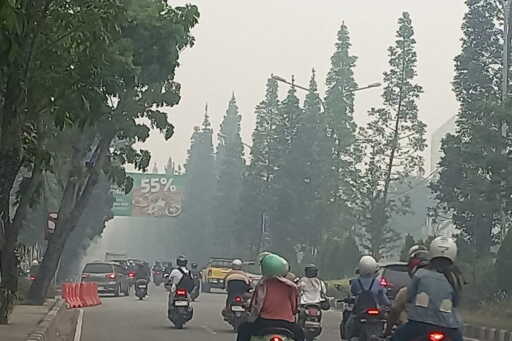
KUALA LUMPUR — Video editor Mohamad Haazim has lost count of how many times he refreshes Malaysia’s Air Pollutant Index (API) website every day to check air quality in the city where he lives. It’s been hovering between “unhealthy” and “hazardous” in recent weeks. Haazim, who asked to be identified only by his given names for privacy reasons, lives in Kuching, the capital of Malaysia’s Sarawak state. It is known as one of the cities with the cleanest air quality in the country, but since last month, Kuching has earned a dubious distinction of being the world’s “most polluted major city,” according to IQAir, a Swiss-based air quality technology company. The culprit? Smog from Indonesia’s wildfires. “It has deeply disrupted my daily routine,” Haazim said of the haze. “Outdoor routines are completely on hold; morning and evening walks are out of the question.” An avid marathon runner, Haazim no longer runs five times a week outdoors. “I am now down to just two indoor runs,” he told Mongabay last week. At home and at work, he said he ensures windows are shut tight, with air purifiers running at full blast. Kuching riverside in the city center is shrouded in thick haze in Kuching, Sarawak state, Malaysia, on Sept. 4, 2026. Image by AP Photo/Xpin Voon. He can’t forget his long drive home from Lawas, a Sarawak town located between Sabah and Brunei, on Aug. 31. “The haze became much thicker as we went back to Kuching,” he said. “As we arrived…This article was originally published on Mongabay
From Conservation news via This RSS Feed.