

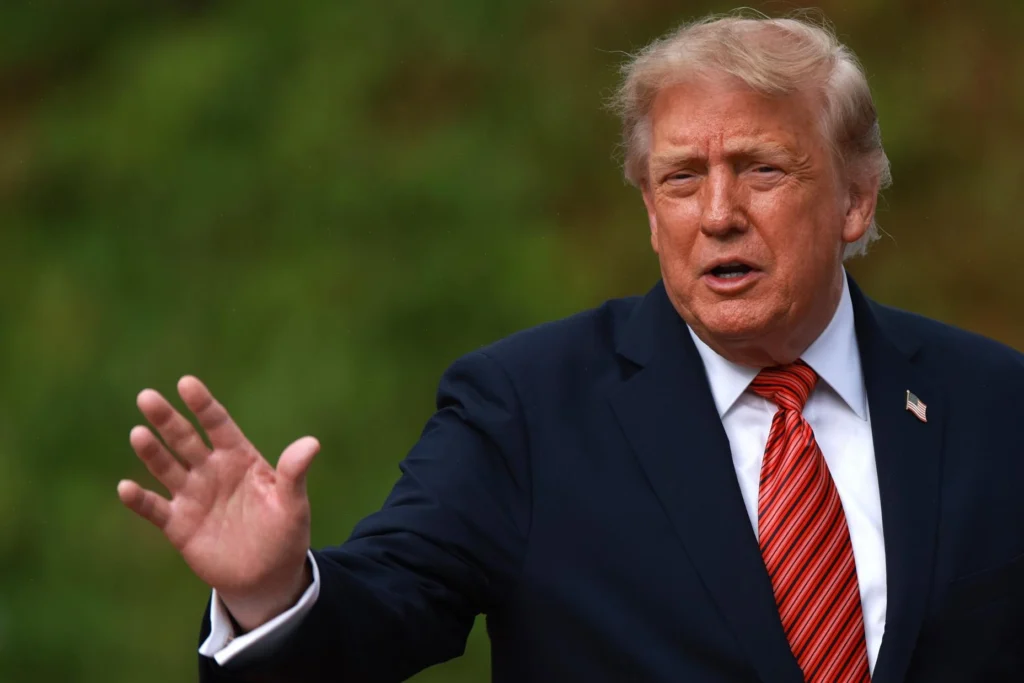
On September 16, U.S. President Donald Trump signed a decree removing Venezuela from the unilateral list of countries that manifestly fail to meet their drug control commitments, ending Caracas’s two-decade presence on a list that also includes Bolivia, Honduras, Jamaica and Mexico.
The move was formalized through the “Presidential Determination on Major Drug Transit or Illicit Drug Producing Countries for Fiscal Year 2027,” which was sent to Congress on Tuesday, September 15, and published by the State Department on Wednesday.
Trump’s administration justified the decision by saying Caracas has demonstrated compliance with its drug-control commitments.
RELATED: Sheinbaum Calls on U.S. To Do Its Part in Anti-Drug Fight
“I have determined that Venezuela should no longer be considered a country that has manifestly failed to meet its drug control commitments,” Trump stated.
The decision was praised by Acting President Delcy Rodríguez, who stated that Venezuela’s actions will continue to advance in the fight against drug trafficking.
Trump also raised the possibility of soon reviewing Colombia’s status, saying he would consider lifting its “demonstrable failure” designation if Bogota carries out an aggressive plan to eradicate coca crops and dismantle narco-terrorist groups over the coming year.
Ver esta publicación en Instagram
Una publicación compartida de teleSUR English (@telesurenglish)
The change is related, according to the presidential determination, to a new phase of diplomatic relations between the United States and Venezuela’s government.
However, the document itself states that this classification responds to a combination of geographical, commercial, and economic factors that can facilitate the transit or production of drugs or chemical precursors. Therefore, a country’s presence on this list does not necessarily reflect the efforts made by its government or its coordination with the United States.
U.S. Strikes Spark Controversy
The announcement comes as the U.S. administration says it is coordinating efforts to root out criminal organizations across Latin America. Under that framework, Washington has carried out military actions and direct strikes on vessels it accuses of alleged trafficking drugs in the region.
Recent military actions and direct operations against vessels in the Pacific and Caribbean have been part of this strategy. However, these actions have been criticized by experts from the United Nations (UN), who called for an immediate halt to the use of lethal force in international waters.
The UN experts highlighted that since September 2025, U.S. forces have conducted attacks on vessels in the Caribbean and Pacific, resulting in over 200 deaths. These operations have left no survivors, and the U.S. has not provided concrete evidence linking the targeted vessels to drug trafficking.
The UN relators rejected the U.S. justification of self-defense under Article 51 of the UN Charter, emphasizing that drug trafficking groups are not parties to an armed conflict and that international law prohibits summary executions.
Venezuela’s removal from the noncompliance list marks a notable shift in tone between Washington and Caracas on the drug-policy front, even as U.S. military operations against alleged trafficking vessels in the wider region remain a source of international controversy.
From teleSUR English via This RSS Feed.