

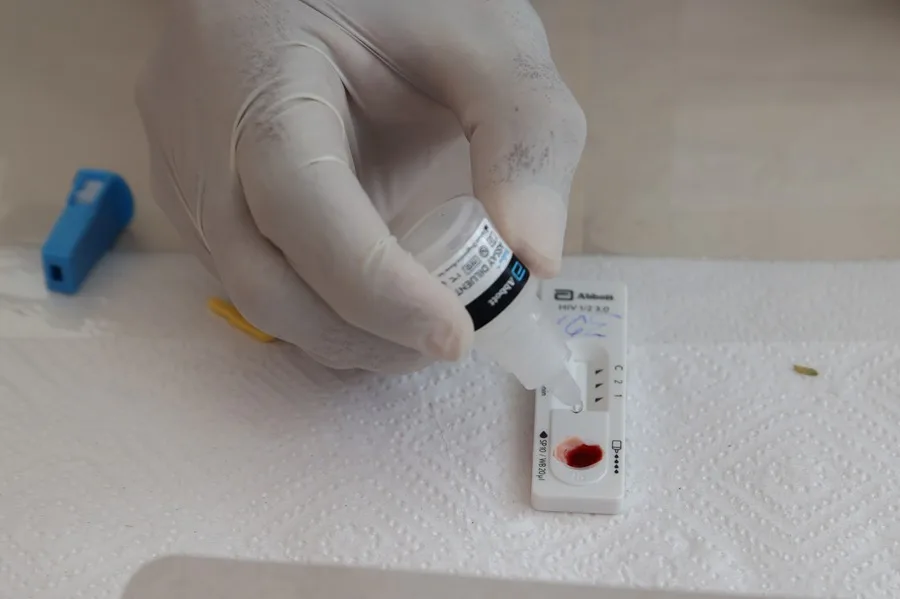
The Government of Fiji has declared this Wednesday a national emergency to address the rapid increase in HIV infections, trying to contain the virus and protect public health.
The health crisis, first evident in January 2025, has seen a dramatic rise in cases, with one in every 60 adults now infected, compared to one in 167 just five years ago.
The declaration aims to coordinate government efforts urgently to contain the virus and protect public health.
RELATED: HIV Funding Cuts Threaten Global Fight Against AIDS
Minister of Health Atonio Lalabalavu announced that the government will enhance access to diagnostics, therapies, and pre-exposure prophylaxis (PrEP). Additionally, a formal plan for needle exchange programs and long-acting injectable prevention methods will be expedited.
The Fiji’s Minister highlighted that 2% of pregnant women tested in prenatal services have been diagnosed with HIV, equivalent to one in every 50 pregnancies.
Fiji has officially declared HIV a national emergency.
Estimates show 1 in 6 people are now living with HIV, up from 1 in 165 five years ago (2,016 new diagnoses in 2025).
The government is expanding testing, treatment, and PrEP access.#Fiji #HIV #PublicHealth #GlobalHealth pic.twitter.com/BIIzvyq1B7— NewsFromSea (@riskiomap) September 16, 2026
A joint evaluation by the World Health Organization (W.H.O.) and the United Nations Development Programme (UNDP) in 2025 revealed that the lack of harm reduction programs and sterile injection supplies significantly increases HIV transmission risk among drug users. The report identified methamphetamine use as the most common practice, warning that contaminated equipment exposes users to HIV and hepatitis from their first use. The study also noted that sharing blood directly among users was not a significant factor.
UNAIDS to support Fiji as it declares HIV a national crisis and puts in new measures to strengthen the response.
Read press release: https://t.co/KLR8TlVXKH pic.twitter.com/IFmu5fzwyz
— UNAIDS Global (@UNAIDS) September 16, 2026
HIV Impact on Fiji
The statistics paint a grim picture: 1,583 new cases were reported in 2024, with an additional 1,226 cases in the first half of 2025. Estimates from UNAIDS suggest that the total number of people living with HIV in Fiji has surged from around 2,000 in 2020 to approximately 6,100 in 2024. Alarmingly, 48% of patients who started treatment in 2024 were people who inject drugs, all of whom admitted to sharing used medical equipment due to the scarcity of sterile services.
This crisis in Fiji mirrors broader global concerns about HIV resurgences, exacerbated by financial cutbacks, particularly from the United States. The lack of sterile needles and harm reduction programs has been identified as a critical factor in the spread of HIV among drug users. The government’s emergency measures aim to address these issues head-on, with a focus on increasing access to essential healthcare services and preventive measures.
The declaration of a national emergency in Fiji underscores the urgent need for comprehensive action to combat the HIV epidemic. By enhancing access to diagnostics, therapies, and preventive measures, the government aims to curb the spread of the virus and protect the health of its citizens. The success of these efforts will depend on the effective implementation of the planned measures and the continued support of international health organizations.
From teleSUR English via This RSS Feed.