

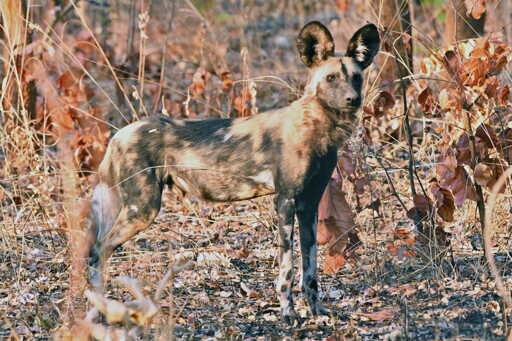
In mid-2025, a trio of male African wild dogs headed east through the open woodlands of Kafue National Park in west-central Zambia, away from the pack they’d grown up in. Roughly two weeks earlier, four of their sisters had also left the pack. One dog in each of the groups was wearing a GPS collar fitted and monitored by a team of researchers from the Zambian Carnivore Programme, Zambia’s Department of National Parks and Wildlife, and other partners. The tracking data showed that the females headed northward, into a game management area (GMA), a partially protected buffer zone adjacent to the park. But their brothers, known to the researchers as the Mayukuyuku males, entered an unprotected area east of Kafue, then turned north toward the cities of Kitwe and Ndola. The two dispersing groups were doing what wild dogs (Lycaon pictus) tend to do when they reach the age of around 3 years old. They break from their birth packs and head out in search of territory and mates to form packs of their own. But it’s also extremely risky behavior. “A good way to die, if you’re an African wild dog, is to leave your pack,” said Scott Creel, an ecologist at Montana State University in the U.S. and lead author of a new study recording these and other epic wild dogs movements across Zambia. But, he added, the alternative is also grim: “A good way to never reproduce is to stay in your pack.” African wild dogs in…This article was originally published on Mongabay
From Conservation news via This RSS Feed.
Very interesting read, and super cool to see someone from my alma mater involved.
