

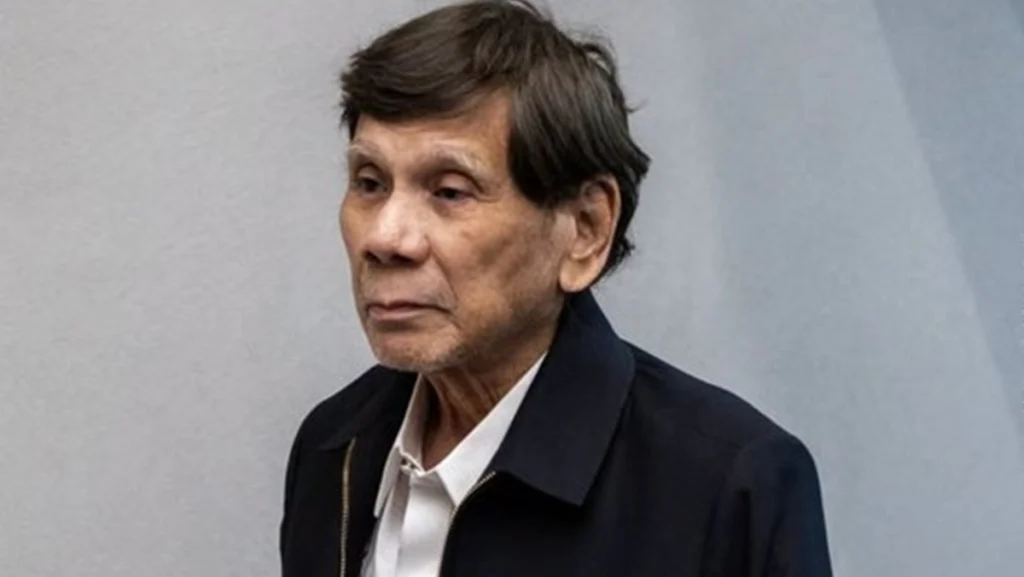
Rodrigo Duterte was compelled to appear in person before the International Criminal Court.
On Wednesday, the International Criminal Court (ICC) ruled that former Philippine President Rodrigo Duterte should remain in custody in The Hague.
RELATED:
Philippines Court Issues Arrest Warrant for Vice President Sara Duterte
The 81-year-old was forced to appear in person before the ICC for the first time since his arrest in March 2025. This happened despite his defense attorneys’ insistence that he suffers from cognitive and memory problems that prevent him from facing trial.
On Nov. 30, the ICC will formally begin the trial against Duterte, who is accused of crimes against humanity during his “war on drugs” first as mayor of Davao and later as president of the Philippines.
Wearing a dark suit and white shirt, Duterte sat behind his team of lawyers at the start of the hearing, appearing normal and showing no obvious external signs of fragile health.
In 2025, the ICC ordered Duterte’s arrest, finding “reasonable grounds” to believe that he was an indirect co-perpetrator of crimes against humanity between November 2011 and March 2019. During that period, he promoted campaigns against criminals and people linked to drugs that developed into a “widespread and systematic” attack against the civilian population that caused thousands of deaths.
Although the Philippines withdrew from the Rome Statute in 2019, the ICC retains jurisdiction over alleged crimes committed through March 16 of that year, when the country’s withdrawal took effect.
Relatives of EJK victims react upon seeing former President Rodrigo Duterte appear at the third status conference in his crimes against humanity case before the ICC in The Hague. pic.twitter.com/MedVWlA7hP
— Raffy Tima (@raffytima) September 16, 2026
His War on Drugs and Crimes Against Humanity
Rodrigo Duterte made his campaign against illegal drugs a central policy of his presidency, which began in June 2016. Police and other security forces carried out thousands of anti-drug operations, while Duterte repeatedly used forceful rhetoric in support of the campaign.
The United Nations documented credible allegations of widespread and systematic extrajudicial killings, with authorities reporting thousands of deaths. A 2020 U.N. human rights report said at least 8,663 people had been killed in the campaign, according to the most conservative available assessment, while noting that the actual figure could be considerably higher.
These killings were carried out without due process and that victims included people suspected of involvement in the drug trade, as well as people who were not armed or resisting arrest. Duterte and Philippine authorities defended the campaign as a law enforcement effort against illegal drugs.
The case entered a significant legal phase in 2025 and 2026. In March 2025, Duterte was arrested in the Philippines and surrendered to ICC custody in The Hague.
In April 2026, ICC Pre-Trial Chamber I unanimously confirmed three counts of crimes against humanity against him. The court found substantial grounds to proceed with charges including murder and other alleged acts connected to the campaign.
Duterte’s ability to stand trial has become one of the defense’s main strategies to halt the case and secure his release. In a filing submitted on Sunday, his defense argues that he suffers from a “significant deterioration of memory” that prevents him from retaining recent information and reliably accessing his memories, to the point that he only occasionally remembers the name of his lead attorney.
The defense argues that these difficulties would prevent him from adequately understanding the charges and the extensive evidentiary material, effectively participating in the preparation of his case and giving instructions to his lawyers.
teleSUR/ JF
Sources OHCHR – EFE
From teleSUR English via This RSS Feed.