

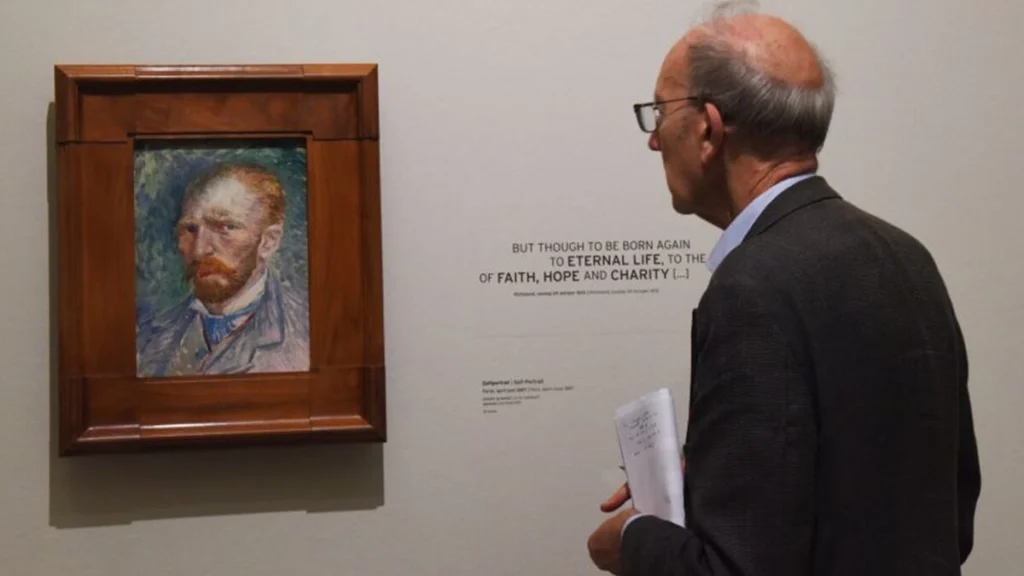
The exhibition presents all the paintings in relation to the three divine virtues: faith, hope and love.
The Dutch Kroller-Muller Museum in the Netherlands has this week displayed all paintings in its collection by Vincent Van Gogh for the first time since 1984.
RELATED:
Santo Domingo Hosts the 12th Ibero-American Museum Meeting
The museum is home to 88 paintings by the 19th-century Dutch artist. It is one of the world’s largest collections of his work. The exhibition presents all the paintings in relation to the three divine virtues: faith, hope and love.
The exhibition, called “Van Gogh, All Our Paintings,” opened on Tuesday. It features some of the artist’s best-known works, including The Potato Eaters, The Sower, Cafe Terrace at Night, Sorrowing Old Man (At Eternity’s Gate), L’Arlesienne and The Old Tower at Nuenen.
“Even before he became an artist, he wanted to help and comfort people through his work. That remained important to him throughout his artistic career,” said the museum’s curator Renske Cohen Tervaert.
Helene Kroller-Muller, the museum’s founder, began collecting Van Gogh’s works in 1908. Between then and 1930, she and her husband, Anton Kroller, acquired 88 paintings and more than 170 works on paper by Van Gogh.
This is a story by Vincent van Gogh


pic.twitter.com/d42Yxn9oED
— 𝕬𝖗𝖒𝖆𝖌𝖊𝖉𝖉𝖔𝖓
(@Armagedon6972) September 16, 2026


The Life and Legacy of a Revolutionary Artist
Vincent van Gogh was born on March 30, 1853, in Zundert, in the Netherlands, into a religious family. Before becoming an artist, he worked in several occupations, including as an art dealer, teacher and missionary.
He did not begin painting seriously until his late 20s, and his early work largely depicted peasants, rural life and working-class communities. His career as an artist lasted only about a decade, but during that period he produced more than 2,000 artworks, including roughly 850 oil paintings.
Van Gogh moved to Paris in 1886, where he encountered the work of the Impressionists and other avant-garde artists. Their use of brighter colors and looser brushwork influenced his style, which increasingly became characterized by vivid colors, expressive brushstrokes and strong contrasts.
In 1888, he settled in Arles, in southern France, hoping to establish an artists’ community. It was there that he produced some of his best-known works, including The Bedroom and Sunflowers, and developed a close but turbulent relationship with fellow artist Paul Gauguin.
Van Gogh struggled with episodes of mental illness throughout his adult life and spent periods receiving treatment, including at the Saint-Paul-de-Mausole asylum in Saint-Remy-de-Provence.
Despite his personal difficulties, he continued to paint prolifically, creating works such as The Starry Night, Irises and Wheatfield with Cypresses.
Van Gogh died on July 29, 1890, in Auvers-sur-Oise, France, at age 37, from a gunshot wound. He achieved little commercial success during his lifetime, but his work became enormously influential after his death and helped shape modern art.
teleSUR/ JF
Sources: Xinhua – The Met – The Van Gogh Museum
From teleSUR English via This RSS Feed.