

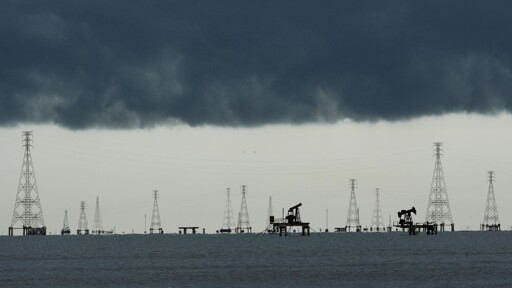
In late August, the U.S. announced a historic oil deal that gives it access to more than 65 billion barrels of proven reserves in Venezuela, with investment of up to $100 billion in new oil infrastructure across the country. The deal has been billed as a way to secure “energy dominance” for the U.S. while driving Venezuela’s economic recovery. But observers say they’re concerned about the climate impact of fossil fuels, the deal’s lack of transparency, potential oil spills and other environmental risks. “Economic recovery cannot come at the expense of human rights relating to the environment,” said a Sept. 9 joint statement from the Venezuelan Program for Education-Action on Human Rights (Provea) and Clima21, an environmental NGO. “No economic interest takes precedence over the constitutional and internationally recognized right to a healthy, safe and sustainable environment.” The deal is structured through private company North American Blue Energy Partners (NABEP), the second-largest Venezuelan oil producer, which has “100-year concessions for 17 oil fields,” according to the U.S. government. The U.S. has a “35% equity stake” in the company and can purchase 20% of its production, with a right of first refusal for the remaining 80% throughout the 25-year agreement. It’s part of an attempt by the U.S. to increase involvement in Venezuela following a January military operation to remove President Nicolás Maduro, who has been accused of narco-terrorism and cocaine trafficking. Throughout 2026, U.S. officials have visited Venezuela to discuss investment in the country’s natural resources, most notably oil and gas. Venezuela has one…This article was originally published on Mongabay
From Conservation news via This RSS Feed.