

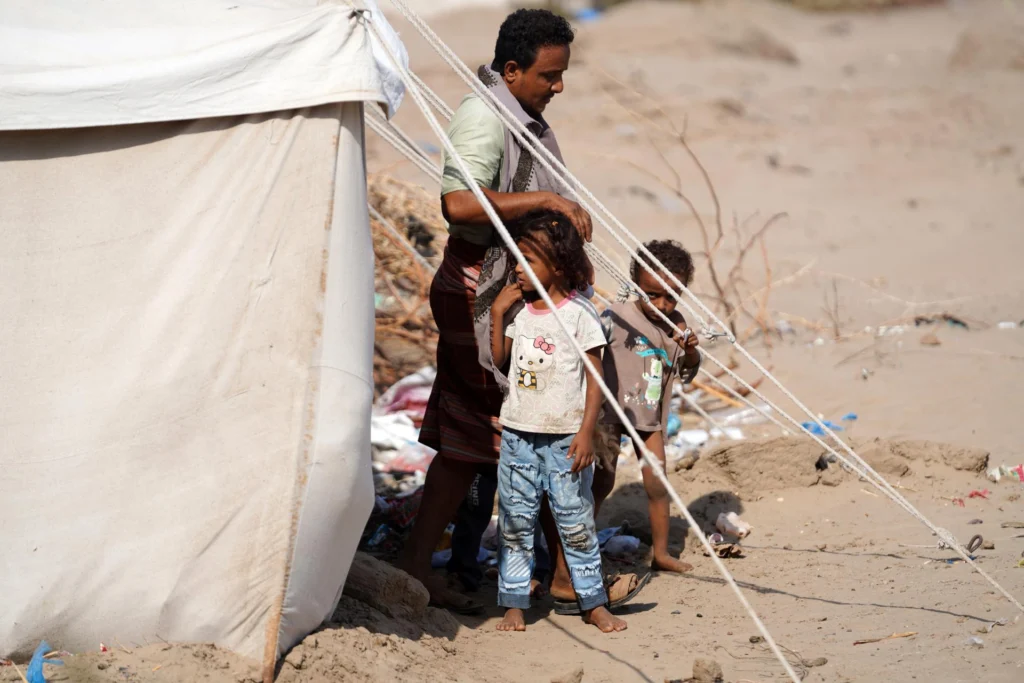
Over 100,000 people have been displaced in Yemen since July, with a mass exodus of 2,400 to Djibouti in just four days, as the conflict intensifies and humanitarian needs grow critical.
The United Nations High Commissioner for Refugees (UNHCR) has issued a stark warning about a severe humanitarian crisis in Yemen, where escalating violence has forced more than 100,000 citizens to flee their homes since early July.
The rapid escalation of fighting along Yemen’s western coast has not only displaced hundreds of thousands within the country but has also driven thousands more to seek refuge in Djibouti, crossing the strategic Bab el Mandeb Strait.
RELATED: Yemen’s Ansar Allah Challenges Western Strategies in Red Sea
The magnitude of this displacement is evident in the recent migrant flow, with over 2,400 people successfully crossing into Djiboutian territory in the last four days alone.
The UNHCR emphasizes that the affected populations urgently need shelter, food, clean water, medical attention, and protection services. The host communities and displacement centers have reached their operational capacity limits, exacerbating the crisis.
The security situation in Yemen has deteriorated significantly following intensified hostilities along the western coast.
Here’s what your algorithm isn’t showing you about Yemen. pic.twitter.com/AjMhe1kgjq
— UNHCR, the UN Refugee Agency (@Refugees) September 15, 2026
Critical Access Issues
Access to humanitarian facilities remains a significant challenge. Insecurity, damaged roads, telecommunication disruptions, and movement restrictions are all hindering operations. The UNHCR highlighted these obstacles, stating that the situation on the ground is increasingly dire.
The recent surge in violence is a result of a firm response and counteroffensive by the Houthi Ansar Allah movement and the Yemeni Armed Forces against aggression and the blockade led by the Saudi-led coalition. The conflict intensified when Ansar Allah launched a successful offensive on September 3, expelling pro-Saudi factions from key districts and inflicting significant losses. This military dynamic has deepened the conflict, which began after the fragile ceasefire collapsed on July 13 following a bombing at Sana’a International Airport, attributed to Saudi intervention.
In response to these actions and the historical blockade, the Houthi movement has intensified its defensive operations, including controlling and imposing restrictions on the Bab el Mandeb Strait. This maritime passage, connecting the Red Sea to the Indian Ocean and facilitating a significant portion of global oil and container commerce, has become a central geopolitical friction point due to foreign interference and Yemeni resistance.
Yemeni PM Shaya Mohsen al-Zindani has met with Deputy Speaker of Parliament Mohammed al-Shaddadi in Aden to discuss the “dangerous military escalation led by the Houthi terrorist militia”, says the premier’s office.
LIVE updates: https://t.co/q4MiXWft4z pic.twitter.com/ceF67iYeFG
— Al Jazeera English (@AJEnglish) September 15, 2026
The humanitarian needs are growing more urgent by the day. The UNHCR’s call for immediate assistance underscores the dire situation faced by the displaced populations. As the conflict continues to escalate, the international community must act swiftly to address the pressing needs of those affected by this crisis.
From teleSUR English via This RSS Feed.