

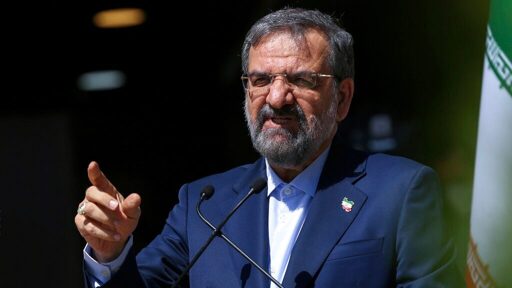

Secretary of Iran’s Supreme National Security Council Mohsen Rezaei refuted United States President Donald Trump’s latest claims about his country seeking fresh talks. He reiterated that there will be no new talks with the US until it implements the conditions already agreed upon.
“Dont get distracted by the US president’s mix signals-from ‘no negotiations’ to ‘we are ready to talk.’ The stakes around oil and the straits have changed. Damage control won’t stop what’s coming,” Rezaei said in a post on X on Tuesday, September 15.
Rezaei was responding to Trump’s latest claims made on his social media post about Iran seeking a deal “quickly and badly.” Trump called Iran a “failing nation” and said he will decide “whether or not the US will choose to engage.”
Iranian President Masoud Pezeshkian, during his visit to the 18th BRICS Summit in New Delhi earlier this week, also said there is no need for fresh talks with the US until the conditions in the Islamabad Memorandum of Understanding (MoU), signed between the two countries in June, are implemented.
Iran and Oman are seeking regional consensus
On Monday, Iran claimed it had finalized an agreement with Oman regarding the management of navigation through the Strait of Hormuz and said it’s details would be announced soon.
“The understanding between Iran and Oman, as two littoral states, has been finalized. In consultation with Oman, we will decide on the next step, including how to announce or register the understanding,” official spokesperson of Iran’s Ministry of Foreign Affairs Esmail Baghaei said in a press conference on Monday, September 14.
He also claimed that a scheduled discussion over the issue with the Persian Gulf countries on Monday was canceled at the last minute after Saudi Arabia’s intervention. He called the Saudi move “ill-advised” and a lost opportunity.
It is speculated that the Saudi intervention is linked to recent attacks carried out by Yemen’s Ansar Allah forces inside its territories, hitting a crucial oil pipeline and King Khalid Air Base, along with other infrastructure.
Ansar Allah claimed its attacks inside Saudi Arabia were in retaliation to hundreds of Saudi airstrikes and over a decade-long blockade of the country.
Read more: Over 300 killed in Yemen in clashes between Ansar Allah and Saudi-backed forces
Ansar Allah has also announced it will target Saudi ships carrying crude through the Bab-al Mandeb in the Red Sea.
In the past, Saudi Arabia had accused Iran of supporting Ansar Allah militarily. Iran has denied such claims, calling Ansar Allah an ally with its own independent agenda.
Earlier, both Iran and Oman had claimed that the regional meeting on Monday was not postponed for a later date, with Omani Foreign Minister Badr Albusaidi saying the delay was in the “interest of consensus.”
The talks for an agreement over the joint management of traffic through the Strait of Hormuz with Oman began in June, after Iran proposed it.
On August 25, Iran and Oman announced an initial agreement on the establishment of a temporary joint maritime corridor and a joint-mine clearance project.
The agreement, once finalized, is expected to “restore safe navigation” through the Strait while preserving the sovereignty and sovereign rights of coastal states, Press TV reported.
Strait of Hormuz is closed
On the evening of September 14, a super tanker hit a mine after trying to cross the Strait of Hormuz through what Iran calls the “illegal route” near Omani waters, the Islamic Revolutionary Guard Corps (IRGC) said in a statement.
Later it was reported that several of the crew members of the said ship were missing.
The IRGC reiterated its warnings to all the ships in the Persian Gulf to refrain from using the US-backed Omani route, repeating the claims about the Strait of Hormuz being shut and under its full control.
The IRGC has repeatedly questioned US President Donald Trump’s claims of the restoration of free navigation through the Strait, calling them lies.
The Strait, through which nearly 20% of the global energy trade flowed before the US-Israeli war on Iran began in February has seen a massive fall in traffic, causing disruptions in energy supplies after the Iranians restricted traffic in retaliation.
Oil prices have crossed USD 100 per barrel several times since then. They again crossed the mark earlier this week due to the renewed escalation and fear of a blockade of oil trade through the Bab-al-Mandeb, after Ansar Allah’s warnings of targeting Saudi ships.
Nearly 12% of global trade in energy happens through the Bab-al-Mandeb.
On Monday, Iran reiterated that the US is solely responsible for the global impacts caused by the blockade of oil trade in the region.
The US war and naval blockade against Iran are the direct reasons for the closure of the Strait, Ali Bahreini, Iran’s permanent representative at Geneva, said during a UN Trade and Development (UNCTAD) meeting asking the international community to acknowledge the fact that such unilateral actions are harmful for the global economy.
Iran assured that it will lift the blockade on the Strait of Hormuz the moment the US announces the end of its war and lifts the naval blockade and economic sanctions on Iran.
From BT News via This RSS Feed.
Man its almost like it you put the dumbest people in charge they make dumb decisions i can never forgive maga for this.
